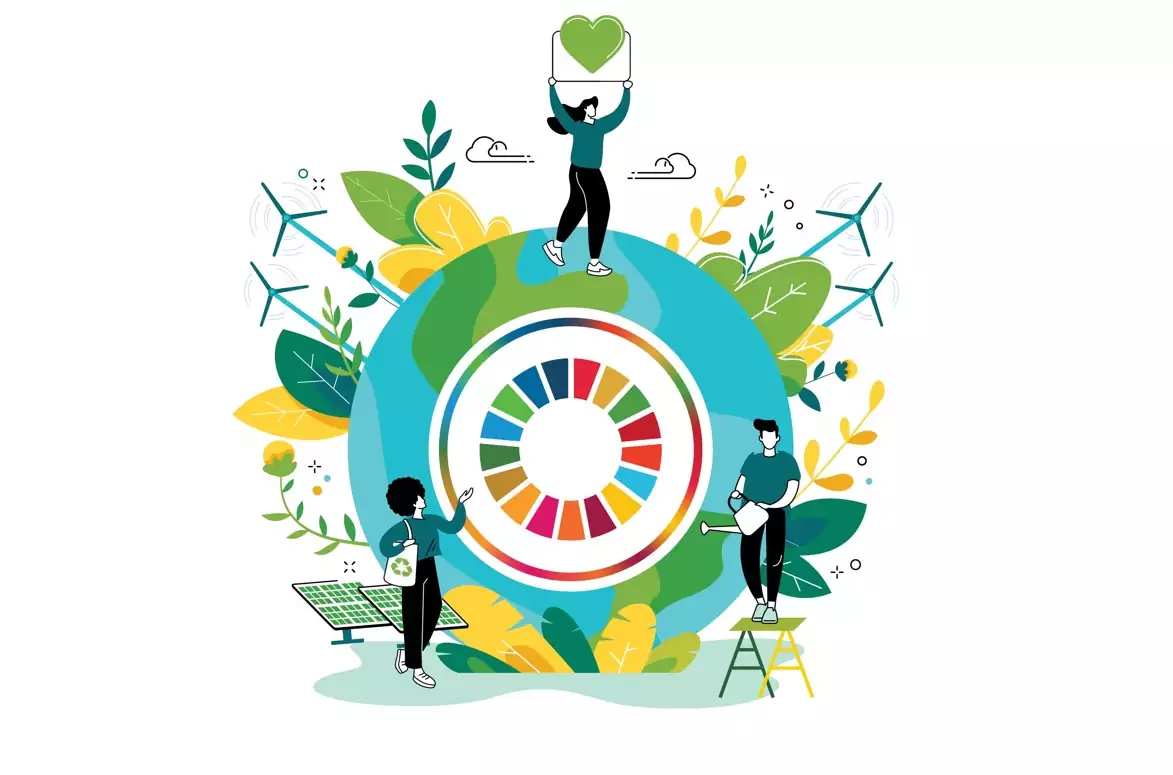
The Sustainable Development Goals (SDGs) are a collection of universal objectives that apply to all nations and address a variety of concerns, such as poverty, hunger, health, education, gender equality, access to clean water and sanitation, energy, economic development, and climate change.
The SDGs are also designed to be interconnected and indivisible, which means that advancement in one area will encourage advancement in others. For instance, investing in clean energy can assist to protect the environment, while investing in education and gender equality can help to eliminate poverty.
The SDGs are also intended to be universal, which means that they apply to all nations regardless of how developed their economies are. This is crucial because every nation must play a part in achieving sustainable development and will benefit from a more just and sustainable world economy.
The Sustainable Development Goals (SDGs) are a set of ambitious and all-encompassing global objectives that seek to eradicate poverty, safeguard the environment, and guarantee that everyone lives in peace and prosperity. The SDGs are technically attainable, but they will need a lot of work by governments, civil society, the commercial sector, and people all around the world, as well as tackling the obstacles that could prevent them from being achieved.
Sustainable Development Goals Challenges
Some of the barriers to successful achievement of the SDGs include:
- Lack of funding: Achieving the SDGs will require significant investments in areas such as infrastructure, education, and healthcare. However, many developing countries lack the resources to make these investments, and may not receive enough financial assistance from developed countries.
- Limited capacity: Many developing countries lack the capacity to implement the SDGs, including the necessary institutions, systems, and skilled personnel.
- Inequalities: The SDGs aim to leave no one behind, but some groups such as women, children, the elderly, and marginalized communities are more likely to be affected by poverty and inequality and will require targeted efforts to ensure they benefit from sustainable development.
- Climate change: Climate change is a major threat to sustainable development and many developing countries are particularly vulnerable to its impacts. Addressing climate change will require significant investments in renewable energy and other low-carbon technologies, as well as efforts to build climate resilience.
- Fragile states and conflict: Achieving the SDGs will be particularly challenging in countries affected by conflict and fragility, where basic security and governance are lacking and it is difficult to implement development programs.
- Limited progress on SDG 4 (Quality Education): The ongoing COVID-19 pandemic has made it difficult for many students to continue learning, particularly in low-income countries, and has highlighted unequal access to quality education, which is a major barrier to achieving SDG 4.
- Lack of political will and commitment: Even though the SDGs have been adopted by all UN Member States, political will and commitment to implementing them vary widely. Without strong political will and commitment, it will be difficult to mobilize the necessary resources and make the policy changes needed to achieve the goals.
Read Why the SDGs came into existence? What are its features?
Overall, while the SDGs are achievable, achieving them will require a concerted effort and addressing these barriers, as well as addressing many other challenges that may arise along the way.

How the SDGs can be achieved?
Sustainable Development Goals (SDGs) are achievable through a combination of strategies and actions at the global, national, and local levels. Some of the key strategies for achieving the SDGs include:
- Strong and inclusive economic growth: The SDGs aim to promote sustainable economic growth that creates jobs and reduces poverty, and this can be achieved through policies that support small and medium-sized enterprises, encourage investment in infrastructure and education, and promote trade and innovation.
- Reducing inequality: The SDGs aim to reduce income and wealth inequality, and this can be achieved through policies that promote progressive taxation, social protection programs, and access to quality education and healthcare.
- Addressing climate change: The SDGs recognize the importance of addressing climate change as a key element of sustainable development, and this can be achieved through policies that reduce greenhouse gas emissions, promote renewable energy, and improve resilience to the impacts of climate change.
- Investing in people: The SDGs aim to ensure that all people have access to quality education, healthcare, and social services, and this can be achieved through policies that increase public investment in these areas and ensure that services are targeted to the most marginalized and vulnerable groups.
- Building sustainable cities and communities: The SDGs aim to create inclusive and sustainable cities and communities, and this can be achieved through policies that promote compact, walkable, and mixed-use development, protect natural and cultural heritage, and improve access to public transport and green spaces.
- Strengthening global cooperation: The SDGs recognize the importance of strong global cooperation in achieving sustainable development, and this can be achieved through policies that promote international trade, investment, and aid, and through multilateral action on key global challenges such as climate change, poverty, and inequality.
The achievement of the SDGs will require a strong commitment from all actors, including government, the private sector, civil society, and individuals, to work together to create a more sustainable and equitable world.