
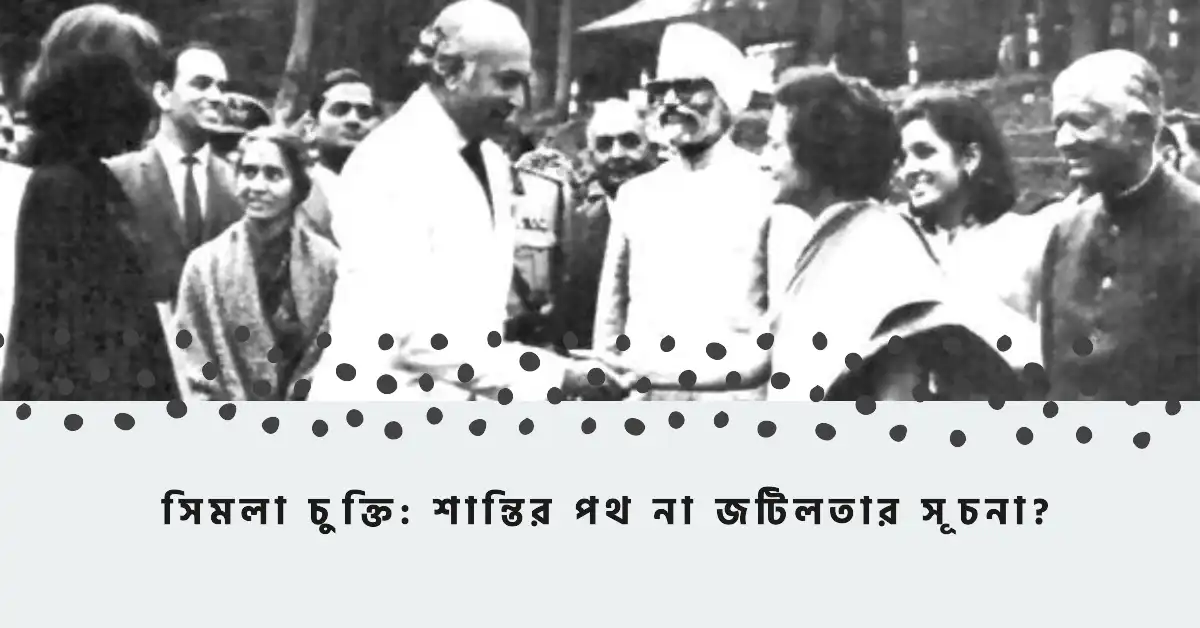
In the aftermath of the 1971 Bangladesh Liberation War, relations between India and Pakistan were fraught with profound volatility. Both nations had endured staggering losses, necessitating a diplomatic framework to secure a lasting peace. This imperative culminated in the Simla Agreement, signed in July 1972. While the accord was intended to dissolve the prevailing hostilities between the two regional powers, whether it genuinely paved a path toward peace or merely catalyzed new, intractable complexities remains a subject of intense debate among historians and political analysts. This article examines the historical context and the core tenets of the 1972 Simla Agreement.
The Context of the Simla Agreement
The Simla Agreement was the direct consequence of the 1971 India-Pakistan War. To understand its genesis, one must analyze the preceding events and the profound geopolitical shockwaves the conflict generated.
In March 1971, the Pakistani military launched a systematic genocide against unarmed Bengalis in East Pakistan (modern-day Bangladesh), resulting in the deaths of millions of innocent civilians. In response, the people of East Pakistan rose in defiance, forming the Mukti Bahini, an indigenous freedom-fighting force. India intervened, providing crucial training and logistical support to the Mukti Bahini to aid the cause of independence.
How minorities are being oppressed in India?
In December 1971, India formally entered the conflict, and within a mere thirteen days, the Pakistani military surrendered. The war transformed East Pakistan into the sovereign nation of Bangladesh, but the post-war landscape left India and Pakistan at an impasse, compounded by the presence of 93,000 Pakistani prisoners of war (POWs) held in Indian custody.
A retrospective of European historiography reveals that, while the continent languished in the medieval depths of superstition, squalor, and intellectual stagnation, the Iberian Peninsula served as a luminous beacon of civilization. It was within this crucible that the Muslim architects of the region forged the enduring, multifaceted heritage of Al-Andalus.
The Sino-Indian Clash in Galwan: Who Prevails?
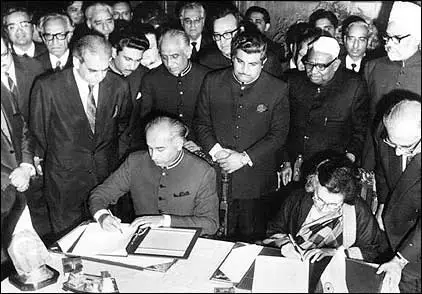
Seeking to restore regional stability, Indian Prime Minister Indira Gandhi and Pakistani Prime Minister Zulfikar Ali Bhutto met in the Himachal Pradesh hill station of Shimla on June 28, 1972. Following extended negotiations, the two leaders signed the accord on July 2, now known as the Simla Agreement.
The Provisions of the Simla Agreement
The primary objectives of the Simla Agreement were to resolve the myriad problems spawned by the war and to facilitate a new era of cooperation. The agreement outlined the following commitments:
- The cessation of all hostilities and the establishment of a foundation for friendly, harmonious relations at both national and international levels.
- The institutionalization of bilateral dialogue to address disputed border issues.
- The repatriation of the 93,000 Pakistani soldiers captured since December 17, 1971.
Sheikh Mujibur Rahman: The Architect of Bangladesh
Publish Your Research & Critical Analysis on MaroonPaper
Contribute in-depth essays on law, political philosophy, economics, and geopolitics to an intellectual readership.
Key pillars of the agreement included:
Delineation of the Kashmir Border
A central feature of the Simla Agreement was the management of the Kashmir frontier. Divided between India and Pakistan and the site of multiple wars, the region remained a flashpoint. The two nations agreed to pursue bilateral negotiations to resolve the issue, committing to consider the interests of the Kashmiri population. Furthermore, the military positions held at the end of the conflict were formalized as the "Line of Control" (LoC).
Thug: The Moral Killer of British India
Widely recognized as one of the world's inaugural written constitutions, the Charter of Medina serves as a seminal historical document, establishing foundational precedents for the Islamic state, religious pluralism, and the architecture of social cohesion.
Repatriation of Prisoners of War
The agreement provided for the repatriation of the 93,000 Pakistani soldiers held by India. Both parties agreed to sign a separate protocol to facilitate their return to Pakistan.
Commitment to Bilateral Relations
- India and Pakistan pledged to end their historical animosities and foster peaceful coexistence. Both governments committed to resolving all mutual differences through peaceful means and fostering cultural and commercial exchanges.
Read the Simla Agreement in English
Positive Outcomes
The Simla Agreement left a significant, albeit nuanced, legacy:
- Reduction of War-Time Tensions: The accord lowered the immediate threshold for military confrontation.
- Release of POWs: India’s release of 93,000 Pakistani troops served as a significant goodwill gesture.
- Restoration of Diplomatic Ties: Formal diplomatic channels were reopened between New Delhi and Islamabad.
- Border Stability: The recognition of the 'Line of Control' (Line of Control) provided a baseline for frontier management.
- Bilateralism as Policy: The agreement prioritized resolving disputes without the intervention of third-party mediators, a cornerstone of the agreement’s diplomatic ethos.
Muskan Khan’s Hijab and Indian Secularism
The Negative Critique
Despite its peace-oriented aspirations, the Simla Agreement carried significant shortcomings:
- The Unresolved Kashmir Dispute: Article 6(ii) of the accord mandated that both nations resolve the Jammu and Kashmir dispute through "future bilateral negotiations." This process failed to materialize, leaving Kashmir as a perpetual, unresolved conflict, leading to subsequent skirmishes.
- Bangladesh’s Absence: Although the 1971 conflict was fought to secure Bangladesh's independence, the new nation was excluded from the negotiations. This marginalization of Bangladesh, whose struggle was the primary catalyst for the war, remains a contentious point.
- The Uncertainty of the Freedom Fighters: The agreement remained silent on the future and recognition of the Mukti Bahini, whose vanguard role was pivotal to the independence of Bangladesh.
- The 'Line of Control' as a Permanent Boundary: For many, the implicit acceptance of the 'Line of Control' as a functional, if not legal, boundary undermined the special status of Kashmir.
A Path to Peace or the Dawn of Complexity?
The Simla Agreement remains a monument of complex history. While it effectively restored diplomatic relations post-1971 and bolstered the foundations of Bangladesh’s national identity, its failure to resolve the Kashmir issue—coupled with the exclusion of Bangladesh—has invited enduring scrutiny. The lack of Bangladeshi representation in a deal born from its own liberation struggle continues to cast a shadow over regional perceptions of Indian diplomacy. Furthermore, the decision to force Pakistani forces to surrender to the Joint Command rather than directly to Bangladeshi representatives, alongside the handling of captured weaponry, raised profound questions about the nature of the post-war order. Is the Simla Agreement a roadmap for peace or a labyrinth of unresolved tensions? The answer is as multifaceted as the history it sought to define.