
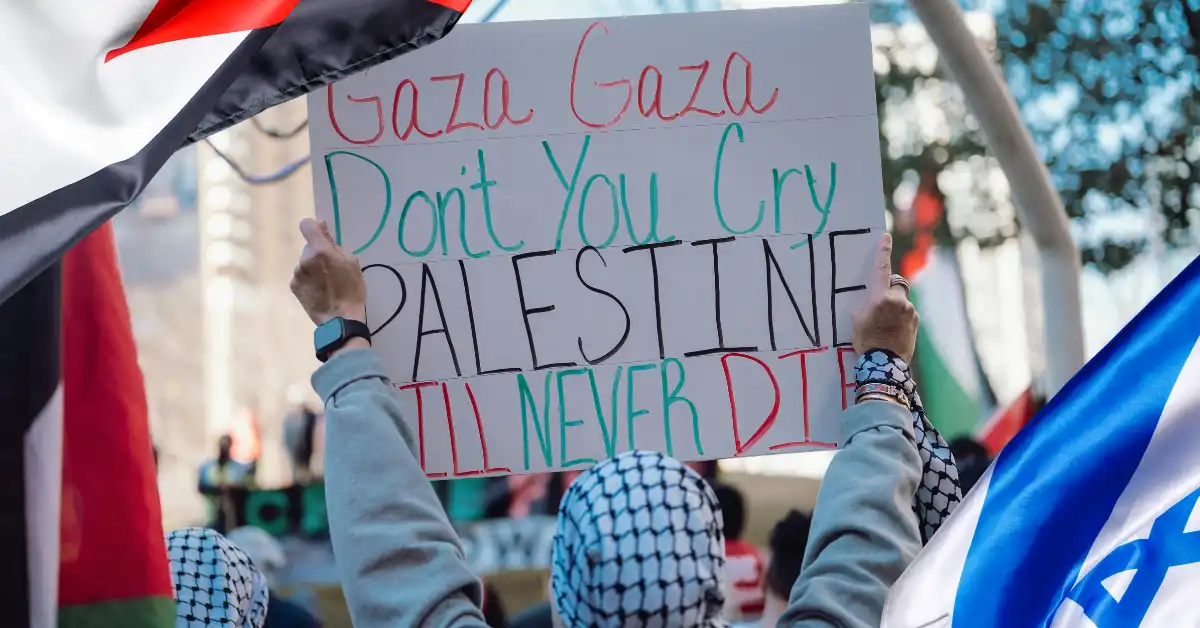
The Israel-Hamas War: October 7
Since 1948, thousands of Palestinians have lost their lives annually, including hundreds of women and children, while countless others have been injured or detained without trial by occupying Israeli forces. Against this backdrop, Hamas launched an attack on Israel on October 7, 2023, killing 1,200 people and taking 251 hostages into Gaza. Israel subsequently launched a massive military offensive in the strip. According to data as of January 15, 46,707 Palestinians have been killed in Gaza due to these hostilities. Furthermore, over 109,660 individuals have been injured, and more than 11,160 are reported missing. In the West Bank, 852 people have been killed, including 175 children, with 6,700 wounded. According to UNICEF, at least 14,500 children have died, thousands more have been injured, 17,000 have been separated from their families, and one million have been displaced. The latest data from the UN Office for the Coordination of Humanitarian Affairs, the World Health Organization, and the Palestinian government as of January 15 indicates that nearly all residential buildings in Gaza have been partially or completely destroyed. Eighty percent of commercial establishments have sustained damage, and 88 percent of school buildings have been devastated. The healthcare sector has suffered a catastrophic blow, with only 50 percent of hospitals remaining partially functional. Approximately 68 percent of the road network and an equivalent amount of agricultural land have been decimated. As of December 27, 2024, more than 200 journalists have been killed in the Gaza war. According to the Committee to Protect Journalists, the ongoing conflict has claimed the lives of at least 217 Palestinian, three Lebanese, and two Israeli journalists.Terms of the Gaza Ceasefire Agreement
Following the news of the ceasefire, many Palestinians in Gaza were seen celebrating in the streets. This agreement will allow millions of displaced Palestinians from Gaza City and the southern regions to return to their homes. The agreement is scheduled to take effect on Sunday, January 19, and will be implemented in three phases:Phase One (6 weeks):
- Israel will withdraw its troops up to 700 meters into the interior of Gaza.
- Hamas will release 33 Israeli hostages.
- Israel will release 2,000 Palestinian prisoners, including 250 serving life sentences.
- 600 trucks carrying aid and medical supplies will be permitted to enter daily through the Rafah crossing.
- 50 fuel-laden tankers will be sent to keep Gaza’s hospitals operational.
Phase Two:
- Hamas will release the remaining living Israeli hostages.
- Israel will commence a complete military withdrawal from Gaza.
Phase Three:
- The remains of the remaining deceased hostages will be handed over.
- A three-to-five-year reconstruction plan will be implemented under international supervision.
What are weapons of mass destruction?
United Nations Secretary-General António Guterres stated, "Humanitarian aid must reach Gaza immediately. Once the ceasefire commences, the political and military barriers will be removed, allowing us to deliver relief to the people of Gaza." UNICEF remarked, "This agreement was long overdue. The consequences of this war for Gaza's children have been catastrophic. At least 14,500 children have been killed, thousands have been injured, 17,000 are separated from their families, and one million have been displaced." The Gaza ceasefire agreement is being viewed as a critical step toward ending the long-standing conflict between Israel and Hamas. While questions remain regarding the full implementation and longevity of the deal, it represents a significant advancement on the path to establishing peace in the Middle East. It is hoped that the international community will provide the necessary support and assistance to both parties to ensure the successful realization of this agreement.