Switch language / ভাষা পরিবর্তন করুন
HistoryEnglish Edition

Operation Bunyan-un-Marsus: Pakistan’s Strategic Counter-Offensive Against India

Rakibul IslamRakibul Islam
•May 10, 2025•4 min read
Operation Bunyan-un-Marsus: Pakistan’s Strategic Counter-Offensive Against India

Pakistan has initiated a comprehensive retaliatory campaign against India, designated 'Operation Bunyan-un-Marsus'—a nomenclature derived from the Quranic concept of a 'wall of molten lead,' symbolizing an impenetrable bulwark of resistance.

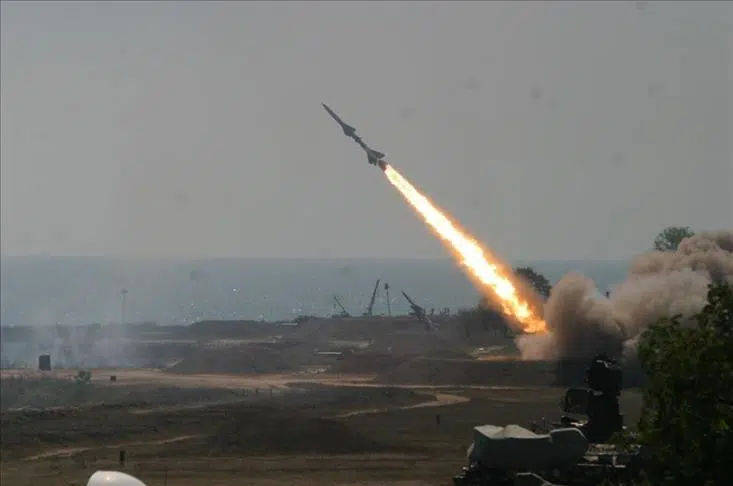
On May 10, the Pakistan Armed Forces initiated a wide-ranging counter-offensive against India, designated "Operation Bunyan-un-Marsus." The operation’s nomenclature is derived from the fourth verse of Surah As-Saff in the Quran, which translates to "a wall of molten lead," signifying an impregnable structure. This offensive serves as a direct riposte to India’s "Operation Sindoor," launched on May 6. While New Delhi has yet to disclose the full extent of its losses, the Pakistani military maintains that the operation successfully struck several strategic military targets across Jammu and Kashmir, Punjab, and Rajasthan—most notably, *BrahMos missile* depots and *S-400 air defense systems*.

The Genesis of Operation Bunyan-un-Marsus

The term "Bunyan-un-Marsus" (بنيان مرصوص) finds its origin in Quran 61:4 (As-Saff), which speaks of the divine favor bestowed upon those who fight in His cause, standing united "as if they were a solid structure." The Inter-Services Public Relations (ISPR), the media wing of the Pakistan military, stated that this title was chosen to symbolize the singular resolve and unified strength of their forces. Following the terrorist attack in Pahalgam on April 22, 2025, India launched "Operation Sindoor" on May 6, targeting nine installations within Pakistani territory. Pakistan claims to have neutralized five Indian fighter jets and captured several personnel in response to that initial foray. Islamabad has characterized the Indian operation as an egregious violation of its sovereignty, and it frames "Operation Bunyan-un-Marsus" as a necessary exercise of self-defense.

Will the Pahalgam Terrorist Attack Ultimately Ignite an India-Pakistan War?

Strategic Targets and Casualties of Operation Bunyan-un-Marsus

Citing reports from PTV, the Pakistani newspaper *Dawn* has compiled a preliminary list of the operation's effects. Sources indicate a sophisticated fusion of cyber warfare, airstrikes, and ground-based offensives. Key targets include:
  • Neutralization of India's Power Grid (70%): In the early hours of May 10, Pakistani cyber-commandos targeted the power infrastructure in North India, triggering cascading outages across eight states, including the capital, Delhi.
  • Destruction of the S-400 Missile Defense System: Stationed at the Adampur Air Force base, this Russian-manufactured system was reportedly destroyed by a domestically produced, 120km-range Fatah-1 missile fired from a Pakistani JF-17 Thunder aircraft.
  • Rajouri Military Training Center: A drone strike on a facility reportedly linked to India’s Research and Analysis Wing (RAW) resulted in the deaths of 15 officers.
The heaviest shelling occurred in Rajouri, Udhampur, and Pathankot. Pakistan claims to have obliterated Indian brigade headquarters, artillery batteries, and supply depots. Local administrative data indicates a toll of 32 lives lost, including 14 civilians. In Rajouri, a direct strike on a government office claimed the lives of three officials. Tensions have been further exacerbated by damage to religious sites, including the Shambhu Temple in Jammu. However, the Indian outlet *Anandabazar Patrika* has dismissed these Pakistani claims as fabricated.

International Reaction and the Threat of Nuclear Escalation

While the UN Security Council has yet to convene an emergency session, U.S. Secretary of State Antony Blinken has urged both nations to exercise "maximum restraint." Analysts warn that this represents the most significant move toward nuclear mobilization by both sides since the 1999 Kargil War. With India's *Agni-V* and Pakistan's *Shaheen-III* missile systems on active standby, the region is bracing for an era of profound instability. Military experts identify three primary drivers that threaten to spiral the conflict beyond control: 1. Both nations are approaching major national elections (India in 2029, Pakistan in 2027), leaving little political room for domestic concession. 2. The long-standing contention over India's revocation of Article 370 in Kashmir, compounded by new disputes over hydroelectric projects. 3. The breakdown of diplomatic mediation efforts from China and Middle Eastern powers, which has left few avenues for immediate de-escalation. The trajectory of this conflict rests precariously upon the intervention of the international community and the political will of policymakers in both capitals. Current indicators, however, suggest that South Asia is entering a period of protracted volatility.

Share this intellectual discourse

Help expand constructive dialogues on global affairs, law, and politics.

Rakibul Islam

Rakibul Islam

Author & Contributor, MaroonPaper

Contributing insightful research and analytical essays on law, politics, history, and international affairs for MaroonPaper.

Stay Connected with MaroonPaper

Subscribe to receive selected intellectual essays, critical commentaries, and translations directly in your inbox.

No spam, ever. Unsubscribe at any time.