The Execution of Nguyễn Văn Lém: A Catalyst for the De-legitimization of the Vietnam War
Kamrul Islam
•July 10, 2021•7 min read
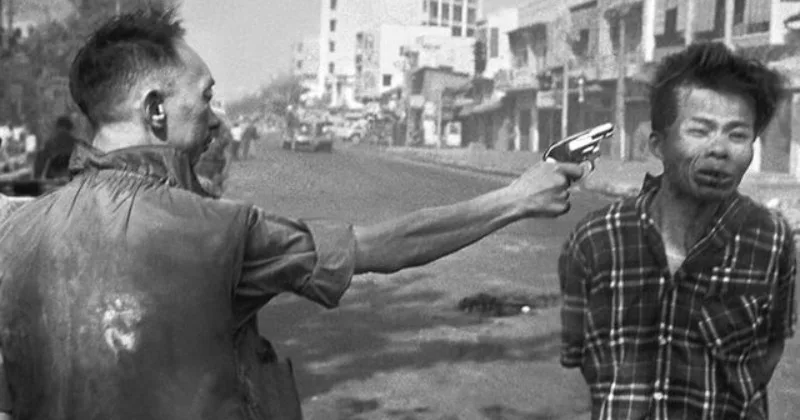
The muzzle flash erupts from the snub-nosed revolver, the recoil momentarily arresting the hand that wields it. In that singular instant, the prisoner’s visage contorts as the projectile finds its mark, piercing the cranium in a tableau of violence that would fundamentally reshape the global perception of the conflict.
When facts and material realities remain constant, how much room is left for stylistic flourish in the telling of a tale? How wide is the aperture for importing nuance and variation? And yet, I continue to ply my pen, unfettered and relentless, seeking to inject a different flavor into these familiar narratives. Above, the sky hangs heavy; a favored bird calls out, nature remains hushed, and the wind hums in my ear. And I? I sit in the dim, flickering light, a fixture in my chair, weaving stories with my thumbs upon this virtual screen. Tales of consequences—and, yes, for some, tales of success.
Today, I shall recount a story of an image—what one might call a "photo-narrative." When the winds of war shift amidst the chaos of carnage, the one who captures a moment of death on camera becomes a titan of historical record. Meanwhile, a soldier, bound by the rigid dictates of duty, must squeeze the trigger of a snub-nosed revolver to earn a salute. How curious! Do the drums of war beat within your mind? Does even the bird in mid-flight pause in sudden stillness? If the southern gate remains shut, I shall hold my pen of artifice. Shall we proceed to the story? Readers, after all, often find the accounts of war-torn years heavy on the palate, flipping pages after merely a few lines. I offer this, then, as a preamble. Let us turn to the execution of Nguyễn Văn Lém, but first, I invite you to contemplate the images below.
"The bullet has exited the snub-nosed pistol. The hand that held it absorbs the recoil of the discharge. The prisoner’s face contorts under the impact as the bullet enters his skull. To the left of the frame stands a soldier; the suddenness of the event seems to distort his features. Looking at this photograph, captured at the very instant of a man's death, many will undoubtedly experience a strange constellation of feelings: shock, a sense of psychological torment, and perhaps a flicker of guilt."
A retrospective of European historiography reveals that, while the continent languished in the medieval depths of superstition, squalor, and intellectual stagnation, the Iberian Peninsula served as a luminous beacon of civilization. It was within this crucible that the Muslim architects of the region forged the enduring, multifaceted heritage of Al-Andalus.
The event describes a moment during the war between North and South Vietnam, which began in 1955. For nearly two decades (1955–1975), the two sides remained locked in a conflict defined by the collision of ideologies.
**The Origins of the Vietnam War**
It is well known that following the Second World War, capitalism rose to prominence under American leadership, while Communism, led by the Soviet Union and China, expanded its reach. The capitalist nations, led by the United States, were united in their mission to halt the advance of Communism. During this period, the Soviet Union extended its sphere of influence to include Eastern Europe, Bulgaria, and East Germany, while also exerting pressure in parts of Asia, including China and Korea. The capitalist West viewed Communism as a profound threat to the democracy and economic order that emerged in the post-war era. This ideological rift provided the drumbeat for war in North and South Vietnam—a conflict that would become the darkest chapter in the history of the United States military. Known also as the Second Indochina War, it serves as a testament to how a single photograph can bind its subject to eternal infamy, or elevate its creator to the pinnacle of professional acclaim. A captured image has the power to mobilize the conscience of global humanity. In this piece, through a photographic lens, you will glimpse the essence of the conflict; in a future essay, I intend to write with greater clarity on the causes, the brutality, and the ignominious defeat of the United States in this war.
**The Execution of Nguyễn Văn Lém**
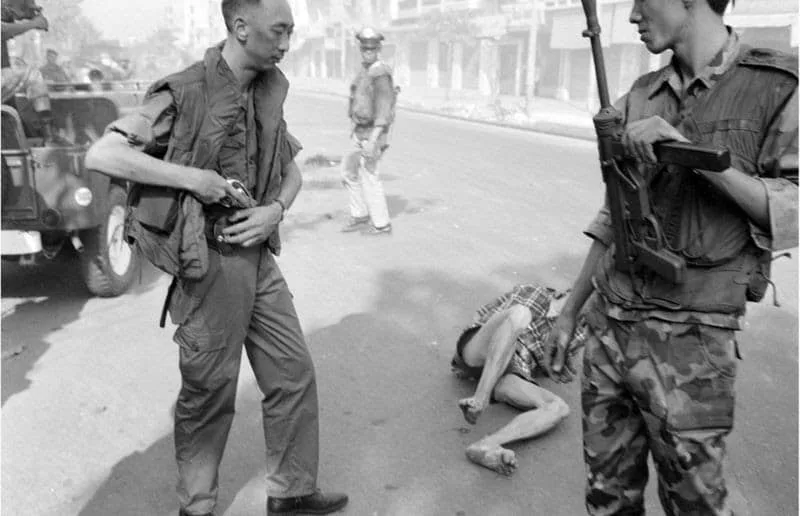
The year was 1968, February 1st. The war was in full fury, the outcome still shrouded in uncertainty. Nguyễn Văn Lém was a leader of the North Vietnamese "Viet Cong" guerrilla forces. He had participated in the "Tet Offensive," a surprise operation across various cities in South Vietnam, aimed at destabilizing the South Vietnamese military and their American allies. Amidst the chaos, Lém was apprehended near a mass grave in Saigon, the South Vietnamese capital. Soldiers dragged him before the jeep of Brigadier General Nguyễn Ngọc Loan, the chief of the South Vietnamese national police. Loan drew his revolver and aimed it at Lém’s temple. The moment was captured by photojournalist Eddie Adams.
"I thought he was just going to threaten or terrorize him. So, I naturally took the picture,"
Contributors Wanted • Write for MaroonPaper
Publish Your Research & Critical Analysis on MaroonPaper
Contribute in-depth essays on law, political philosophy, economics, and geopolitics to an intellectual readership.
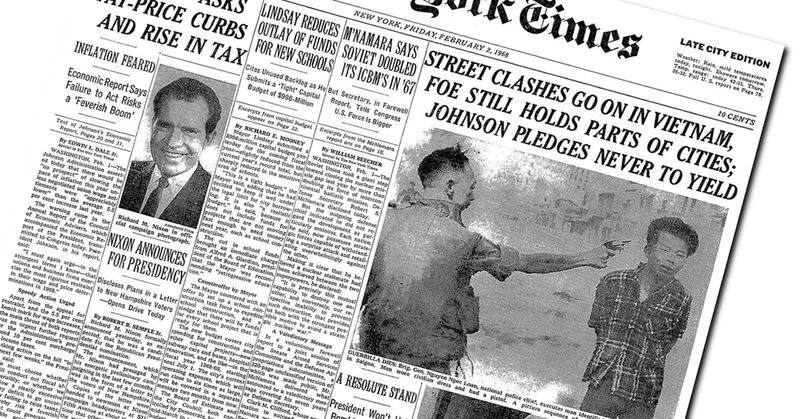
It has been alleged that Lém had killed six people, including the wife of a friend of Loan’s. Defending his actions after the war, Loan stated, "If you hesitate, if you don't do your duty, the men won't follow you." Even then, the Americans were beginning to realize that victory was an illusion. After Adams' photograph circulated, the sentiment against the U.S. government’s involvement grew significantly more intense. It stands as one of the most famous and controversial images of the Vietnam War, revealing the cruelty of a two-decade-long conflict. The photo appeared in newspapers and media outlets worldwide, propelling Eddie Adams to fame and ultimately earning him the Pulitzer Prize.
Widely recognized as one of the world's inaugural written constitutions, the Charter of Medina serves as a seminal historical document, establishing foundational precedents for the Islamic state, religious pluralism, and the architecture of social cohesion.
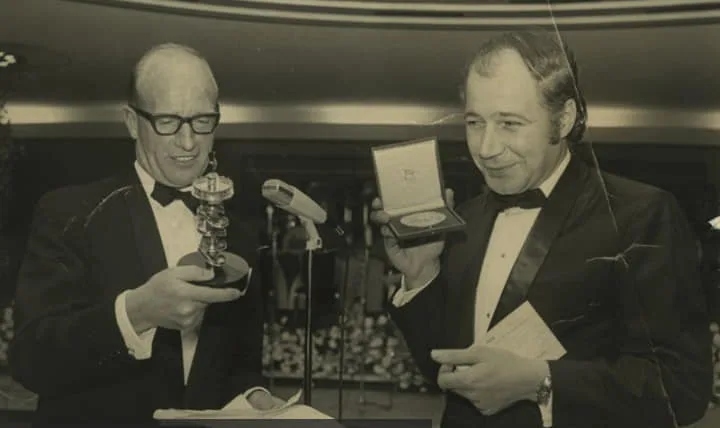
Despite the immense acclaim the photograph brought him, it haunted Adams for the rest of his life. Upon accepting the award, he remarked with regret, "Two people died in that photograph: the recipient of the bullet and General Nguyen Ngoc Loan. The general killed the Viet Cong; I killed the general with my camera."
Eddie Adams while accepting the Pulitzer Prize
**The Life of the Executioner Post-War**
Eddie Adams and Brigadier General Loan maintained contact for many years. Towards the end of the war, Loan fled to the United States, where the immigration authorities initially sought to deny him entry due to the notoriety of that very image. The Americans asked Eddie Adams to testify against Loan, but Adams, in a turn of conscience, testified in his favor. Though Loan was eventually granted permission to remain in the United States, the past pursued him until his death. He opened a Vietnamese restaurant in the U.S., but success remained elusive. Once his history became common knowledge among the American public, his business suffered, and it is said that people would even scrawl vitriol against him on the walls of his restaurant's restrooms. Like any potent symbol, this single photograph remains an embodiment of the brutality of all wars—past, present, and future.
Note: The Pulitzer Prize is widely recognized as the highest honor in the United States for journalism, literature, and music. It was established by Joseph Pulitzer, the Hungarian-American journalist and a pioneer of "yellow journalism." The prize is awarded in 21 categories.
Share this intellectual discourse
Help expand constructive dialogues on global affairs, law, and politics.
Kamrul Islam
Author & Contributor, MaroonPaper
Contributing insightful research and analytical essays on law, politics, history, and international affairs for MaroonPaper.