
A History of Nomenclature
By definition, a strait is a narrow body of water that connects two larger seas or gulfs. Such is the Strait of Hormuz, known in Persian as *Tangeh-ye Hormuz*. Historical records suggest the strait derives its name from the Kingdom of Hormuz, which held sway over the eastern Persian Gulf from the 10th to the 17th centuries. The kingdom fell under the dominion of the Seljuk Empire, followed by the Mongol Ilkhanate under Hulagu Khan, and eventually, Portuguese colonial rule. By the 17th century, it was incorporated into the Safavid Empire of Iran. Some sources posit that the nomenclature evolved between the 11th and 18th centuries. Historians suggest the term "Hormuz" is derived from the Persian word *Ohrmazd*, meaning "date palm." Locally, it is also believed that the name bears an affinity with *Ahura Mazda*, the supreme deity of ancient Persian Zoroastrianism.The Geography of the Strait
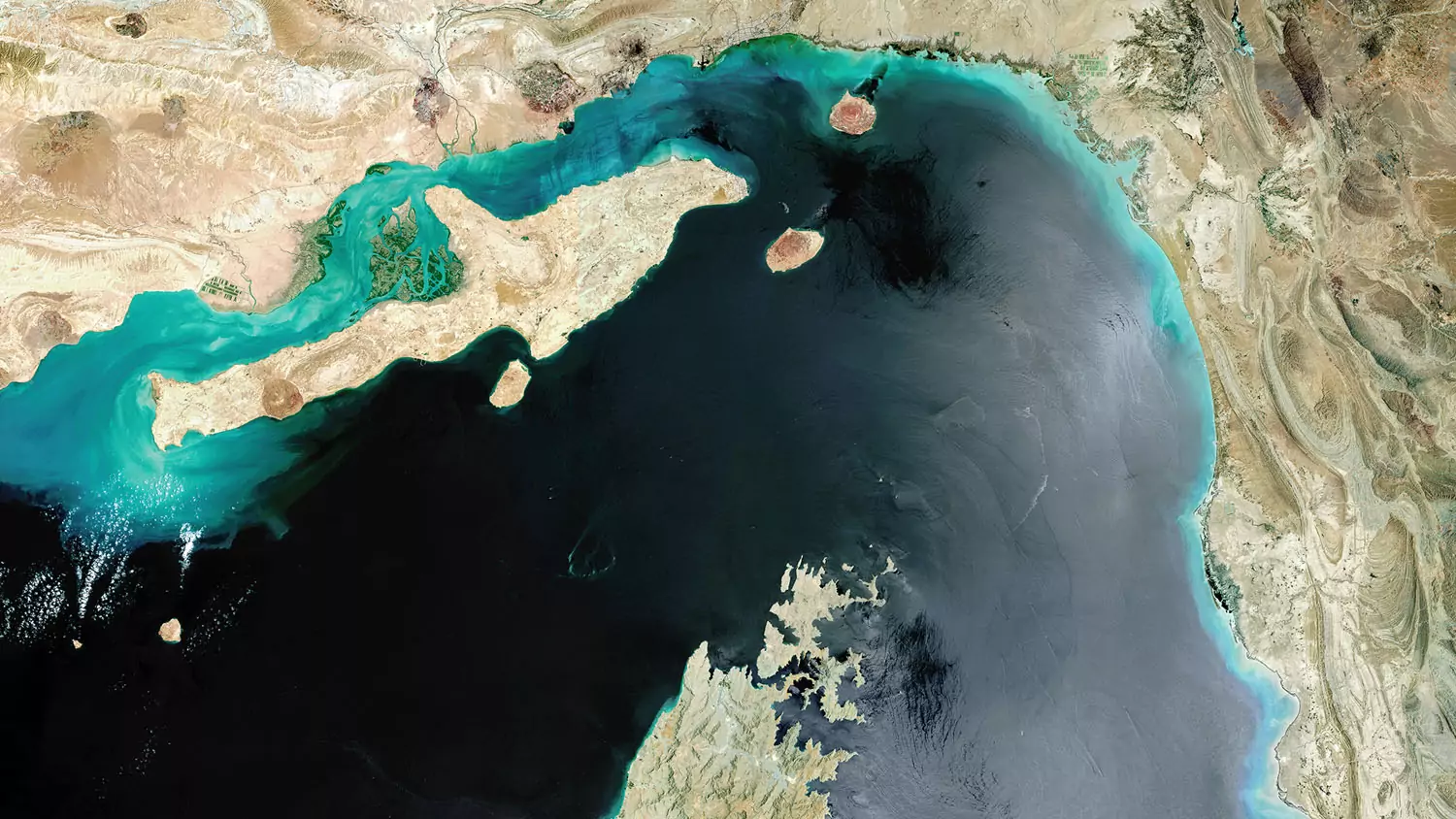
The Strait of Hormuz is, fundamentally, a narrow maritime passageway connecting the Persian Gulf in the west to the Gulf of Oman and the Arabian Sea in the east, effectively separating the Iranian mainland from the Arabian Peninsula. Spanning 34 kilometers in length, it serves as the vital maritime link between Iran and the Sultanate of Oman.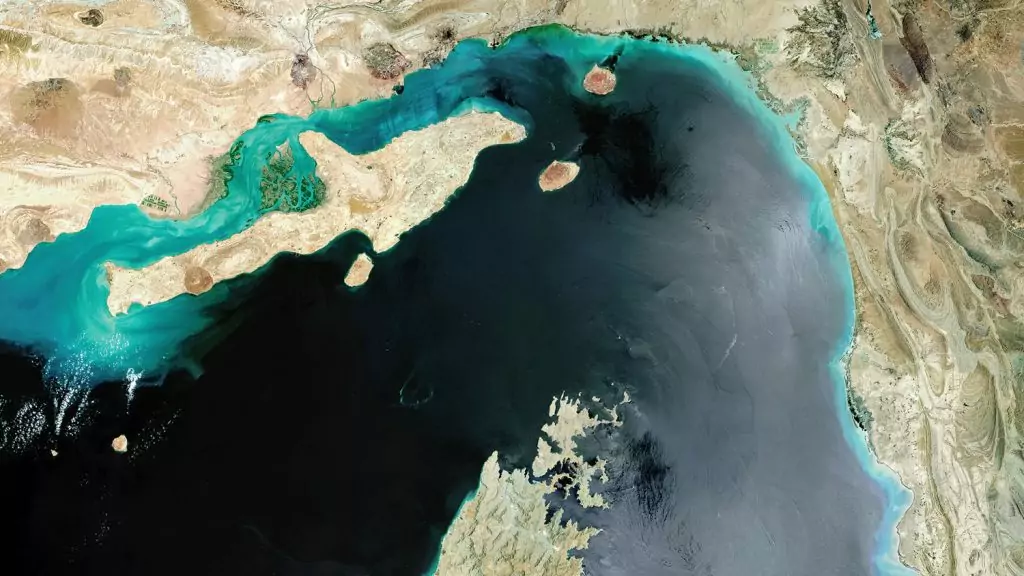
Read More: The Moroccan Nationalist Movement and Sultan Muhammad
Islands and Ports
The strait is dotted with several islands, including Hormuz and Qeshm. The surrounding coastlines have functioned as commercial centers linking China, India, and Africa since antiquity. Qeshm Island, located roughly five miles from the Iranian coast, falls under the jurisdiction of Iran's Hormozgan province. Notably, the strategic port of Bandar Abbas—the capital of Hormozgan—serves as the cornerstone of Iranian maritime power. The strategic value of this region is not a modern phenomenon; it was vital during the eras of the Mamluks, Umayyads, and Abbasids. It was, in fact, the mastery of these maritime routes that underpinned the Ottoman Sultan Mehmed II’s conquest of Constantinople in 1453. In military parlance, such regions are deemed "choke points." Throughout history, control over these narrow geographic advantages has allowed smaller, weaker forces to hold off superior armies, a tactical reality that remains as relevant today as it was in the time of William Wallace or the ancient Greeks.The Strait in the Contemporary Global Economy
The Strait of Hormuz may be narrow, but it is sufficiently deep and wide to accommodate the world’s largest oil tankers. It is the primary energy artery of the planet; global energy security is essentially contingent upon its fluidity. Approximately one-third of the world’s seaborne petroleum exports transit through this channel.The Persian Gulf Economies
The maritime accessibility of Iraq, Kuwait, Qatar, Bahrain, and the United Arab Emirates is entirely dependent on the strait. For these nations, there are no alternative maritime routes to the open sea. Saudi Arabia, too, relies on the strait for transit to the Arabian Sea. According to the Energy Information Administration (EIA), the Gulf states export roughly 80 percent of their total output through the Strait of Hormuz. For OPEC members, the strait is the singular, non-negotiable exit point for their fiscal survival. Furthermore, the Asian markets—China, India, Japan, South Korea, and Singapore—are heavily dependent on Middle Eastern energy. Approximately 76 percent of Asia's energy imports transit this corridor.Oil Transportation
Global trade is anchored in maritime logistics. Every ten minutes, an oil tanker passes through this 60-kilometer-long bottleneck, carrying a portion of the 62 percent of global oil supply that transits these waters. This flow constitutes 50 percent of Japan’s energy needs, 40 percent of Western Europe’s, and 5 percent of the United States’. As a nexus for the Near East, Far East, and Oceania, the strait facilitates the transit of 14 supertankers, carrying up to 15.5 billion barrels of crude. The region holds 57 percent of the world’s crude oil reserves and 45 percent of its natural gas reserves.Read More: What Do We Owe Afghanistan?
Natural Gas Exports
One-third of the world’s liquefied natural gas (LNG) passes through Hormuz. Qatar, one of the world's leading LNG producers, relies almost exclusively on this route for its global distribution.International Trade
The Strait of Hormuz remains the world’s busiest maritime thoroughfare. Daily, 21 million barrels of oil are funneled through the strait, with 76 percent destined for China, Japan, India, and other Asian economies. In monetary terms, this represents a daily flow of $1.197 billion in oil exports from OPEC-member states, accounting for 20 percent of global annual oil demand.Western Dependency
While the majority of this energy flows eastward to Asia, the route remains vital to the West. Because American and European firms hold significant equity in Middle Eastern extraction projects, their economies are deeply intertwined with the secure passage of these tankers. The U.S. receives approximately 30 million barrels per month via this route, accounting for 10 percent of its monthly imports. Since 2010, the U.S. has maintained a consistent naval presence in the region to safeguard these transit lanes against militant threats.At a Glance: The Strait of Hormuz
- In 2007, 40% of the world's total seaborne energy products transited the strait.
- According to the U.S. Energy Information Administration (EIA), in 2011, 35% of seaborne petroleum was carried through the strait.
- According to the EIA, 21 million barrels of oil were transported daily through the strait in 2018.
- In 2018, 18% of U.S. crude oil imports passed through the strait.
- In 2018, one-fifth of the world’s total energy supply passed through the strait.
- In 2019, 19 million barrels of crude oil were transported through the strait daily.