Switch language / ভাষা পরিবর্তন করুন
HistoryEnglish Edition

The Dissolution of the PKK: A Strategic Opening for Turkey or a Looming Crisis for the Kurdish Question?
Rakibul IslamRakibul Islam
•May 12, 2025•6 min read
The Dissolution of the PKK: A Strategic Opening for Turkey or a Looming Crisis for the Kurdish Question?

The declaration regarding the dissolution of the Kurdistan Workers' Party (PKK) presents a complex geopolitical crossroads: does it herald a genuine prospect for enduring peace within Turkey, or does it signal the onset of a new era of disenfranchisement for the Kurdish populace?

Turkey stands at a historic juncture. The Kurdistan Workers’ Party (PKK) has announced the cessation of its four-decade armed insurgency and its subsequent dissolution. This declaration marks a watershed moment in the political cartography of the Middle East. While it offers a long-awaited opportunity to end a protracted conflict, it simultaneously precipitates a complex set of questions regarding the future of Kurdish political aspirations. Should the PKK genuinely transition toward democratic recognition and reconciliation, the implications will extend far beyond Turkey’s domestic politics, fundamentally altering the security architecture and political equilibrium of the entire region. Yet, the path to implementation—encompassing disarmament and the potential release of imprisoned leadership—is fraught with complexity, particularly given Turkey’s rigid security doctrines, the fragmented state of the PKK’s affiliate cells, and deep-seated anxieties regarding cross-border Kurdish stability. The central question remains: will Ankara leverage this moment to establish a durable peace, or will the rights of the Kurdish population be further curtailed?

The PKK’s Dissolution: A Departure from Militancy?

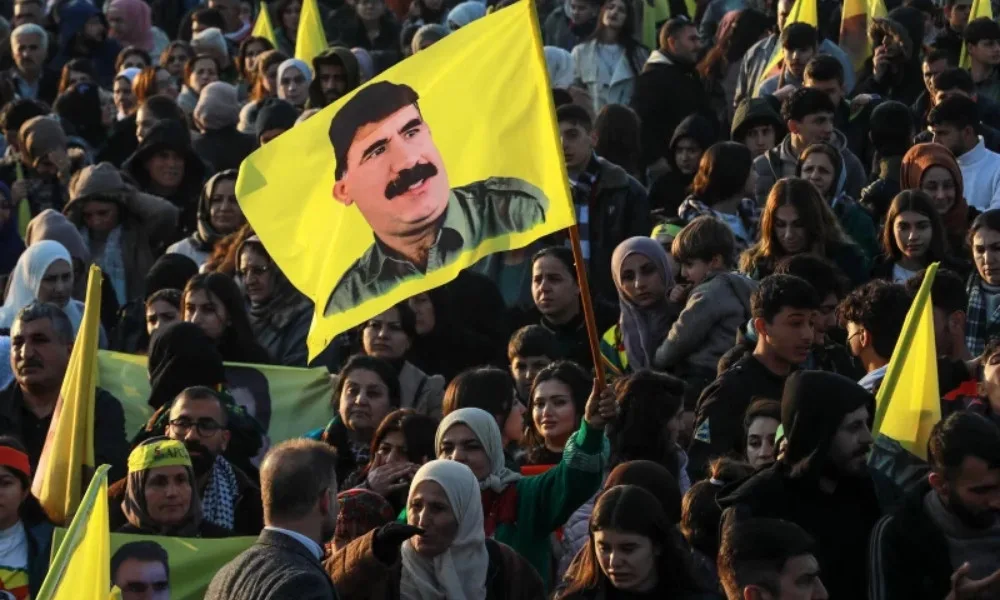
On May 12, 2025, the PKK formally announced that it would cease its armed operations and dismantle the group’s organizational structure. This decision follows the directive of imprisoned leader Abdullah Öcalan, who has long advocated for a negotiated settlement rather than continued armed struggle to secure Kurdish political rights. However, this decision warrants scrutiny beyond its superficial framing. It is inextricably linked to Turkey’s domestic political climate, the government’s policies toward its Kurdish minority, and broader regional geopolitical calculations. Since its inception in 1978, the PKK has been synonymous with a brutal chapter in Turkish history; the conflict between 1984 and 2025 claimed an estimated 40,000 to 45,000 lives, calling the very viability of the state into question. That a movement defined by such intermittent, high-intensity violence would pivot toward a cessation of hostilities is, in historical terms, nearly unfathomable. Yet, it must be acknowledged that the PKK has never acted in isolation; it has operated through a complex security network spanning the Iraq-Syria borderlands, akin to a contemporary "Silk Road" of militant logistics.

Political Recognition vs. The Terror Narrative

The call from imprisoned PKK leader Abdullah Öcalan—that "peace is impossible without the dissolution of the party structure"—is now manifesting as a historical reality. Nevertheless, the Turkish government continues to designate the PKK as a terrorist organization. Consequently, the transition from ceasefire to tangible outcome depends on whether Ankara is willing to recognize the PKK as a working group within the political sphere, a move that would represent a significant shift in the state’s domestic policy.

Disarmament and Implementation

While the PKK pledged to "dissolve the organization and end armed struggle" during its May 5–7 congress, it has yet to establish a concrete timeline for disarmament. According to the Firat News Agency, all parties must be brought to the negotiating table under uniform terms. This invites a critical uncertainty: will the PKK’s Syrian affiliates and the fractured, decentralized guerrilla units within Turkey abide by this mandate?

Future Challenges and Prospects

The Erdoğan administration has welcomed the declaration of dissolution. Yet, historical precedent suggests that while the Turkish government has promised peace talks with Kurds in the past, it has ultimately remained steadfast in its existing positions. Analysts suggest that the Erdoğan government now faces two distinct paths: 1. Utilizing the dissolution to guarantee the political, social, and cultural rights of the Kurds, thereby fostering a revitalized Turkish state. 2. Persisting in the old paradigm of repression, which risks incubating even greater conflict in the future.

The Turkish Political Landscape: Kurdish Rights or New Crises?

The political future of the Kurdish population following the PKK's dissolution remains highly contested. The PKK long served as the primary platform for Kurdish advocacy; its disappearance may initially lead to a weakening of Kurdish political representation. Conversely, there is the potential for Kurdish political parties to emerge with renewed vigor, securing a place in Turkey's parliamentary mainstream and broadening the avenues for advancing Kurdish rights. However, if the Erdoğan administration refuses to alter its designation of the PKK, the reintegration of members and subsequent political dialogue will likely fail. While a new political platform may emerge from the remnants of the movement, Turkey’s stringent security and anti-terror laws pose an immediate existential threat to such an initiative.

Regional Geopolitics: A New Polarization?

The PKK issue is not merely internal; it is a linchpin of regional geopolitics, with profound influence in the Kurdish-populated territories of Syria and Iraq. Following a dissolution, the regional balance of power will undoubtedly shift. The Syrian Democratic Forces (SDF) have already begun planning for enhanced stability through expanded public services. However, the Turkish-Iraqi border remains perilously vulnerable to security vacuums, where holdout elements could continue to launch sporadic cross-border incursions. For Ankara, this represents a strategic opening: by fostering a genuine rapprochement with the Kurds, Turkey could significantly expand its influence across the Kurdish regions of Syria and Iraq. Though historic, the PKK's declaration remains ambiguous in its ultimate intent. First, Turkey’s hardline security policies risk undermining the sincerity of the peace process. Second, if the fragmented affiliate organizations fail to engage in the political process, the surrender will remain incomplete. Finally, the response of the Turkish state to the potential release of Abdullah Öcalan—in a climate where judicial independence is already under intense scrutiny—remains the ultimate litmus test. The Erdoğan government must demonstrate a sincere commitment to peace and a respect for Kurdish rights; failing this, the dissolution of the PKK may only sow the seeds of a new, more unpredictable crisis. The PKK's declaration of disarmament has ignited hope for the conclusion of a long-standing armed conflict in the Middle East, yet its fruition depends entirely on the flexibility of Turkish law and order policies. What is required now is an inclusive political process that guarantees the fundamental rights of the Kurdish population. Concurrently, Turkey must craft a long-term strategy that accounts for the fluid dynamics of regional geopolitics. This strategy should not be viewed merely as a tactical gesture of reconciliation, but as a prerequisite for deep political reform—one that would allow the Kurdish population and the Turkish state to move together toward a shared, democratic future.

Share this intellectual discourse

Help expand constructive dialogues on global affairs, law, and politics.

Rakibul Islam

Rakibul Islam

Author & Contributor, MaroonPaper

Contributing insightful research and analytical essays on law, politics, history, and international affairs for MaroonPaper.

Stay Connected with MaroonPaper

Subscribe to receive selected intellectual essays, critical commentaries, and translations directly in your inbox.

No spam, ever. Unsubscribe at any time.