
Oil-Producing Regions
The world’s largest oil fields are concentrated in Middle Eastern nations such as Saudi Arabia, Iran, and Iraq. This region supplies a substantial portion of the world's total oil. The massive reserves within the Middle East have rendered the region strategically indispensable to many nations. Oil production here plays a critical role in shaping the global economy and the geopolitical landscape. Middle Eastern oil production is generally categorized into nine regions:- The Khuzestan oil fields of southwestern Persia;
- The oil fields of northern Iraq and northwestern Persia;
- The oil fields of southern Iraq;
- The oil fields of central Persia;
- The oil fields of Saudi Arabia and the Gulf coast;
- The oil fields of southern Israel;
- The oil fields of southeastern Turkey;
- The oil fields of northeastern Egypt;
- The oil fields of independent Libya.
- **Iran:** As the world's ninth-largest oil producer, Iran generates approximately 3.2 million barrels per day. However, output is currently constrained by international economic sanctions. Key fields include Masjed-e Soleyman, Gachsaran, Aghajari, Lali, Alborz, and Naft-e Shah.
- **Iraq:** The world’s sixth-largest producer, outputting roughly 4.8 million barrels per day. Key fields include Kirkuk, Ain Zalah, Zubair, Bai Hassan, Rumaila, and Jambur.
- **Kuwait:** Producing nearly 3 million barrels per day, Kuwait remains among the world's top 10 oil producers. Its most prominent fields are Raudhatain, Burgan, and Magwa-Ahmadi.
- **Israel:** The Heletz field.
- **Qatar:** The Dukhan field.
- **Saudi Arabia:** Producing approximately 12 million barrels per day—roughly 12% of global output. Extraction is active in the Dammam, Qatif, Ghawar, and Safaniya fields, with newer discoveries such as Khurais and Manifa.
- **Egypt:** Fields include Gemsa, Hurghada, Ras Gharib, Sudr, Belayim, and Ras Bakr.
- **Turkey:** The Ramandag, Garzan, and Germik fields.
- **Libya:** Fields include Bahi, Beda, Dahra, Mabruk, and Zallah.
- **Syria:** The Qara Shuk field, among others.
Read More: The Strait of Hormuz and its Significance in the Contemporary World Economy
Dr. Mosaddegh’s Role in the Nationalization of Iran’s Oil
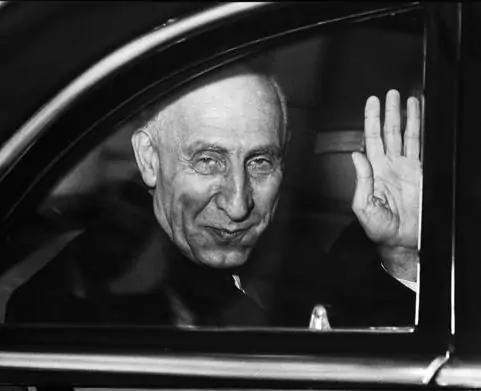
Iran stands as one of the most oil-rich nations in the Middle East. From the moment oil was discovered, Western powers sought to exert influence over the country. When the Iranian ruling class engaged in self-serving pacts with foreign interests, external actors moved to consolidate control over these national resources. In this climate, the nationalist leader Dr. Mohammad Mosaddegh moved to nationalize the oil industry to foster domestic economic development and liberate the nation from foreign interference. Appointed as Minister of Finance in 1951, Mosaddegh became the central figure in the nationalization movement. His contributions are reviewed below.The Formation of the Anglo-Iranian Oil Company
Oil exploration in Iran, then known as Persia, began during the Qajar dynasty. In 1892, a French archaeological team led by Professor Jacques de Morgan reported the potential for oil in Susa, western Iran. Based on these findings, British economist William Knox D’Arcy secured a concession from the Iranian government in 1901. The Anglo-Persian Oil Company (APOC) was subsequently established and discovered oil in the country's southwest in 1908. In 1909, the firm was rebranded as the Anglo-Iranian Oil Company (AIOC). It stood as the largest foreign entity operating in Iran, holding rights to extract, refine, and market oil in the southwest. Crucially, the agreement stipulated that the Iranian government would receive only 16% of the profits.Reza Shah’s Cancellation of the Contract
During the First World War, as oil consumption surged, the AIOC’s accounting practices became increasingly opaque, depriving the Iranian government of its fair share of royalties. In protest, Reza Shah cancelled the AIOC contract in 1932, leading to a diplomatic rupture. The British government responded by deploying warships to the Persian Gulf and taking the matter to the League of Nations.The New Agreement
Following the post-WWI maneuvering, a new agreement was signed in 1933. Its terms included:- The company was granted extraction rights over 100,000 square miles of Iranian territory for 60 years.
- The government’s share of profits was increased from 16% to 30%.
- A clause prohibiting the unilateral cancellation of the contract.
- Arbitration as the mechanism for dispute resolution.
- A commitment to prioritize the hiring of Iranian nationals.
The National Front and the Demand for Nationalization
A diverse array of political factions emerged in Iran during this period, ultimately uniting under Dr. Mosaddegh’s leadership as the "National Front" in opposition to Western influence. In 1950–51, the National Front campaigned for the nationalization of the oil industry. When Prime Minister Haj Ali Razmara rejected these demands, he was assassinated by a member of a religious extremist group, Khalil Tahmasebi, on March 7, 1951. Shortly thereafter, the Iranian Majlis passed a nationalization bill, which was subsequently approved by the Senate, though its immediate implementation remained elusive.The Nationalization Law
Following Razmara’s assassination, Hossein Ala was appointed Prime Minister and adopted a conciliatory policy toward the British. However, his reluctance to fully commit to nationalization led to his resignation. The next day, the Majlis elected Dr. Mosaddegh as Prime Minister. With the support of political parties, labor unions, and nationalists, the Shah was compelled to sign the oil nationalization law. This effectively terminated the AIOC's operations, as well as the royalty payments the government had previously received.Mediation Efforts
The nationalization deeply alarmed Britain and the United States. Although the U.S. declared neutrality, it remained in close coordination with London. In June 1951, discussions between the oil company and Iran failed. The British government appealed to the International Court of Justice in The Hague, to no avail. U.S. President Harry Truman eventually dispatched his personal envoy, Averell Harriman, to Tehran. Negotiations centered on two British demands: adequate compensation for the company and the retention of British management in extraction, refining, and marketing. Iran rejected the latter, and the talks collapsed.UN and International Court Intervention
In 1951, Iranian forces expelled British technicians from the Abadan refinery. The Iranian government revoked the residence permits of the remaining company staff, forcing a British withdrawal. The National Iranian Oil Company (NIOC) subsequently assumed control of refining operations. The British government then took the dispute to the United Nations.Read More: The Anatomy of the Cyprus Dispute
Dr. Mosaddegh traveled to New York to argue that the matter was an internal Iranian affair and outside the Security Council’s jurisdiction. The Council eventually referred the matter to the World Court, which ruled in 1953 that it lacked the authority to adjudicate the issue. While this was a legal victory for Iran, the economic and political paralysis at home weakened Mosaddegh’s power base.