Who Participated in the Marrakesh Conference?
Led by the Moroccan Ministry of Endowments and Islamic Affairs, the conference was sponsored by the Forum for Promoting Peace in Muslim Societies, headed by Shaykh Abdallah Bin Bayyah. The assembly brought together an unprecedented coalition: Sunni and Shia Islamic scholars, activists, muftis, representatives of religious minorities (including the Ahmadiyya), and clergy from various global religious traditions. In total, 340 Islamic scholars, jurists, muftis—those authorized to issue fatwas—and government ministers from across the Islamic world convened to deliberate on the protection of religious minorities, including Christians. Representatives arrived from diverse states such as Pakistan, Iran, Iraq, Nigeria, Saudi Arabia, Egypt, and the host nation, Morocco. Notable figures included the Pakistani Hanafi scholar and Mufti Muhammad Taqi Usmani, the Iranian Shia theologian Ayatollah Seyed Mostafa Mohaghegh Damad, the Iraqi Yazidi leader Khalid Amin Rumi, and the Palestinian Bishop Munib Younan. Beyond the Muslim world, government officials from the United States and Europe also participated. Over two days, attendees engaged in rigorous sessions. While non-Muslim delegates gathered in break-out sessions to refine the procedural framework and the declaration’s language, their Muslim counterparts debated the structural integrity and theological foundations of the text. Representatives from minority communities emphasized the necessity of moving beyond rhetoric toward tangible action. Several Muslim speakers voiced growing concern over the institutional and social injustices faced by minorities within their borders, arguing that Muslims cannot legitimately demand protection for their own co-religionists abroad while failing to guarantee the same rights to minorities living under their own jurisdiction.Read: The Strait of Hormuz and its Importance in the Contemporary Global Economy
Why Morocco?
Muslim-majority nations, particularly in the Middle East, remain mired in sectarian conflict. In response to this violence, the constitutional expert Shaykh Abdallah Bin Bayyah, under the auspices of the Forum for Promoting Peace in Muslim Societies, organized this landmark international conference. The organizers selected Morocco for its moderate stance, its celebration of cultural diversity, and its progress in the sphere of human rights. Morocco is often described as a "tolerant nation" where Christians are spared the physical and psychological persecution seen elsewhere. The Marrakesh Conference represents the first such gathering of its kind in 1,400 years of Islamic history.The Marrakesh Declaration on the Rights of Religious Minorities
The summit was held with the singular purpose of drafting a declaration that would serve as a global benchmark for the protection of persecuted minorities. Divided by modern geopolitical polarization, Muslim leaders for the first time in contemporary history issued a clear, unified rejection of religiously motivated persecution and discrimination, aligning themselves with international human rights frameworks. The Marrakesh Declaration draws its primary inspiration from the Charter of Medina—a 1,400-year-old document drafted by the Prophet Muhammad (PBUH) to establish peace between the warring tribes of Medina.Read about the UN Universal Declaration of Human Rights
For the uninitiated, the Charter of Medina served as the foundation for a city-state involving Muslims and Jews between 622 and 624 CE. It is widely recognized as the first written constitution in Islamic history and a seminal document in the evolution of constitutional law. It provided the blueprint for a multi-religious state, effective immediately upon the Prophet’s arrival in Medina. The objective of the Marrakesh Declaration was to provide a framework adaptable for modern national constitutions, ensuring compatibility with the UN Charter and the Universal Declaration of Human Rights. Specifically, it highlights the "constitutional contractual citizenship" and the principles of "freedom of movement, property ownership, mutual solidarity, and defense, as well as justice and equality before the law" for both Muslims and non-Muslims.Goals and Objectives of the Marrakesh Conference
The Marrakesh Declaration is defined by six primary objectives:The development of a new jurisprudence on inclusive citizenship;
This involves the evolution of legal principles that promote equal rights for all individuals, regardless of race, gender, ethnicity, or religion, emphasizing the necessity of non-discrimination in the implementation of national law.The conceptualization of contractual citizenship to ensure equal treatment in a multicultural society;
This principle asserts that citizenship should not be defined merely by political status but by a shared social commitment to values that foster equality and respect for diversity, transcending formal legal protections.The restructuring of Muslim educational institutions;
This aims to address the root causes of extremism by reforming curricula and teacher training to propagate a culture of peace and tolerance within Muslim communities.Supporting movements for the just treatment of religious minorities in Muslim-majority states;
This includes diplomatic engagement and the mobilization of civil society to ensure minorities are treated with equity and dignity.Read more: What are Human Rights? How can they be protected?
Revitalizing the tradition of hospitality for all religious groups;
This calls for a return to the Islamic ethos of generosity and kindness toward guests, regardless of their background, through interfaith dialogue and inclusive local initiatives.Eliminating Religious Misinterpretation and Defamation
Addressing religious misinterpretation and prejudice requires a multifaceted approach: promoting interfaith education, utilizing media to counter hateful propaganda, enacting robust legal safeguards against hate speech, and encouraging religious leaders to promote authentic, moderate theological interpretations.The Decline of the Muslim World
Once the global vanguard of science, economics, and cultural practice, the Muslim world has found itself weakened by internal discord and the machinations of foreign powers. Sectarianism has escalated into regional conflicts and power struggles. The Marrakesh Conference sought to diagnose this malaise and offer a path toward rejuvenation.Ongoing Violence
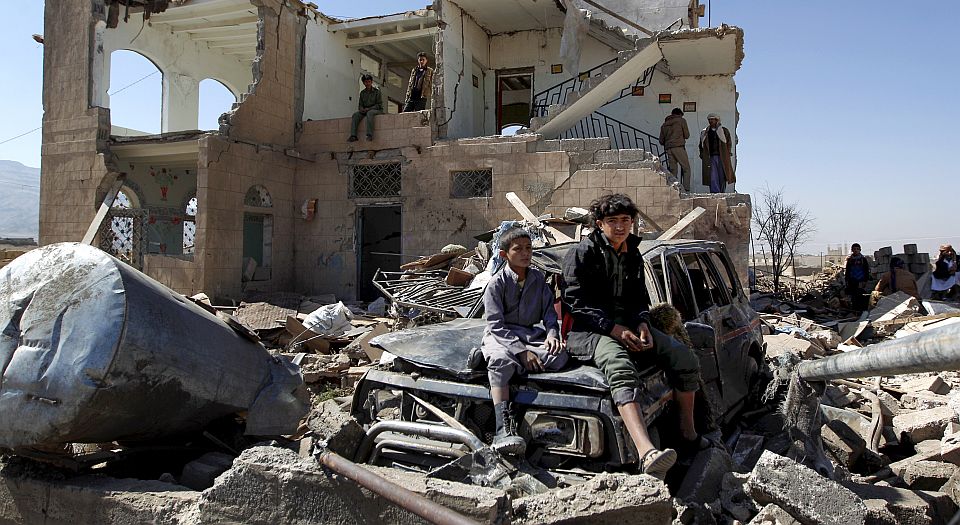
A critical focus of the summit was the current climate of violence. In Yemen, Syria, and Iraq, millions of innocent people—children, women, and the elderly—are perishing under the weight of bombardment and neglect. As Shaykh Abdallah Bin Bayyah noted, quoting Nietzsche: "When civilizations fall ill, it is the sages and philosophers who must serve as the healers." The summit was, in essence, a medical council for a fractured civilization.