
What is Happening in Ladakh?
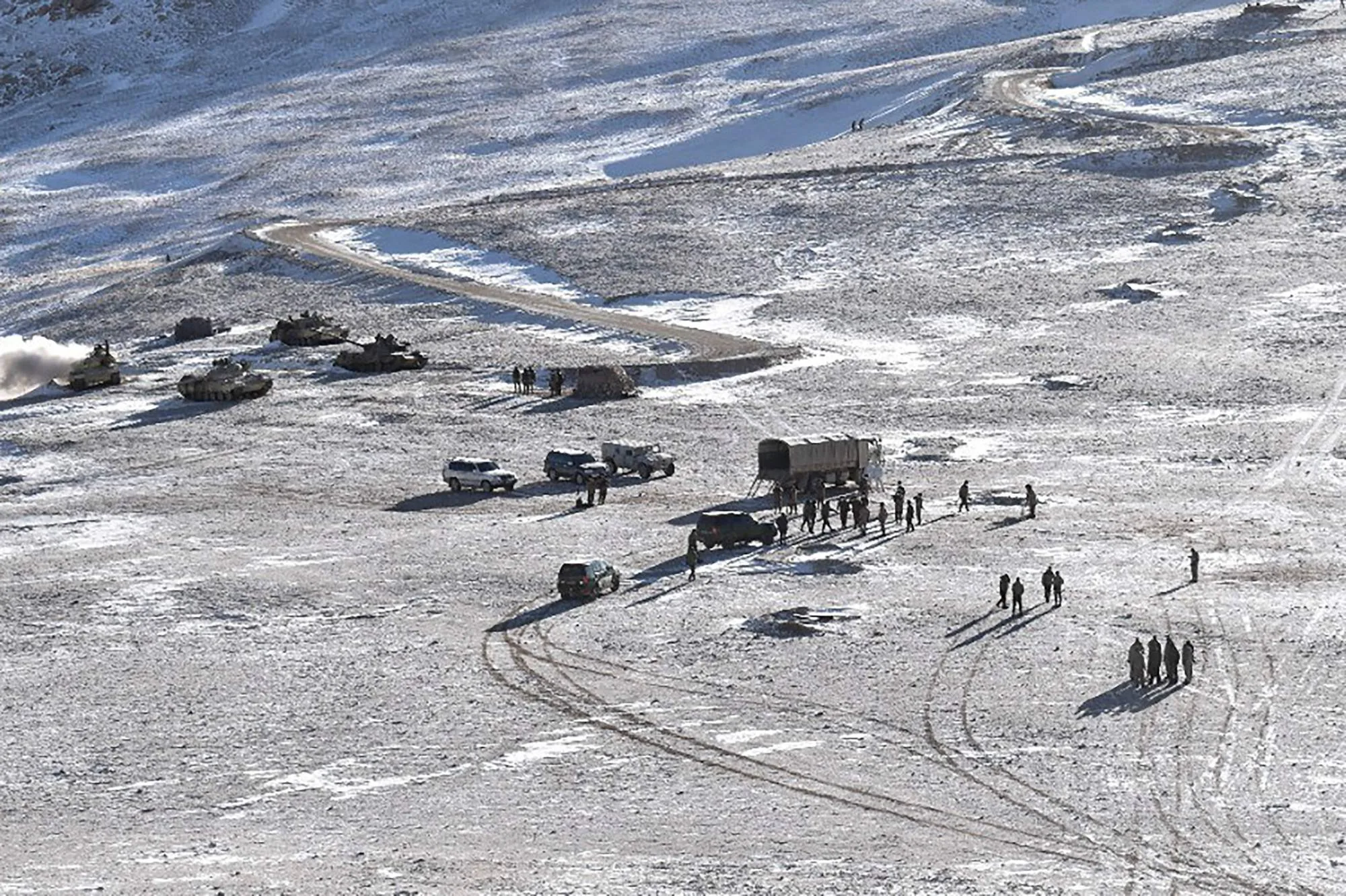
The recent clash between China and India occurred along the Galwan border in Ladakh. In 1996, the two nations signed an agreement prohibiting the use of firearms and explosives against one another. While China technically adhered to the treaty by eschewing gunfire, it utilized customized rods and clubs to brutally assault Indian soldiers, whom they accused of provocation. Initially, India denied any casualties. Shortly thereafter, the government admitted that three soldiers, including a captain, had been killed. Later, a more harrowing report emerged: 20 soldiers had died, and 120 were critically injured, with the potential for the toll to climb higher. While China remained reticent regarding its own losses, Indian military authorities claimed 43 Chinese casualties. Beijing has neither confirmed nor denied these figures; it has disclosed its territorial position without detailing the specific circumstances of the skirmish. Two days later, China’s release of ten captured Indian soldiers served as a tactical assertion that it was, in fact, India that had breached Chinese territory.
Is the USA a Leading Terrorist State?
The reality remains that China detained Indian soldiers and, to this day, retains its positions in the region. After a prolonged silence following the attack, Prime Minister Narendra Modi broke his reticence, asserting, “India has the capability to give a fitting reply,” and declaring that “China has not occupied any Indian territory.” One must ask: whom does this statement benefit? If the Prime Minister denies the Chinese occupation—ostensibly to satisfy his domestic support base—he effectively legitimizes that occupation. Much like the situation with Nepal, it is possible that China will soon incorporate this territory into its own maps. Indeed, Nepal has already successfully passed a parliamentary bill incorporating the disputed Kalapani region into its official map, and India was rendered helpless to intervene.
Why is China Acting Aggressively?
In recent times, India has found itself in confrontational standoffs with China, Nepal, and Pakistan simultaneously. The Indian government’s responses to these incidents have been curiously, if not laughably, erratic. From the capture and subsequent release of an Indian pilot by Pakistan, to the detention of Indian troops in Ladakh, to the shooting of Indian farmers by Nepali forces, these incidents do not appear to be isolated events. Two factors seem to explain this pattern: regional geopolitics and the testing of military mettle.
- Regional Geopolitics
- A Testing Ground for Arms
Regional Geopolitics
Two kings cannot coexist in one realm; for one to survive, the other must yield. The strategic significance of South Asia is immense, a fact both nations recognize and leverage. Both Beijing and New Delhi covet regional hegemony, but the question of who will achieve it remains the crux of the matter. Both countries are working to retain their neighbors within their respective spheres of influence. However, strategic acumen will determine the victor. This competition is governed by a few key indicators of success:
- The depth of political statecraft,
- The caliber of human resources,
- Military capability, and
- Economic robustness.
Judging by these metrics, it becomes clear who is poised to dominate: India or China. A massive population is of little utility unless that population is highly skilled and productive.
Political Strategy and Skilled Manpower
While both nations possess vast size and population, these are not the sole determinants of success. India is a sophisticated, democratic state. While constitutionally secular, its practice is increasingly far removed from that ideal. Indeed, India is arguably moving toward the global vanguard of sectarianism—a trend reflected in the activities of its diaspora and the subsequent responses of foreign governments. Domestically, the situation is even more alarming. The treatment of Muslims, the National Register of Citizens (NRC), and the Citizenship Amendment Act (CAA) have laid bare the country’s sectarian drift—a transformation that has intensified significantly under the current Bharatiya Janata Party (BJP) government. With these internal fissures as a backdrop, India’s calculations regarding China have been remarkably amateurish. The friction at the Galwan border was the culmination of deteriorating relations; India never anticipated that such a confrontation could occur at that juncture.
Secular India and the Nature of its so-called Secularism
Beyond the conventional narratives propagated by Western media, a closer inspection of the map reveals a starker reality: the perpetual instability in the Middle East serves as a backdrop to a ruthless shadow conflict over the Strait of Hormuz—the critical maritime chokepoint through which twenty percent of the world’s petroleum supply flows.
The 1996 agreement was established precisely to avoid such volatility, stipulating that neither side would use firearms along the Line of Actual Control (LAC). For four decades, despite occasional scuffles, the status quo held. India signed the agreement with a sense of complacency, but China did not; it quietly built alternatives and maintained its momentum. India sought a policy of avoidance, but China’s inherently strategic, aggressive posture created instability at the Galwan border. They prodded India into conflict and then dealt a crushing blow. In that high-altitude, snow-covered valley, the injured soldiers were left to succumb to the biting cold, while others disappeared into the crags. It seemed as though every factor had conspired against India.

A four-foot-long iron rod. One to one-and-a-half feet of the tip is adorned with sharp, nail-like spikes, a weapon used to kill Indian soldiers. (Anandabazar)
The situation reached a point where China breached Indian territory, killed soldiers, and took others captive as a strategic maneuver. By later releasing them, Beijing preserved its own international image while exposing India’s impotence. Even today, China maintains its position along the LAC, while India responds with little more than rhetoric. Reports indicate that China is actively damming the Galwan river, using bulldozers to pile rocks 600 meters upstream. Heavy weaponry traverses a five-kilometer stretch, and the river’s flow has been nearly halted—all while India’s reaction remains inconspicuously tepid. While the BJP and India may project a conservative image domestically, they have consistently faltered on the international stage, suffering setbacks even against Nepal and Pakistan. Most recently, a farmer was killed by Nepali police fire on the Bihar border. Despite allegations that the police crossed into India, Nepal’s version of events prevailed, and India was forced to retreat.
In South Asian politics, India enjoys the luxury of Bangladesh’s neutrality only as long as the Awami League remains in power. Should there be a change in government, India may well lose that neutrality. Yet, whether Bangladesh possesses the diplomatic courage to dictate or influence regional policy is a separate matter. What is clear is that India is losing the contest for South Asian hegemony to China due to a lack of strategic sophistication and a waning appeal among neighboring states. China is filling this vacuum by courting Nepal, incentivizing Pakistan, and providing development assistance to Bangladesh. Amidst the Galwan border tension, China granted tariff exemptions on 97% of Bangladeshi exports—a move that naturally pulls Dhaka closer to Beijing.
Who Leads in Military Might?
In the competition between modern global powers, military capability is a primary survival metric—whether through indigenous production or procurement. China and India are undoubtedly engaged in an arms race. India, however, remains reliant on imports, with minimal domestic manufacturing. China, conversely, produces its own armaments and has emerged as one of the world’s leading arms exporters—ironically, selling significantly to India. In a direct comparison of military capacity, China wins by a wide margin.
Is the RSS a Threat to India’s Secularism?
Publish Your Research & Critical Analysis on MaroonPaper
Contribute in-depth essays on law, political philosophy, economics, and geopolitics to an intellectual readership.
Both nations are nuclear-armed, but according to Global Firepower (GFP) rankings, China sits one step ahead of India. Behind the United States and Russia, China holds third place globally, while India ranks fourth. Among 138 nations, China commands 2.123 million active military personnel compared to India’s 1.444 million. While India maintains a larger reserve force—2.1 million against China’s 510,000—the discrepancy in active, high-tech capacity is telling.
| Comparison Metric | India | China |
| GFP Ranking | 3rd | 4th |
| Active Personnel | 2,123,000 | 1,444,000 |
| Defense Budget | $23.7 Billion | $6.1 Billion |
| Aircraft | 3,210 | 2,123 |
| Warships | 777 | 285 |
| Combat Aircraft | 1,232 | 538 |
| Helicopters | 911 | 722 |
| Tanks | 3,500 | 4,292 |
| Armored Vehicles | 33,000 | 8,686 |
| Self-Propelled Artillery | 3,800 | 235 |
| Field Artillery | 3,800 | 4,060 |
| Rocket Projectors | 2,650 | 266 |
| Submarines | 74 | 16 |
| Aircraft Carriers | 2 | 1 |
| Destroyers | 36 | 10 |
| Frigates | 52 | 13 |
| Corvettes | 50 | 19 |
| Coastal Patrol | 220 | 139 |
| Airports | 507 | 347 |
| Ports and Terminals | 22 | 13 |
A glance at this comparative table reveals why India would struggle in a direct battlefield confrontation.
Who Prevails in Economic Warfare?
The economy is the backbone of the state. Since antiquity, both India and China have possessed the capacity for self-sufficiency; success, however, depends on policy and execution. India’s economy is currently enduring its worst period in 70 years.
As of March 31, 2020, India’s total external debt stood at $563.9 billion—exceeding 20% of its GDP. These debts are owed to multilateral and bilateral sources, including the Asian Development Bank (ADB), the International Development Association (IDA), the International Bank for Reconstruction and Development (IBRD), and the International Fund for Agricultural Development (IFAD). Bilaterally, India has borrowed from Japan, Germany, France, the United States, and even China.
Beginning in late 2019, the situation deteriorated steadily; GDP growth fell to 4.5%. Estimates from S&P put growth at 3.5%, India Ratings at 3.6%, and Moody’s at 2.5%. Some projections even suggested that the impact of the COVID-19 pandemic could slash GDP growth to 2%, potentially setting the country back 30 years. Economist Raj Krishna famously dubbed such sluggish growth the “Hindu rate of growth.”
In the first seven months of the 2019-20 fiscal year, the fiscal deficit reached nearly 7.5 trillion rupees. In 30 major cities, 1.28 million finished apartments remain unsold. A third of India’s textile mills are at risk of closure this year. Major industrial firms like Tata and Maruti have halted production. A report from the Japanese firm Nomura blames the stagnation on declining consumer spending, weak investment, and a struggling service sector.
The volatility currently defining Middle Eastern statecraft is anchored by the convergence of the intractable Palestinian crisis and the Abraham Accords—a transformative diplomatic framework that continues to reshape the regional architecture.
How Sikkim became a part of India?
Even amidst the Ladakh conflict, China’s Shanghai Tunnel Engineering Co Ltd secured a contract to build a Delhi subway line. Furthermore, the Board of Control for Cricket in India (BCCI) maintains its partnership with the Chinese firm Vivo for the IPL, a deal worth 4.4 billion rupees annually. The irony of the "boycott China" movement is that if enforced, the BCCI claims it would be unable to organize the IPL, leading to further economic stagnation. On a brighter note, some corporations like Apple are considering shifting investment from China to India, which would be a significant boon for New Delhi.
In January, China suffered losses estimated at $420 billion due to the COVID-19 outbreak. Yet, based on official figures, China has maintained an average annual growth rate of 9% over the past two decades. Despite severe trade friction with the U.S., China achieved 6.4% growth in the first quarter of last year. While an export-reliant economy currently faces stagnation, Beijing is navigating these headwinds with relative proficiency.
According to Reuters, China invests $137 billion annually worldwide. Fosun, a subsidiary of Shanghai Yuyuan Tourist Mart, recently announced the acquisition of a 55.4% stake in the French jewelry brand Djula. In India, Alibaba holds stakes in Paytm, BigBasket, and Zomato. Tencent has invested in Ola, Flipkart, and Byju’s. Chinese capital is deeply embedded in the Indian financial sector, and one of the largest single acquisitions remains Fosun’s $1.1 billion purchase of India’s Gland Pharma. Annually, China sells mobile phones in India worth over $7.2 billion.
Is This a Testing Ground for Weapons?
China has recently become aggressively proactive in arms production. It is currently in possession of numerous fighter jets, tanks, and missile systems that have not yet been battle-tested. The Western world would never provide the theater for such testing, nor would they allow China to showcase these weapons so easily. In this context, India is the most convenient and safe adversary, and it may serve as the ideal proving ground for Chinese military hardware. China’s strategy seems to be to poke and prod India until it is forced into a tactical error, at which point Beijing can tighten the vice. If India falls into this trap, it may never recover its footing.
What is the Final Outcome?
As the standoff continues in the Galwan Valley, both sides are engaged in a show of force. India has deployed Chinook and Apache helicopters, P-8 surveillance aircraft, and Il-76 strategic airlifters to the Ladakh skies. India has also decided to rush the purchase of 12 Su-30 and 21 MiG-29S fighters from Russia at a cost of 50 billion rupees. China, meanwhile, is conducting its own large-scale war drills, with footage circulated across news channels.
Read More: Nagorno-Karabakh conflict: Peace in the South Caucasus region
Who will prevail in this contest is becoming increasingly clear. However, the direction of the wind is never certain, and neither nation’s strategic allies are likely to remain idle. Russia, China’s closest partner, is the same country from which India is urgently purchasing fighter jets. Meanwhile, the United States remains at odds with Beijing over Hong Kong and other issues. Perhaps the only silver lining in this display of posturing by these two giants is that smaller regional nations may find the leverage to negotiate their own rights.
Regardless of the tactical advantages or gains, a protracted conflict would set the post-COVID world back by a century. The world is already grappling with the pandemic; this state of war only further erodes global peace. This bellicosity must be halted at any cost. Doing so would benefit both parties and offer South Asia relief from its current volatility. We no longer desire war.