
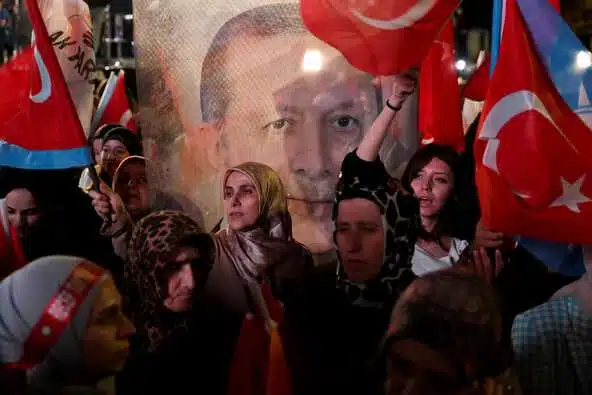
On May 28, 2023, Turkish President Recep Tayyip Erdogan secured re-election in an intensely contested presidential runoff, extending his two-decade tenure at the helm of the Turkish state. Erdogan’s electoral triumph has ignited an expansive global discourse spanning domestic statecraft, macroeconomic vulnerability, and international strategic alignments.
While steadfast supporters laud Erdogan for steering Turkiye into an assertive regional power with major infrastructure expansion and indigenous defense capability, domestic critics and international observers view the victory with trepidation, citing the systemic consolidation of executive authority and the progressive erosion of democratic pluralism.
Erdogan’s Victory in Turkey Election in 2023: Stability or a Threat to Democratic Pluralism?
Beyond party rhetoric and television hyperbole lies the harsh calculus of South Asian geopolitics: why regime change in Kolkata exposes the collapse of regional buffer zones and strips the veneer from Delhi’s structural dominance over Bangladesh.
Domestic Governance: Executive Centralization and Institutional Decay
Erdogan’s prolonged governance—transitioning from the premiership in 2003 to an all-powerful executive presidency ratified in the 2017 constitutional referendum—has fundamentally reshaped the architecture of Turkish republicanism. The current state apparatus is marked by extensive executive decree powers, direct oversight over the judiciary, and severe constraints on independent media organizations.
The campaign demonstrated how structural state control over the broadcasting authority (RTÜK) and state resources tilted the playing field against opposition candidate Kemal Kılıçdaroğlu. Moving forward, Turkiye faces the critical challenge of preventing the complete atrophy of its remaining checks and balances, safeguarding judicial independence, and preserving civil society space.
Publish Your Research & Critical Analysis on MaroonPaper
Contribute in-depth essays on law, political philosophy, economics, and geopolitics to an intellectual readership.
Macroeconomic Pressures: Unorthodox Monetarism vs. Orthodox Reality
Economic headwinds represent the most urgent domestic trial confronting the administration. Over previous years, Erdogan’s unorthodox monetary doctrine—insisting that low interest rates combat inflation—precipitated a catastrophic collapse in the Turkish lira and propelled headline inflation above 85% in late 2022.
Depleted central bank foreign exchange reserves, escalating foreign currency debt obligations, and surging living costs forced an inevitable recalibration. The appointment of Mehmet Şimşek as Treasury and Finance Minister alongside conventional central bank leadership signaled a begrudging pivot toward orthodox interest rate hikes. Whether this stabilization agenda can restore foreign direct investment while curbing cost-of-living distress remains an existential test.
Just two years after its triumph against Myanmar, Bangladesh secured another landmark verdict in the Bay of Bengal. An analytical deconstruction of the 2014 PCA arbitration in The Hague, equidistance vs. equity, South Talpatti Island, and the Blue Economy.
Strategic Autonomy: Balancing NATO, Moscow, and the Global South
Erdogan’s foreign policy is defined by a doctrine of strategic transactionalism and non-aligned assertiveness. Turkiye leverages its pivotal geographic crossroads connecting Europe, the Caucasus, and the Middle East:
- Transactional Atlanticism: As a vital NATO member, Ankara leveraged Sweden's accession treaty to extract defense concessions and F-16 procurement packages from Washington, maintaining strategic indispensability.
- Equidistance in the Ukraine Conflict: Refusing to participate in Western sanctions regimes against Russia, Ankara mediated the Black Sea Grain Initiative, maintaining lucrative energy and trade lifelines with Moscow while supplying armed Bayraktar TB2 drones to Kyiv.
- Normalization Across the Middle East: Actively repairing frayed diplomatic ties with Saudi Arabia, the United Arab Emirates, Egypt, and Israel to secure vital bilateral currency swaps and sovereign investment flows.
Societal Cleavages and the Cultural Battleground
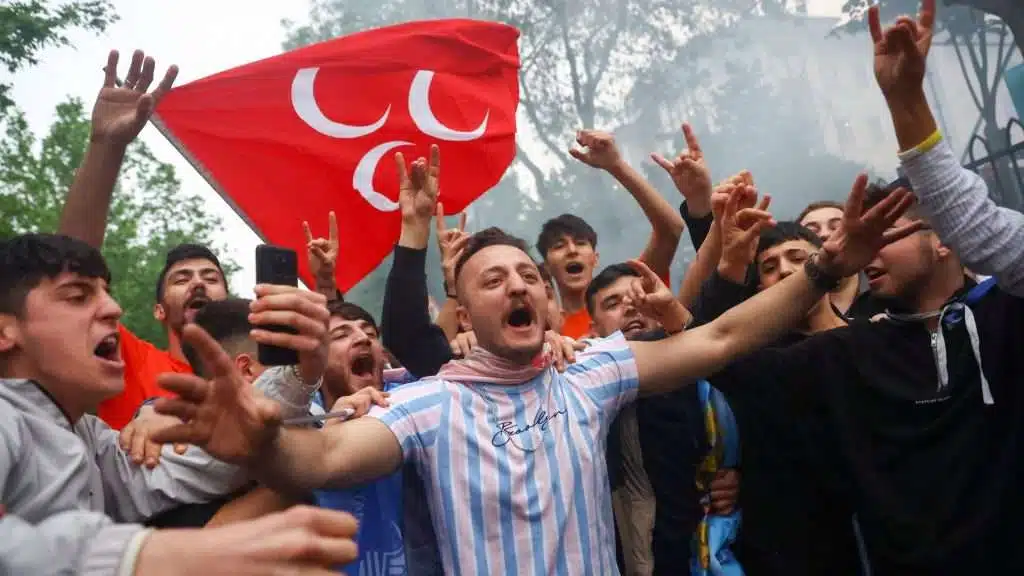
Erdogan’s electoral coalition—cementing the alliance between his Justice and Development Party (AKP) and the far-right Nationalist Movement Party (MHP)—relied heavily on polarizing cultural rhetoric. Framing the opposition as morally decadent and sympathetic to separatist terrorism, state messaging deepened religious-secular and Turkish-Kurdish cleavages.
Reconciling an intensely polarized society of 85 million people requires addressing minority rights, restoring academic autonomy in major universities, and halting the criminalization of political dissent. Healing these fractures will dictate whether Turkiye experiences internal brain drain or harnesses its dynamic youth demographics.
Conclusion
Erdogan’s third decade in power cements his status as the most consequential Turkish leader since Mustafa Kemal Atatürk. Yet his consolidated authority coincides with acute economic strains and deep societal fissures. Navigating this delicate juncture will require balancing personalized executive rule with institutional resilience, charting a sustainable path for a nation navigating the fault lines of twenty-first-century geopolitics.