
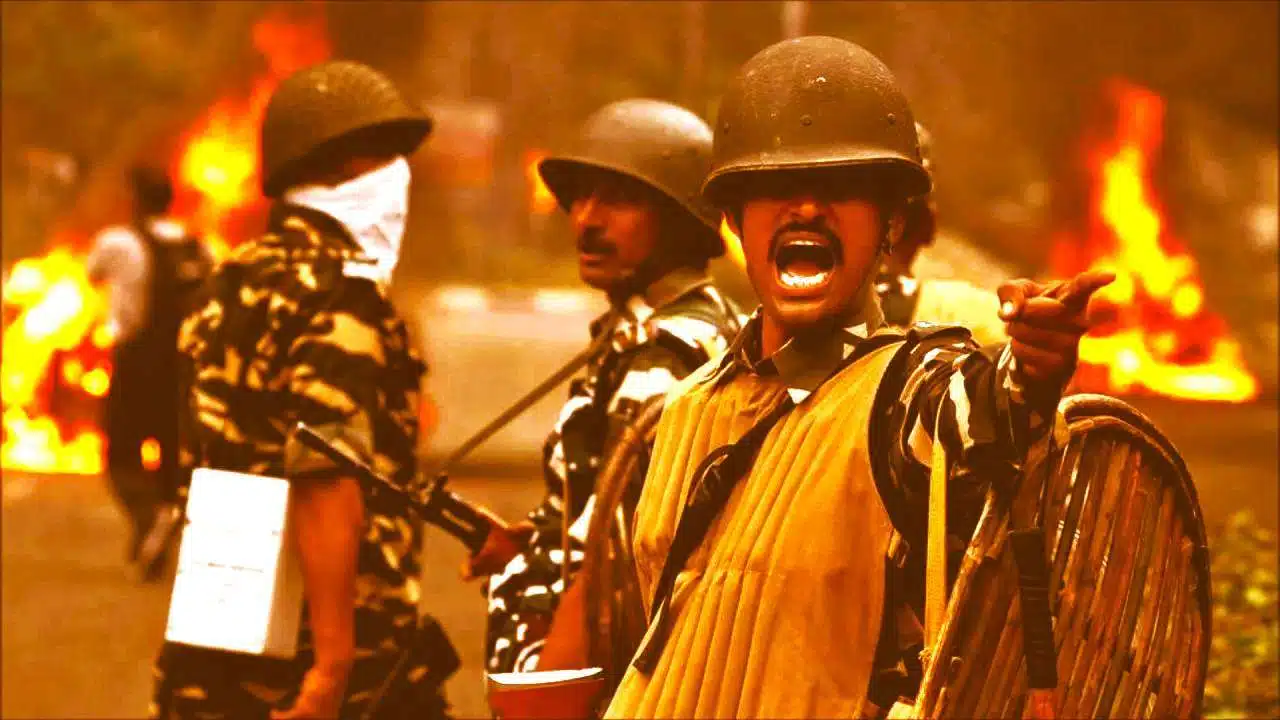
In late July 2023, severe communal violence erupted across the northern Indian state of Haryana, leaving at least ten people dead, scores injured, and triggering widespread socio-political turmoil across the National Capital Region (NCR). The epicenters of the violence were Nuh, a historically marginalized Muslim-majority district in Mewat, and Gurugram, India's glittering corporate and financial tech corridor. The clashes involved aggressive mobilization by right-wing Hindu nationalist outfits—specifically the Vishva Hindu Parishad (VHP) and Bajrang Dal—against local Muslim communities, laying bare the deep fractures in India's constitutional secularism.
Catalysts of the Conflagration: Provocations and Vigilantism
The outbreak in Nuh was ignited by deliberate political provocations centered around Monu Manesar (Mohit Yadav), a notorious cow-vigilante leader associated with the Bajrang Dal. Manesar was the prime suspect wanted by Rajasthan police in connection with the horrific abduction, lynching, and charring of two young Muslim men, Nasir and Junaid, in February 2023.
Prior to the annual Brij Mandal Jalabhishek Yatra organized by the VHP in Nuh, video messages surfaced on social media wherein Manesar and his associates brazenly announced their intention to participate in the procession, daring local Muslims to stop them. The circulation of these threatening videos generated deep outrage and anxiety throughout Mewat.
Concurrently, local communities in Nuh were already reeling from aggressive police crackdowns and surveillance operations, creating an environment saturated with mutual suspicion. While Manesar ultimately did not appear in person—later claiming he was on a pilgrimage—the deliberate psychological provocation had achieved its intended objective.
Signed on August 7, 2026 between Saudi Arabia, Türkiye, and Pakistan, the Mecca Joint Defense Pact stipulates that an armed attack on one member shall be deemed an attack on all. For Bangladesh—confronting border casualties, unilateral riparian diversions, and transit imbalances—a collective deterrence architecture restores sovereign bargaining leverage.
Chronology of the Clashes: From Edward Chowk to Gurugram
On the afternoon of Monday, July 31, the VHP-led procession assembled at Edward Chowk in Nuh, with many participants brandishing swords, firearms, and chanting provocative slogans. As the armed rally advanced through Muslim neighborhoods, heated confrontations escalated into stone-pelting and violent physical clashes.
Vehicles were torched, and gunfire was exchanged. Two state Home Guards personnel, Neeraj and Gursevak, along with several civilians, lost their lives as administrative order disintegrated. Security forces responded by deploying thousands of central paramilitary troops, clamping curfews, and terminating mobile internet services.

Minority Oppression in Contemporary India: A Structural Overview
However, rather than abating, the violence metastasized eastward into Gurugram and Sohna. Organized Hindu mobs systematically targeted Muslim-owned businesses, roadside eateries, and butcher shops. In Bahadurgarh, Bajrang Dal marches resonated with genocidal hate slogans—most notoriously "Desh ke gaddaron ko, goli maaro saalon ko" ("Shoot the traitors of our nation")—rhetoric normalized by senior BJP politicians during the 2019–2020 Citizenship Amendment Act protests.
Publish Your Research & Critical Analysis on MaroonPaper
Contribute in-depth essays on law, political philosophy, economics, and geopolitics to an intellectual readership.
The Desecration of the Anjuman Mosque and the Killing of Maulana Saad
The violence reached a gruesome climax in the early hours of August 1 in Sector 57, Gurugram. A heavily armed mob of approximately 150 far-right militants attacked the Anjuman Mosque—one of the few officially designated Muslim places of worship in the city, which had faced months of harassment by Hindutva groups campaigning against Friday prayers.
The mob set the mosque on fire and stormed the premises. Inside, they ambushed the 19-year-old deputy imam, Maulana Saad, shooting him multiple times and stabbing him in the chest. Eyewitnesses recounted attackers chanting "Jai Shri Ram" and screaming threats to slaughter Muslims.

The tragedy in Gurugram prompted international tech corporations and multinational consulting firms to order mandatory work-from-home protocols, underscoring how majoritarian violence threatens India's premier commercial corridors.
While post-WWII Germany and Italy were systematically de-Nazified, dismantling the fascist machinery in post-July Bangladesh has encountered fierce resistance. Backed by India's regional hegemony and an entrenched cultural fifth column, reactionary networks are working tirelessly to subvert the democratic breakthrough.
Unraveling the Ethnic Violence in Manipur: State Complicity and Civil War
State Complicity, Punitive Demolitions, and Impunity
In the aftermath of the riots, the Haryana state government, headed by the Bharatiya Janata Party (BJP), launched what rights monitors termed "selective retribution." State authorities deployed bulldozers to demolish hundreds of homes, shops, and temporary shanties belonging almost exclusively to impoverished Muslims in Nuh, citing alleged encroachments—a practice that the Punjab and Haryana High Court halted, questioning whether the state was conducting an exercise in ethnic cleansing.
International human rights organizations, including Human Rights Watch and Amnesty International, have repeatedly documented how state institutions, including law enforcement and municipal administrations, operate with overt majoritarian bias under the ruling BJP. From the 2002 Gujarat pogrom and the 2020 Delhi riots to ongoing atrocities in Manipur and Haryana, state machinery consistently fails to hold perpetrators accountable while punishing minority victims.

Bharat Jodo Yatra: Can Secular Coalitions Reclaim India's Republic?
Conclusion: The Existential Peril to India's Secular Republic
The 2023 Haryana riots are not an isolated law-and-order failure, but a symptom of an orchestrated project to transform India into a de facto Hindu Rashtra (majoritarian state). When state power shields militant vigilantes and normalizes the persecution of 200 million Muslim citizens, the foundational values of India's constitution—equality, fraternity, and pluralism—are placed in grave jeopardy. Restoring democratic resilience requires an immediate end to state-sponsored vigilantism, judicial accountability for hate crimes, and an unyielding commitment to civil rights for all communities.