
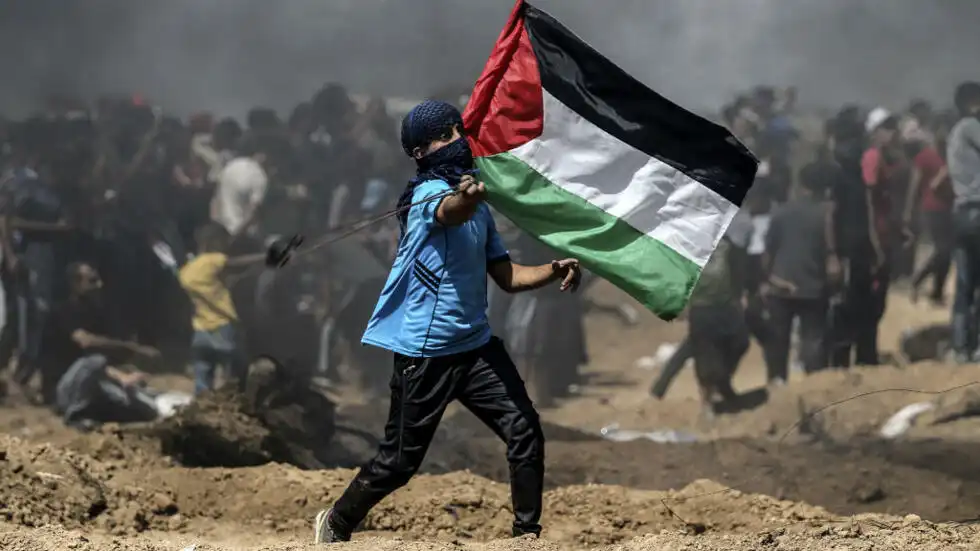
In the contemporary discourse on Palestine, Western narratives invariably commence with the premise that October 6 was a day of tranquility. The implication is crystalline: Hamas’s October 7 incursion serves as the singular progenitor of the current Israel-Palestine conflict. The construct suggests that Hamas acted in a vacuum—devoid of history, provocation, or preceding tension. This narrative is not merely erroneous and obfuscatory; it is a calculated artifice, meticulously curated by Western powers to apportion total culpability for the war onto Hamas.
Was there truly peace before October 7?
One could only posit that peace reigned in Palestine prior to October 7 if one were willfully ignorant of the scale of atrocities committed annually by Israel against the Palestinians. Western proponents of this narrative consciously disseminate this falsehood to undermine Palestinian rights and obscure their history.
A History of the Israel-Palestine War
Every year has served as a curse upon the lives of Palestinians. To ask which year was peaceful since 1948 is a category error; the pertinent question is which year witnessed the most acute violence. Thousands of Palestinians—including countless women and children—have lost their lives annually, while thousands more have been wounded or detained by occupying Israeli forces without due process. The sheer magnitude of the destruction and slaughter is illustrated in the data below, which synthesizes reports of fatalities, injuries, arrests, and abductions in the conflict:
Beyond the conventional narratives propagated by Western media, a closer inspection of the map reveals a starker reality: the perpetual instability in the Middle East serves as a backdrop to a ruthless shadow conflict over the Strait of Hormuz—the critical maritime chokepoint through which twenty percent of the world’s petroleum supply flows.
| Year | Death | Injuries | Detained Palestinian | ||
| Israeli | Palestinian | Israeli | Palestinian | ||
| 2008 | 6 | 1,440 | 1,000 | 5,000 | 3,000 |
| 2009 | 10 | 1,100 | 500 | 4,000 | 2,500 |
| 2010 | 20 | 600 | 300 | 2,000 | 2,000 |
| 2011 | 15 | 700 | 200 | 3,000 | 2,200 |
| 2012 | 40 | 2,300 | 400 | 6,000 | 2,800 |
| 2013 | 4 | 700 | 150 | 1,500 | 1,500 |
| 2014 | 67 | 2,100 | 2,000 | 10,000 | 3,000 |
| 2015 | 20 | 300 | 800 | 1,200 | 1,700 |
| 2016 | 15 | 100 | 600 | 900 | 1,200 |
| 2017 | 17 | 200 | 500 | 1,000 | 1,500 |
| 2018 | 12 | 300 | 1,200 | 2,000 | 1,800 |
| 2019 | 10 | 150 | 400 | 800 | 1,000 |
| 2020 | 5 | 100 | 300 | 500 | 900 |
| 2021 | 13 | 250 | 1,000 | 2,500 | 1,500 |
| 2022 | 18 | 300 | 900 | 2,000 | 1,700 |
| 2023(before 7th Oct.) | 32 | 247 | 213 | 9379 | 1,264 |
| 2023-24 (after 7th Oct.) | 1,139 | 37,077 | 8,730 | 87,959 | 3,000 |
According to latest casualty statistics as of June 4, at least 36,550 people have been killed in Gaza—including over 15,000 children—with more than 82,959 injured and over 10,000 missing. In the occupied West Bank, the Palestinian Ministry of Health reports at least 527 killed, including 132 children, and over 5,000 injured. Conversely, the death toll from the October 7 attack in Israel has been revised to 1,139, with at least 8,730 injured and 240 missing.
International Court of Justice orders Israel to halt Rafah offensive
Since the onset of the Israel-Gaza war on October 7, over 100 journalists have been killed, the overwhelming majority being Palestinians. According to the Committee to Protect Journalists and the International Federation of Journalists, the death toll includes 96 Palestinian, three Lebanese, and four Israeli journalists. In Gaza, every hour, 15 people are killed (six of them children), 35 are injured, 42 bombs are dropped, and 12 buildings are destroyed.
Publish Your Research & Critical Analysis on MaroonPaper
Contribute in-depth essays on law, political philosophy, economics, and geopolitics to an intellectual readership.
The Western Mask Slips
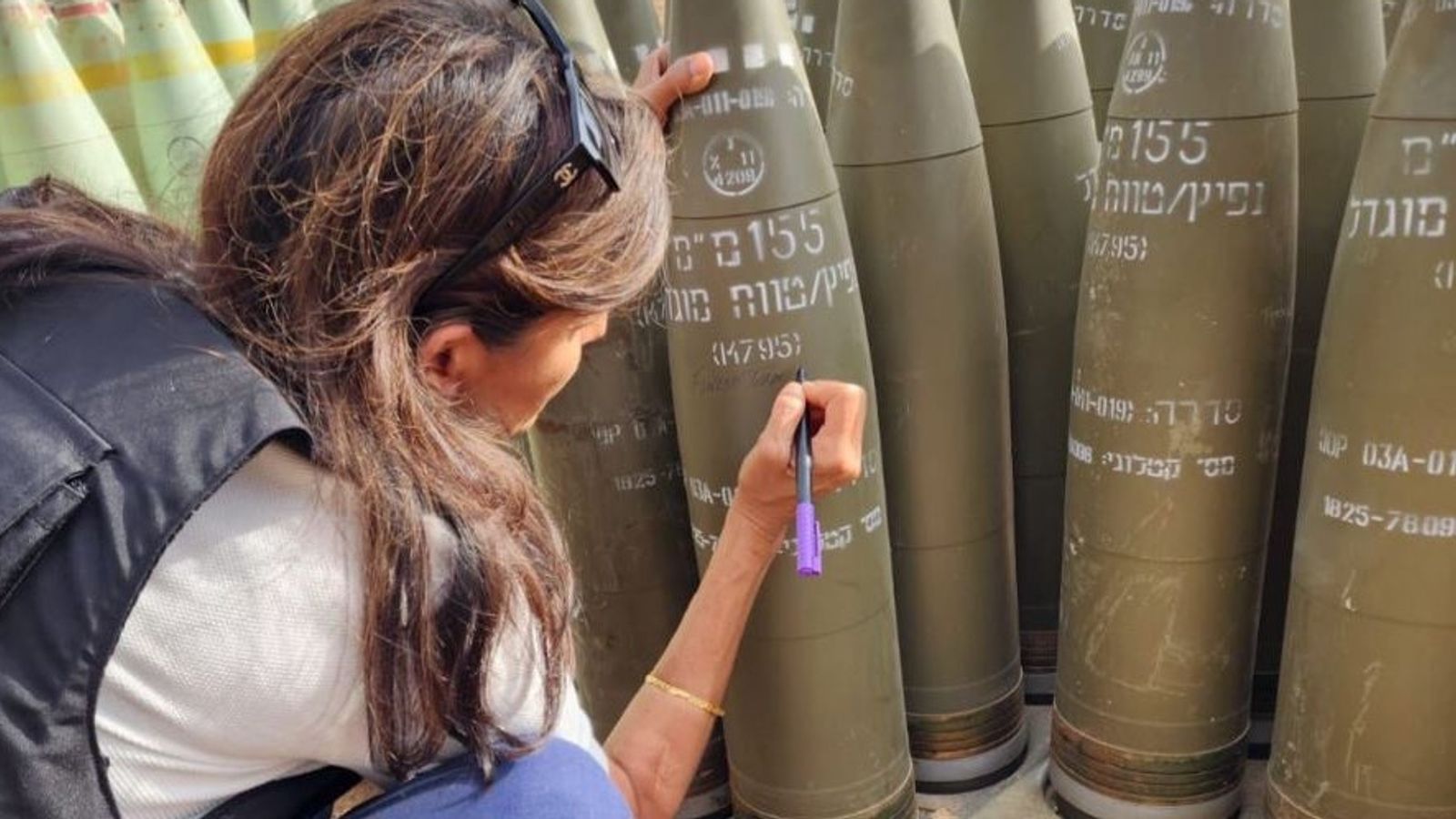
Despite the thousands of Palestinians perishing at the hands of Israeli forces annually, the political and media establishments have remained largely indifferent. These atrocities and the deaths of thousands have been either directly denied or implicitly excused. Only recently, Nikki Haley was photographed in Israel autographing an artillery shell with the message, “Finish them!”
Orit Strock, Israel’s Minister of National Missions, has denied the existence of the Palestinian people, declaring: "There is no such thing as a Palestinian people. There will never be a Palestinian state on this land. Every civilized person in the world knows that this land belongs to us, the Israeli people, and only to us." In 2013, Deputy Defense Minister Eli Ben-Dahan, in a radio interview, described Palestinians by stating: "To me, they are like animals, they are not human."
Responding to a constituent regarding the death of Palestinian children in Gaza, Tennessee Republican Representative Andy Ogles insisted that "we should kill them all."
The volatility currently defining Middle Eastern statecraft is anchored by the convergence of the intractable Palestinian crisis and the Abraham Accords—a transformative diplomatic framework that continues to reshape the regional architecture.
The conclusion is inescapable: in terms of raw power and political weight, Palestinian lives have mattered little. The persistent bias in favor of Israeli war crimes, juxtaposed with the rhetoric of humanitarianism, has stripped away the mask of Western morality, revealing a deeply ingrained fascist character. The hypocrisy, bloodlust, and malice of those who lecture the world on human rights have been laid bare, exposing a grotesque reality that can no longer be hidden.
The Desperation of Hamas
Hamas understood that the only way to shatter this silence was to disrupt the status quo. They recognized that only the mass death of Israelis would create a tremor of sufficient magnitude that the international community could no longer ignore. Because the deaths of Israelis are reviewed with profound gravity while Arab deaths are met with systemic indifference, they sought to invalidate the Israeli assumption that this conflict could be indefinitely contained. They engineered a reality where the plight of the Palestinians could no longer be dismissed.
The Peace Process: Rewriting History
This tactic has, in its own grim way, functioned. Some argue that this discourse rewards Hamas. But what constitutes the "reward"? The fact that their grievances are finally being debated? Is that a reward, or is it the long-overdue acknowledgment of the Palestinian struggle for rights? These are not issues specific to Hamas, but to the entire Palestinian people. Hamas remains the faction prepared to adopt any means necessary to secure independence and to assert their presence through the only language they perceive as effective: struggle.
Do you despise Hamas's role in the Palestinian struggle?
Many recoil at the violence emanating from the Israeli occupation in Gaza. Yet, you will rarely hear these same voices offer to fight for the Palestinians themselves. None of those who decry Hamas are willing to risk their own political or economic security to advocate for Palestinian survival. If you do not fight for the Palestinians, Hamas will inevitably fill that void. The logic is elementary. When the opportunity arises, they will take it. Why wouldn't they? If you do not wish for Hamas to dictate the terms of the discourse or lead the fight, then you—the critic—must stand for Palestinian independence, engage in the discourse, and lead the struggle yourself. If you do not want Hamas, then *you* fight for the Palestinians.