Switch language / ভাষা পরিবর্তন করুন
HistoryEnglish Edition

Defining the Cold War: Origins, Evolution, and Contemporary Resonance

Rakibul IslamRakibul Islam
•October 28, 2023•9 min read
Defining the Cold War: Origins, Evolution, and Contemporary Resonance

The Cold War constituted a profound ideological schism between the United States and the Soviet Union, characterized by a persistent climate of mutual suspicion and systemic mistrust.

In the aftermath of the Second World War, two preeminent superpowers—the United States and the Soviet Union—emerged as the undisputed architects of the new world order. The traditional European powers, namely France and Britain, were economically decimated, while the Axis powers—Italy, Germany, and Japan—had seen their capabilities effectively dismantled. Into this power vacuum stepped the United States and the Soviet Union, nations boasting economic and systemic robustness, yet fundamentally divided by irreconcilable ideologies. The world fractured along the fault lines of American capitalism and Soviet socialism. This systemic antagonism, characterized by military, economic, and ideological maneuvering, formed the essence of the Cold War—a conflict sustained by mutual suspicion, profound distrust, and a persistent, precarious peace.

Defining the Cold War

The term "Cold War" was popularized in 1947 by the American economist Walter Lippmann. It describes a state of affairs that is neither open war nor true peace—a condition of "uneasy" stability. The Cold War was a political, economic, military, and propaganda-driven struggle born from the escalating distrust between the U.S., the Soviet Union, and their respective spheres of influence. Its defining characteristic was the absence of direct military engagement between the two superpowers, yet it plunged the global order into decades of persistent volatility and systemic tension. This epoch began in the late 1940s and concluded with the dissolution of the Soviet Union in 1991. The primary catalyst was the ideological divide: the United States championed democracy and capitalism, while the Soviet Union advocated for communism and a single-party state. This fundamental disagreement fueled a global race for dominance.
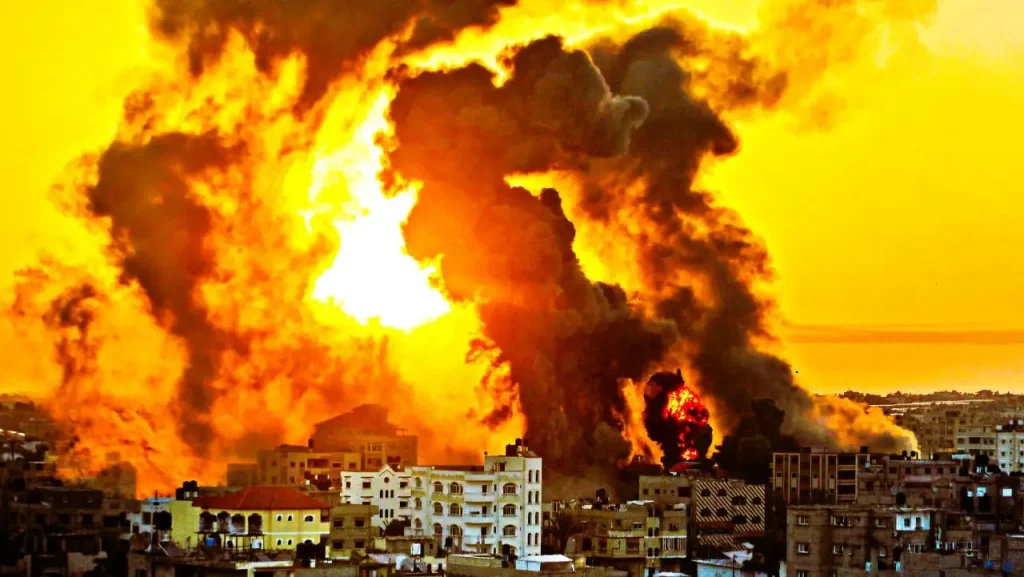
The Cold War, factors behind Israel's atrocities in Palestine
Professor A.K. Grethop famously asserted that the Cold War was the conflict between communist powers and the rest of the world. Francis Fukuyama provided a more nuanced interpretation, noting, "The Cold War was a conflict between two different visions of human destiny: one liberal, the other communist." Professor Frankel argued that the Cold War encompassed all events stemming from the clash between communist and democratic ideologies, embodied by the Soviet Union and the United States, respectively. Both nations held diverging visions for the future of the global order—the U.S. sought a democratic framework, while the Soviets pushed for a socialist one. While historians occasionally debate whether it should be classified as a "war" or merely a "competition," the prevailing consensus favors the term "Cold War," acknowledging the absence of direct kinetic engagement. At its core, the Cold War was a contest for hegemony between the architects of the United Nations, stripped of the veneer of regional or traditional imperial interests.

Origins of the Cold War

The seeds of tension were sown with the Russian Revolution of 1917, the rise of Italian Fascism in 1929, and the ascent of Nazism in Germany in 1933, all of which heightened the anxieties of capitalist states. The 1937 Molotov-Ribbentrop Pact further exacerbated these fears. However, the modern Cold War specifically emerged from the post-WWII ideological and military rivalry between the U.S. and the USSR. The origins of this antagonism can be categorized into two primary theaters: * **Ideological Conflict:** The U.S. and the Soviet Union held diametrically opposed views on the future of humanity. The U.S. championed a democratic, capitalist system, while the Soviet Union promoted a socialist, centralized command economy. * **Power Dynamics:** As the two remaining superpowers, the competition for global influence and raw power created a structural inevitability for conflict.

Ideological Divergence

The root of the conflict lay in these disparate worldviews. The American commitment to private enterprise and free markets stood in stark contrast to the Soviet commitment to state-owned property and centralized planning. This schism transcended military concerns, permeating politics, culture, and trade—witnessed in the partition of Europe, the Berlin Crisis, and the Marshall Plan.

Post-WWII Rivalry

With the cessation of hostilities, both superpowers sought to lead the reconstruction of the world. This scramble for influence led to direct competition for control over various regions, leaving an indelible impact on global affairs.

Arms Race

The post-war era transformed the U.S. and the USSR into nuclear superpowers. This arms race became the defining feature of Cold War geopolitics. The desperate need to maintain a balance of terror—where each side responded to the other’s expansion of nuclear capacity—instilled an enduring fear of global annihilation.

Imperialism and Proxy Wars

Both superpowers sought to project power by establishing military bases and supplying equipment to their respective clients. They stoked instability in regions like Germany, Korea, Vietnam, and Afghanistan. Notably, in Afghanistan, the U.S. supported the rise of the Taliban to counter Soviet influence—a strategy indicative of their cynical approach to global stability.

Mistrust and Misunderstanding

The absence of direct communication channels and a lack of enduring diplomatic missions exacerbated the divide. Both nations relied heavily on propaganda, often disseminating distorted narratives that characterized every rival action as a mortal threat.

The Berlin Blockade

The 1948–1949 Soviet blockade of West Berlin was a critical juncture. The U.S. and Western European allies maintained their presence by airlifting essential goods to the beleaguered city, a move that brought the world to the precipice of nuclear confrontation.

The U.S. Containment Policy

To stem the tide of global communism, the U.S. adopted a policy of "containment," characterized by: * **Economic and Military Aid:** Supporting regimes in countries like Greece and Turkey. * **Military Alliances:** Creating structures like NATO, SEATO, and CENTRO to encircle and deter the Soviet Union. * **Global Propaganda:** An ideological campaign to delegitimize communism.

Economic Competition

The rivalry was as much about economic supremacy as it was about military might. The U.S. promoted free-market capitalism, while the USSR pushed its centralized model. This competition, coupled with the massive financial burden of the arms race, dictated the domestic and international priorities of both nations for five decades.

The Development of the Cold War

The Cold War can be analyzed through three distinct phases:

Escalation (1947–1953)

This period saw the consolidation of rival camps. * **Marshall Plan (1947):** An economic initiative to reconstruct Europe that effectively excluded Soviet influence, prompting the Soviets to form the Communist Information Bureau. * **Truman Doctrine (1947):** A commitment to support nations threatened by communism, specifically targeting Greece and Turkey with $400 million in aid. * **NATO Formation (1949):** A collective defense pact against Soviet expansion. * **Korean War (1950–1953):** A bloody proxy war that solidified the 38th parallel as a permanent divide. * **Baghdad Pact (1955) and the Warsaw Pact:** The formation of competing military blocs in the Middle East and Eastern Europe.

De-escalation (1953–1962)

* **Ending the Korean War:** The 1953 armistice provided a temporary lull in direct hot-war tensions. * **Iranian Coup (1953):** The U.S.-backed restoration of the Shah solidified Western influence in the Middle East. * **Cuban Missile Crisis (1962):** A harrowing encounter that brought the world to the brink of nuclear war, eventually leading to a mutual agreement to pull back from the abyss.

Stalemate (1962–1991)

* **Questioning Marxism-Leninism:** The 1960s saw growing intellectual criticism of the rigidity of the Soviet system. * **Vietnam War (1975):** The U.S. defeat in Vietnam served as a reality check on the limits of American power. * **Détente:** The 1970s saw efforts to improve relations through arms control treaties (SALT I and II) and cultural exchange.

The End of the Cold War

By the 1980s, the Soviet economy was in terminal decline. Mikhail Gorbachev’s ascension in 1985 brought the twin policies of *Glasnost* (transparency) and *Perestroika* (restructuring). The collapse of the Berlin Wall in 1989 and the subsequent fall of communist governments across Eastern Europe sealed the fate of the Soviet bloc. The official end was declared by George H.W. Bush and Gorbachev at the Malta Summit in 1989.

The Dissolution of the Soviet Union

In 1991, following internal political upheaval and independence movements in the constituent republics, the USSR ceased to exist. On December 8, the leaders of Russia, Ukraine, and Belarus signed the Belovezha Accords, effectively dissolving the union. Gorbachev resigned on December 25, 1991.

Current Geopolitical Landscape

Post-1991, the world entered a period of American unipolarity. However, the rise of powers such as China, Russia, and an economically rejuvenated Germany has challenged this hegemony. The 2022 Russo-Ukrainian War and the long-standing Zionist-Palestine liberation struggle have reignited Cold War anxieties. Many analysts observe the emergence of a new bipolarity where a Russo-Chinese bloc challenges the U.S.-led NATO order. Whether through vetoes in the UN Security Council or the formation of new economic and security alliances that bypass Washington, the world is once again shifting. The "Cold War" is not merely a historical relic; its currents remain deeply embedded in the contemporary struggle to control vulnerable states and dictate the global future. The prospect of peace remains elusive, as the world braces for a new, perhaps more destructive, era of systemic competition.

Share this intellectual discourse

Help expand constructive dialogues on global affairs, law, and politics.

Rakibul Islam

Rakibul Islam

Author & Contributor, MaroonPaper

Contributing insightful research and analytical essays on law, politics, history, and international affairs for MaroonPaper.

Stay Connected with MaroonPaper

Subscribe to receive selected intellectual essays, critical commentaries, and translations directly in your inbox.

No spam, ever. Unsubscribe at any time.