
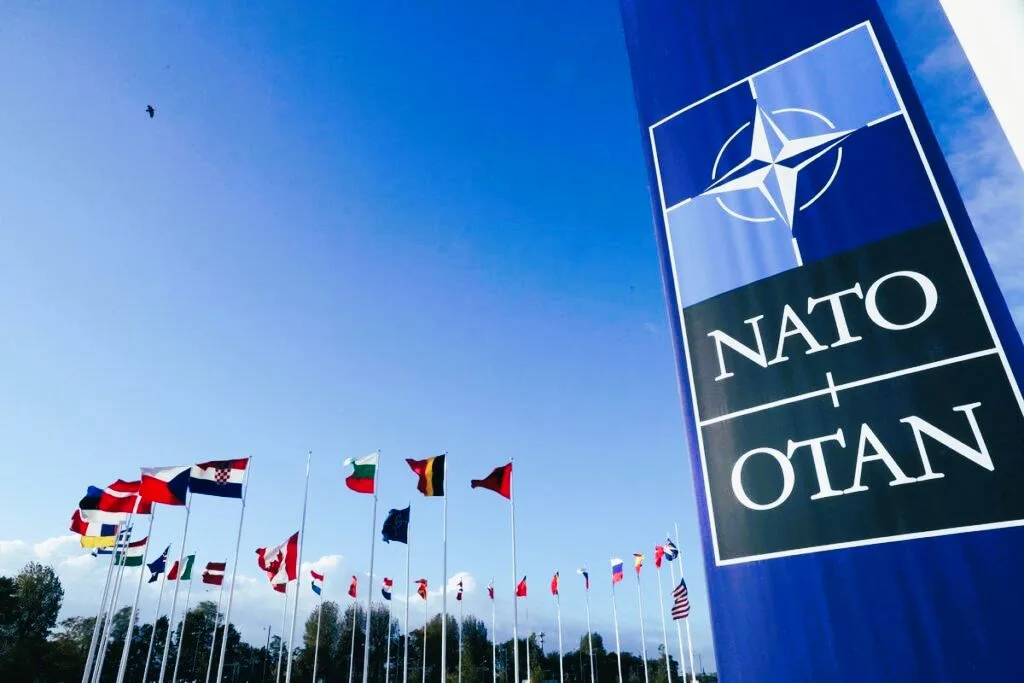
What is NATO?
The North Atlantic Treaty Organization is an intergovernmental military alliance established through the North Atlantic Treaty. Founded on April 4, 1949, it stands as the world's largest and most effective regional security pact. Under the provisions of the treaty, member states are committed to mutual military assistance.
The Elections of 1954: Formation of the United Front, Victory, and the Defeat of the Muslim League
The Western powers were driven to establish NATO to contain the spread of socialism in Eastern Europe, safeguard democratic nations, and create a platform that could circumvent the veto power of the UN Security Council. While NATO was ostensibly founded on a firm commitment to global security and the promotion of democracy, a primary objective remained the entrenchment of capitalist systems under the guise of democratic stability and the creation of a credible military counterweight to Soviet influence.A History of NATO’s Formation
The ravages of World War II left much of Europe in an unimaginable state of ruin. Approximately 36.5 million Europeans perished, 19 million of whom were civilians. Refugee camps mirrored the desperation seen today in Syria, Iraq, Yemen, Afghanistan, or Ukraine. In some areas, infant mortality rates were so severe that one in four children died. Millions were left homeless; in Hamburg, Germany, alone, half a million people were displaced. In the immediate post-war era, the "Treaty of Dunkirk" was signed on March 4, 1947, between France and the United Kingdom, establishing a mutual defense pact to counter potential threats from a resurgent Germany or the Soviet Union. Simultaneously, communists, backed by the Soviet Union, were undermining democratic governments across Europe. In February 1948, the Communist Party of Czechoslovakia, with covert Soviet support, overthrew the democratically elected government. Subsequently, in response to the democratization of West Germany, the Soviets blockaded West Berlin to solidify their control over the German capital. While the Berlin Airlift provided a heroic morale boost to the Allies, the Soviet Union remained a persistent existential threat to freedom and stability.Beyond the conventional narratives propagated by Western media, a closer inspection of the map reveals a starker reality: the perpetual instability in the Middle East serves as a backdrop to a ruthless shadow conflict over the Strait of Hormuz—the critical maritime chokepoint through which twenty percent of the world’s petroleum supply flows.
The Moroccan Nationalist Movement and Sultan Mohammed V
The Objectives and Principles of NATO
NATO’s objective is to uphold freedom and ensure the security of its member states through political and military means. The North Atlantic Treaty asserts that "an attack against one shall be considered an attack against all." This principle of collective defense serves as the bedrock of NATO’s security architecture. The member states have agreed to 14 articles outlining the alliance's purpose and principles, all while reaffirming their faith in the UN Charter. The goals of NATO, as founded on the North Atlantic Treaty, are: * Bringing about and maintaining peace and security in Europe; * Maintaining stability in the NATO region through military presence outside its borders; * Making joint decisions based on consultation and consensus; * Formulating NATO’s strategic policies; and * Addressing new military risks in line with global changes. The 14 articles of the North Atlantic Treaty are as follows:Article 1: Peaceful Settlement
Parties undertake to settle international disputes by peaceful means in a manner that does not endanger international peace, security, and justice. They refrain from the threat or use of force in any manner inconsistent with the purposes of the United Nations.Article 2: Friendly Relations
Parties will contribute to the development of peaceful and friendly international relations by strengthening their free institutions, promoting principles, and encouraging economic collaboration and stability.Article 3: Defense Capability
Parties, by means of continuous and effective self-help and mutual aid, will maintain and develop their individual and collective capacity to resist armed attack.Article 4: Consultation
The parties will consult together whenever, in the opinion of any of them, the territorial integrity, political independence, or security of any of the parties is threatened.Article 5: Collective Defense
An armed attack against one or more of the parties in Europe or North America shall be considered an attack against them all. Consequently, each will assist the party or parties so attacked by taking such action as it deems necessary, including the use of armed force, to restore and maintain the security of the North Atlantic area. Such measures shall be reported to the UN Security Council.Background and Consequences of the Rwandan Genocide
Publish Your Research & Critical Analysis on MaroonPaper
Contribute in-depth essays on law, political philosophy, economics, and geopolitics to an intellectual readership.
Article 6: Definition of Attack
An armed attack is defined as an attack on the territory of any of the parties, or on the vessels, aircraft, or forces of any of the parties in or over these territories.Article 7: UN Charter Obligations
This treaty does not affect the rights and obligations of parties under the UN Charter, nor does it affect the primary responsibility of the Security Council for the maintenance of international peace and security.Article 8: Non-Conflicting Engagements
Each party declares that none of its existing international engagements conflict with the provisions of this treaty and undertakes not to enter into any international engagement in conflict with this treaty.Article 9: Implementation Council
The parties establish a council, on which each of them shall be represented, to consider matters concerning the implementation of this treaty. This council shall set up a defense committee and other subsidiary bodies as necessary.Article 10: Accession of Additional Parties
The parties may, by unanimous agreement, invite any other European state in a position to further the principles of this treaty to accede to it.Article 11: Ratification and Application
The treaty shall be ratified and its provisions carried out by the parties in accordance with their respective constitutional processes.Article 12: Review
After the treaty has been in force for ten years, or at any time thereafter, the parties shall, if any of them so requests, consult together for the purpose of reviewing the treaty, having regard to the factors then affecting peace and security in the North Atlantic area.The Importance of Middle Eastern Oil Fields and Dr. Mosaddegh’s Role in Iran’s Nationalization
The volatility currently defining Middle Eastern statecraft is anchored by the convergence of the intractable Palestinian crisis and the Abraham Accords—a transformative diplomatic framework that continues to reshape the regional architecture.
Article 13: Withdrawal
After the treaty has been in force for twenty years, any party may cease to be a party one year after its notice of denunciation has been given to the U.S. government.Article 14: Authentic Texts
The English and French texts of this treaty are equally authentic.NATO’s Institutional Structure
NATO’s organizational structure is complex and multifaceted, bifurcated into political/strategic decision-making and operational execution. * **Civilian Structure (North Atlantic Council)** This body is responsible for political decision-making and strategic policy. Composed of representatives from each member state, the North Atlantic Council meets at least once a week to discuss matters ranging from security to economic cooperation. * **Military Structure (Supreme Allied Commander Europe & International Military Staff)** This branch executes the political and military decisions of the Council. It is headed by a four-star General or Admiral, known as the Supreme Allied Commander Europe (SACEUR). The SACEUR performs duties in consultation with the International Military Staff (IMS), composed of military experts from member states. The work of this branch is carried out through two primary pillars: * **Allied Command Operations (ACO)** The operational arm of NATO, responsible for all NATO military operations both in peacetime and wartime. It is directed by the SACEUR.The Background of Iraq’s 1958 Military Revolution
* **Allied Command Transformation (ACT)** This branch focuses on the improvement and modernization of NATO’s military capabilities. It is led by the Supreme Allied Commander Transformation (SACT) and works closely with Allied Command Operations to prepare for future military threats. Beyond these, NATO possesses subsidiary bodies such as the NATO Parliamentary Assembly, the Science for Peace and Security Programme, and the Euro-Atlantic Disaster Response Coordination Centre, which facilitate political review, scientific collaboration, and humanitarian aid.NATO’s Necessity in Contemporary Geopolitics
NATO remains the largest and most effective military alliance in the world. While some argue that its utility ended with the Cold War, others contend that it remains essential for maintaining peace in the North Atlantic region. Nonetheless, this controversial alliance has engaged in numerous military interventions—from the Korean War and the Cold War to the war in Afghanistan, the 2011 intervention in Libya, and the recent proxy conflict against Russia in Ukraine. While involved in civilian matters such as counter-terrorism and disaster relief, NATO’s negative impact on global security is undeniable. First, the rift between East and West has deepened. NATO’s objective was to contain Soviet influence; however, the U.S.-led alliance has exacerbated military, political, and economic tensions between East and West. Instead of peace, the last few decades have witnessed wars in Korea, Afghanistan, Yemen, Syria, Iraq, and Libya. Second, NATO has effectively usurped the power of the United Nations. Three permanent members of the UN Security Council—the U.S., France, and the UK—are NATO members. They effectively dictate global foreign policy, and their monopolistic tendencies have undermined the international standing and authority of the UN. Third, NATO’s expansion into Eastern Europe has been contentious. By attempting to bring Ukraine into the alliance in 2022, NATO provoked Russia. Fearing a Western military presence on its border, Russia launched an invasion of Ukraine. Consequently, the wars that once ravaged the Middle East have now reached the heart of Europe, leading to the daily loss of hundreds of civilian lives. When considering these factors, it becomes clear that while NATO was formed under the pretext of peace and security, its actions have often produced the opposite. In the 21st century, the world is questioning the relevance of an alliance whose primary adversary, the Soviet Union, has long collapsed and whose activities have arguably destabilized more regions than they have secured.The Strait of Hormuz and its Importance in the Contemporary Global Economy
Moreover, Russia is no longer the cradle of socialism; the ideological foundation of the original Cold War struggle has evaporated. The superpowers have made commitments to limit weaponry, and the threat of regional instability in Europe—pre-2022—had been largely managed. Ultimately, regardless of the debates, NATO remains a major player in global politics. Yet, the history of its interventions suggests that the alliance is an obstacle to a truly stable world order. Unless NATO is fundamentally reformed or dissolved, the world will likely continue to face the specter of conflicts like the Russia-Ukraine war, fueled by the very geopolitical tensions the alliance was supposedly created to manage.