
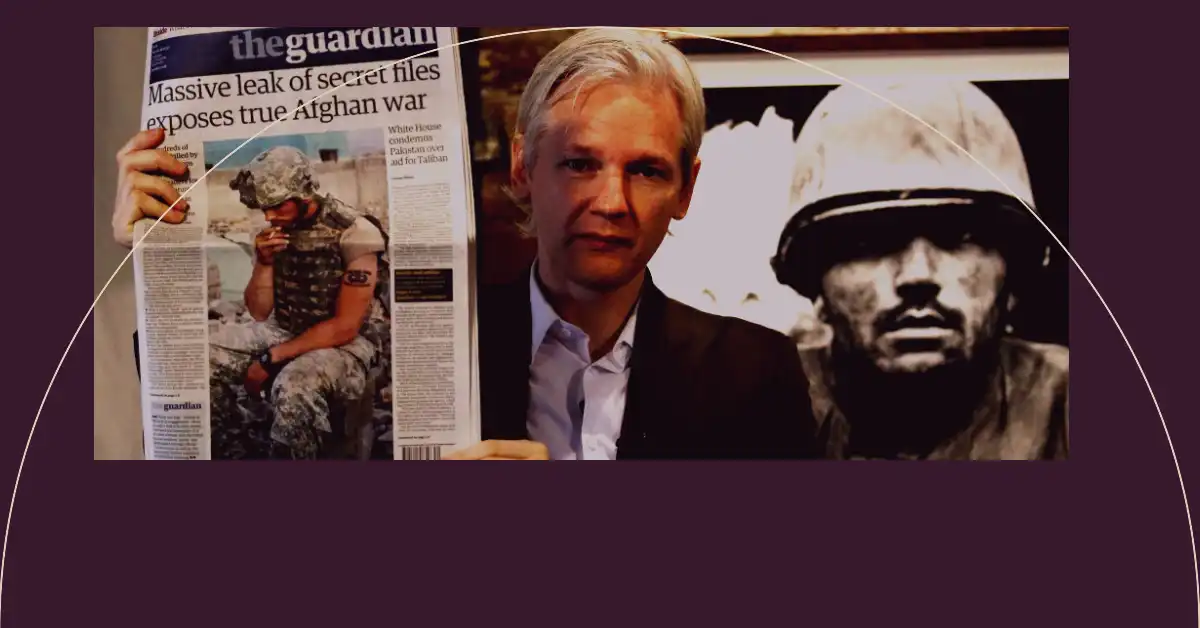
Who is Julian Assange?
Julian Assange is an explosive figure in the digital age—a journalist, computer programmer, and the founder of the incendiary website, WikiLeaks. While he launched his mission with the stated aim of unveiling global truths and fostering transparency, his activities have sparked a firestorm of debate. Born on July 3, 1971, in Australia, Assange spent his childhood moving between various cities. His fascination with computing began early, eventually drawing him into the burgeoning hacker community, where he mastered the techniques of breaching security systems to extract sensitive information. Though he briefly studied mathematics at the University of Melbourne, he eventually left academia to pursue independent mastery of computer programming and cryptography. He later became associated with an online publication titled *Underground Press*, where he chronicled the stories of cyber-activists resisting state oppression in China. This experience provided the impetus for Assange and his collaborators to establish WikiLeaks—a platform designed to enforce state and corporate accountability through the radical disclosure of classified data.What is WikiLeaks?
WikiLeaks is an international, non-profit organization. Assange, who had previously faced legal consequences for hacking in Australia in 1995, founded the platform in 2006. It functions as a repository for leaked government and corporate documents, intelligence dossiers, and other sensitive materials obtained from whistleblowers. By publishing these files, WikiLeaks aims to make the public aware of the clandestine operations of governments and powerful institutions.The Anatomy of the Cyprus Dispute
Beyond the conventional narratives propagated by Western media, a closer inspection of the map reveals a starker reality: the perpetual instability in the Middle East serves as a backdrop to a ruthless shadow conflict over the Strait of Hormuz—the critical maritime chokepoint through which twenty percent of the world’s petroleum supply flows.
The Mission of WikiLeaks
The core objective of WikiLeaks is to expose the opaque operations of the powerful and to champion ethical governance. Assange has long argued that secrecy is a tool used by political and corporate entities to conspire against the public. WikiLeaks maintains that privacy should never be used as a shield to obscure significant public-interest information. Their operations include: **Exposing Classified Information:** Publishing state intelligence, tactical war data, and diplomatic agreements. **Supporting Investigative Journalism:** Assisting media organizations in verifying sensitive information for high-impact investigative reports. **Ensuring Government Accountability:** Forcing states to answer to the public for their conduct through the publication of verified records.Major Disclosures
Since its inception, WikiLeaks has surfaced documents that proved instrumental in exposing state malpractice globally. It gained international prominence in 2008 for exposing electoral fraud in Kenya, and in 2010 for its massive dumps of data concerning the wars in Afghanistan and Iraq, as well as confidential U.S. diplomatic cables.Why Did Russia Invade Ukraine?
Publish Your Research & Critical Analysis on MaroonPaper
Contribute in-depth essays on law, political philosophy, economics, and geopolitics to an intellectual readership.
The Iraq War Diary
In 2010, WikiLeaks released approximately 400,000 classified military documents detailing U.S. operations in Iraq, including: - Evidence of civilian casualties. - Reports of war crimes and human rights violations by military personnel. - Documentation of internal military friction and systemic failures. In one video released by the group, U.S. forces are seen killing 18 civilians in Baghdad. A voice is heard on the recording saying, "Light 'em all up." The attack resulted in the deaths of a Reuters photographer and his assistant. The files revealed that over 66,000 civilian deaths had gone unreported.The Afghan War Diary
In July 2010, WikiLeaks released roughly 92,000 documents covering the war in Afghanistan, detailing: - Daily accounts of combat incidents. - Interactions between the Taliban, insurgent groups, and U.S. military forces. The documents suggested that the U.S. military had been responsible for the deaths of hundreds of civilians that were never formally reported.The Past, Present, and Future of the Russia-Ukraine Conflict
The volatility currently defining Middle Eastern statecraft is anchored by the convergence of the intractable Palestinian crisis and the Abraham Accords—a transformative diplomatic framework that continues to reshape the regional architecture.
Cablegate
In November 2010, WikiLeaks published 250,000 U.S. diplomatic cables. These documents provided intimate insights into U.S. international relations, espionage, and clandestine strategic policy, resulting in significant diplomatic fallout and revealing the inner workings of American foreign policy.The Syria Files
Between 2012 and 2013, WikiLeaks released 2.5 million emails from Syrian government officials and corporate entities, shedding light on the regime's internal communications and its management of the civil war.What are Weapons of Mass Destruction?
Guantanamo Bay Files
In 2011, WikiLeaks released documents concerning detainees at the Guantanamo Bay detention camp, providing evidence of abuse, extrajudicial detention, and a lack of due process.The CIA’s Secret Hacking Program
In 2017, WikiLeaks published "Vault 7," a collection of documents detailing the CIA's clandestine hacking tools, malware, and strategies for compromising electronic devices.The Panama Papers
This release involved over 11.5 million documents exposing how the global elite and corporations utilized offshore tax havens to evade taxes.DNC Leaks
The 2016 leak of Democratic National Committee emails provided insights into the U.S. election, including: - Confidential information regarding Hillary Clinton’s campaign. - Strategies used against Bernie Sanders during the primary. - Internal DNC communications and tactical planning. These files revealed disparaging remarks made by party officials toward Bernie Sanders and confirmed that CNN journalists had provided Clinton with debate questions in advance.Muskan Khan’s Hijab and Secularism in India