The Conspicuous Silence of Western Feminists on Gaza
Rakibul Islam
•July 4, 2024•7 min read
The reticence of Western feminist movements regarding the crisis in Gaza has invited rigorous scrutiny. It suggests a profound and troubling inconsistency, implying that while these cohorts possess a voluble critique for nearly every global injustice, Gaza remains an inexplicable void in their moral architecture.
For over nine months, Israel has subjected the civilians of Gaza to an unremitting campaign of bombardment. Yet, from the vanguard of self-styled Western mainstream feminism, we have encountered only a deafening silence. These same figures have been vocal advocates for global justice—from the climate emergency to the suppression of women in Iran and the precarious status of women under Taliban rule. In the case of Gaza, however, they maintain a shameless reticence, as if the world’s inequities matter everywhere except in the Palestinian enclave.
This silence has provoked a cascade of urgent questions. Why do they refuse to raise their voices for Palestinian women? Why is there an outpouring of active support for Ukrainian women, yet a functional absence of rhetoric regarding their Palestinian counterparts? This article seeks to dissect the roots of this double standard and analyze the ideological failures underpinning this selective solidarity.
The Unilateral Conduct of Western Feminism on Gaza
Western feminists were at the forefront of the outcry following the Taliban’s return to power in Afghanistan, and they expressed profound indignation at the 2022 overturning of *Roe v. Wade*. Their dismay even extended to the 2023 Oscars, where the snub of the film *Barbie* was framed as a profound defeat for the feminist cause. Similarly, global feminist movements rallied in solidarity with Ukrainian women against Russian aggression, resulting in significant international humanitarian mobilization. Even the plight of Mahsa Amini in Iran sparked a global outcry.
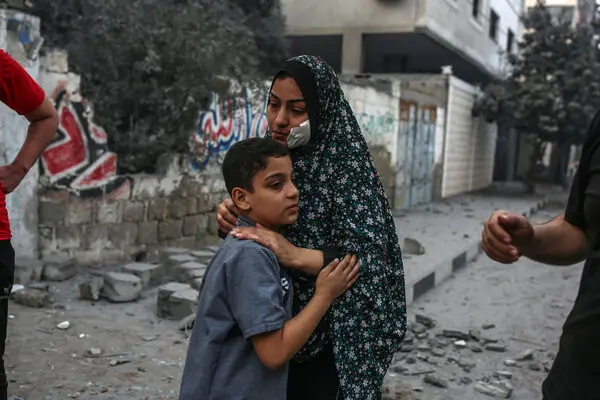
A wounded woman and her child following an Israeli airstrike near their home in the Gaza Strip. Photo: The New York Times
The narrative regarding Palestinian women, however, stands in stark contradiction to this record. While a few Western figures, such as Greta Thunberg and Charlotte Church, have taken public stances, they remain isolated outliers. This pervasive silence indicates a disturbing bias: some lives are deemed worthy of urgent defense, while those in Gaza are relegated to a category of expendability.
Hypocrisy and the Palestinian Struggle
Palestinian women living under Israeli occupation endure profound persecution. To date, over 35,953 people have been killed—more than 9,000 of them women. Those who survive are often forced to endure childbirth without anesthesia, undergo caesarean sections under harrowing conditions, and subsist without basic sanitary supplies. Many have been illegally detained and subjected to dehumanizing treatment.
Palestinian human rights activist Rasha Abushaban has lost her brother and countless loved ones since October 2023, while facing multiple displacements and the destruction of her home. Recently evacuated from Gaza, she poses a harrowing question to the Western feminist establishment: “Where are the voices for the countless mothers in Gaza facing daily catastrophe? Are we not deserving of your attention and support?”
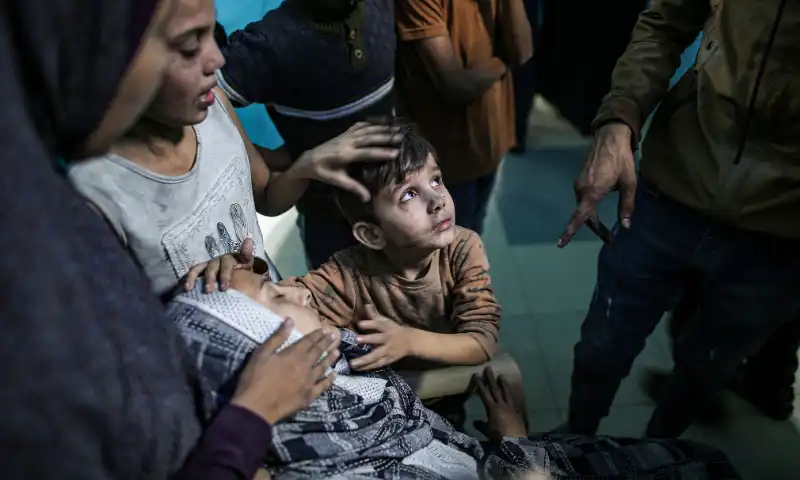
Palestinians, including children, brought to Nasser Hospital for treatment following Israeli attacks in Khan Yunis. Photo: VCG
Rasha’s testimony underscores the lived reality of Palestinian women—a reality of agonizing pain, resource deprivation, and carceral abuse. Yet, the global feminist community remains largely unmoved. This silence is not merely a negligence of human rights; it is the definitive hallmark of a double standard. Why this inconsistency?
An inquiry into the causes of this behavior reveals several fundamental issues:
Islamophobia Within Feminism
British-Libyan journalist Shahed Ezaydi, author of *The Othered Woman: How White Feminism Harms Muslim Women*, argues that this silence stems from the deep-seated prejudice that Muslims are inherently "backwards" and "violent." Such tropes dehumanize Palestinians, effectively barring them from the empathy typically accorded to victims of state violence.
Similarly, Nadien Asbali, author of *Veiled Threat*, asserts that white, Western-centric feminism often acts as a handmaiden to Western imperialist agendas—a framework that sustains class hierarchies and keeps Muslim women at the bottom of the social ladder.
“The hypocrisy of white Western feminists has never been more apparent,” Ezaydi observes. “They are quick to stand with Black, Brown, and Muslim women only when it aligns with their own ideological convenience. But where is that same energy for Palestinian women?”
Political Interests and Alliances
The feminist movement is inextricably linked to the geopolitical strategies of Western states. The contrast between the robust support for Ukraine and the indifference toward Gaza is rooted in national interest. In the case of Ukraine, Western powers are motivated by the desire to curb Russian influence.
Conversely, Israel is a crucial Western ally, serving as a pillar of regional stability for Western interests in the Middle East. Critiquing Israel’s military conduct is often politically untenable in Western capitals, which creates a chilling effect on those who might otherwise speak out for Palestinian women.
The Influence of Israeli Lobbying
Lobbying groups such as AIPAC, J Street, and the Zionist Organization of America exert immense influence not only at the state level but within human rights and advocacy organizations. Their methods are extensive: threatening the withdrawal of funding, socially isolating dissenting organizations as "anti-Israel," and weaponizing litigation to stifle discourse. By imposing these conditions, these groups force human rights organizations into a state of complicity or, at the very least, silence.
Israeli lobby groups such as AIPAC, J Street, and the Zionist Organization of America exert massive influence not just at the governmental level, but over feminist and human rights organizations.
The Role of Media
Israel effectively utilizes media channels and social platforms to disseminate distorted data, framing its military operations under the rubric of "self-defense." By maintaining close relationships with media outlets, they shape the narrative of the conflict. Casualties are often minimized, and critical context is stripped away, leading to a profound shift in public opinion—or, in the case of Gaza, a lack of awareness that prevents sustained pressure.
Redefining Feminism: Beyond Labels and Borders
Feminism has long been a site of rigorous intellectual evolution. Egyptian-American feminist and author Mona Eltahawy describes patriarchy as an octopus—its tentacles reaching into every form of suppression. True feminism must involve the dismantling of all such tentacles.
The Necessity of Inclusive Feminism
By refusing to name and challenge the racist architecture of Israeli occupation and ethnic cleansing, mainstream white Western feminism has effectively collapsed under the weight of its own contradictions. It is a feminism that is incapable of seeing beyond the comfort of its own imperialist and capitalist masters.
Susan Muaddi Darraj, the Palestinian-American author of *Behind You Is the Sea*, views the silence of Western feminists as a profound betrayal. She argues that these opportunists will inevitably be left behind as the world increasingly confronts the reality of Israeli settler-colonialism.
“To those hypocritical feminists who ignore Palestine: the narrative is shifting, and it does not depend on you,” Muaddi Darraj asserts. “Put simply, we do not need you, and we will not wait for your epiphany. Get educated and keep pace, or be left behind.”
The silence of Western feminists regarding Gaza is an expression of opportunism that is both transparent and indefensible. True feminism must transcend convenience and advocate for the rights of all women, regardless of their geopolitical location or religious background. The cries of Palestinian women, bearing the burden of unimaginable suffering, must be heard. It is time for the global feminist community to stand in solidarity with Gaza and uphold the true ethos of feminism: a struggle against all forms of oppression.
Share this intellectual discourse
Help expand constructive dialogues on global affairs, law, and politics.
Rakibul Islam
Author & Contributor, MaroonPaper
Contributing insightful research and analytical essays on law, politics, history, and international affairs for MaroonPaper.