Switch language / ভাষা পরিবর্তন করুন
BiographyEnglish Edition

The Revolutionary Thought of Karl Marx and the Enduring Relevancy of His Philosophy

Rakibul IslamRakibul Islam
•September 15, 2024•7 min read
The Revolutionary Thought of Karl Marx and the Enduring Relevancy of His Philosophy

The intellectual architecture of Karl Marx’s project is anchored in the foundational tenets of dialectical materialism, historical materialism, the mechanics of class struggle, the systemic nature of capitalist exploitation, and the teleological trajectory of communism.

To hear the name Karl Marx is to immediately evoke the specter of socialism, class struggle, and the critique of capital. As one of the most formidable and transformative intellectuals of the modern era, Marx utilized his economic and sociological frameworks to catalyze a paradigm shift that reverberated across the globe. As a seminal architect of socialist and communist thought, his influence remains an inescapable force in sociology, political science, and economics. This article analyzes the life, philosophy, and intricacies of Marx’s theories, while also providing a critical assessment of his enduring legacy.

The Life of Karl Marx

Birth and Early Years

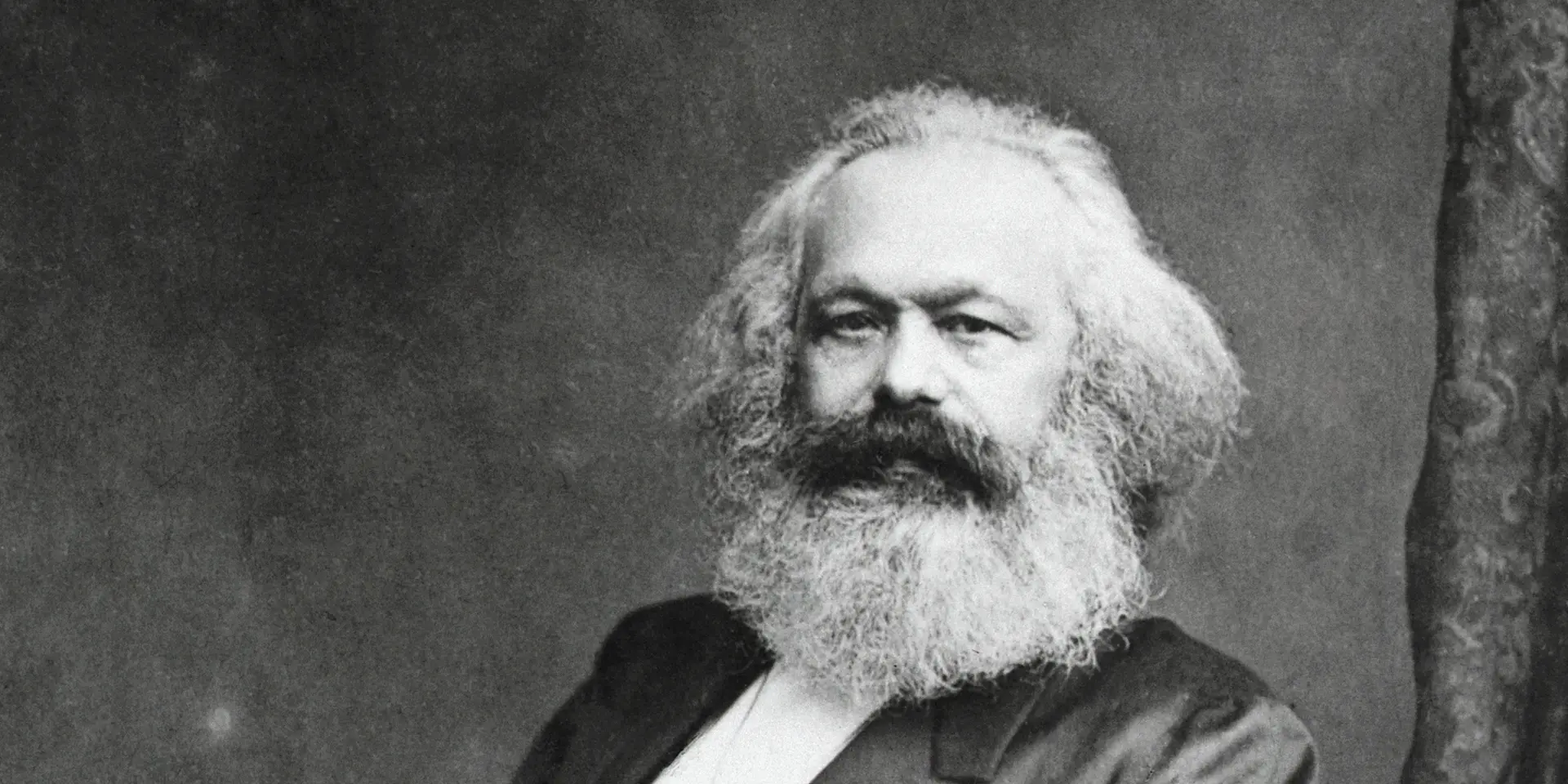
Karl Heinrich Marx was born on May 5, 1818, in the Prussian city of Trier. His father was a successful lawyer; though the family was of Jewish descent, they eventually converted to Christianity. Marx’s formative years were spent in Trier, where he distinguished himself as an exceptionally brilliant student with a voracious appetite for a wide range of subjects.

Education and Career

In 1835, at the age of seventeen, Marx enrolled at the University of Bonn to study law, though he soon found himself more drawn to philosophical and literary discourse. He later transferred to the University of Berlin, where he fell under the intellectual sway of G.W.F. Hegel. This Hegelian influence was pivotal in the evolution of Marx’s thought. During his university tenure, Marx cemented his reputation as an incisive political and philosophical thinker. Karl Marx’s Revolutionary Thought and the Relevance of His Philosophy Marx began his professional career in journalism. In 1842, he became the editor of *Rheinische Zeitung*, where he gained notoriety for his fierce critique of the government. His biting political commentary led to his expulsion from Prussia. He subsequently fled to Paris, where he forged his lifelong partnership with Friedrich Engels—a friendship that would serve as the bedrock for the drafting of *The Communist Manifesto*.
Marx’s Philosophy and Theory

Karl Marx was an intellectual titan of the nineteenth century whose theories have left an indelible mark on modern society, politics, and the global economy. His primary contributions include dialectical materialism, historical materialism, class struggle, the theory of capitalist exploitation, and communism.

Dialectical Materialism

A cornerstone of Marxist philosophy is dialectical materialism. While rooted in Hegel’s dialectics, Marx transposed the concept into a materialist framework. According to this theory, all societal change is the product of dialectical conflict. Marx contended that the friction between varying classes and factions is the primary engine of social progress.

Historical Materialism

Another vital pillar is historical materialism, which posits that the trajectory of human history is fundamentally structured by the relations of economic production. In this view, the development of society is driven by shifts in the modes and relationships of production. Thus, the superstructure of society—its culture, law, and politics—is inextricably tethered to its economic base.
George Orwell’s Animal Farm and the Autocratic Regime of Hasina

Class Struggle

Marx’s most enduring concept is the theory of class struggle. He asserted that the history of all hitherto existing society is the history of class conflict. Whether in ancient slave societies, feudalism, or modern capitalism, there has consistently been a clash between two primary antagonistic groups. In the capitalist era, this conflict resides between the bourgeoisie (the owning class) and the proletariat (the working class). Marx argued that the proletariat is inherently exploited because they are denied the full value of their labor. Though workers are the agents of production, the resulting surplus value is appropriated by the owners—a dynamic that serves as the engine of class struggle.

Capitalist Exploitation and the Theory of Surplus Value

Marx viewed capitalism as an inherently exploitative system designed to siphon maximum profit from the worker. In his masterwork, *Das Kapital*, he detailed how capitalism treats the worker as a mere commodity, where the true value of labor remains alienated from the laborer. This process perpetuates chronic economic inequality.

Marx’s Communism

The ultimate telos of Marx’s philosophy was the establishment of a communist society—a stateless, classless order where private property is abolished and the means of production are held in common. In this system, resources would be distributed according to need rather than profit. Marx believed a proletarian revolution would inevitably overthrow the bourgeoisie, paving the way for this equitable future.

The Theory of Change and Revolution

According to Marx, societal transformation is inevitable and necessitates revolution. He posited that capitalism carries within it the seeds of its own destruction; as exploitation intensifies, the proletariat is eventually forced to break its chains.

Revolutionary Consciousness and Contemporary Impact

Marx’s thought was never intended to be purely descriptive; it was an invitation to revolutionary praxis. While his theories were born of the nineteenth-century industrial context, they continue to inform discussions on economic inequality and exploitation today, even as modern critics debate their applicability in the post-industrial age.

Modern Critiques and the Relevance of Marx

While many of Marx’s prognostications were tailored to the nineteenth-century factory system, the fundamental problems of inequality remain. However, critics often point to the chasm between Marxist theory and the historical reality of the Soviet and Chinese experiences, where the attempt to implement these ideals frequently devolved into authoritarianism.
What is a Protectorate State? The Relevance of the Protectorate in Modern Context

Famous Works of Karl Marx

The Communist Manifesto

Published in 1848, *The Communist Manifesto*, co-authored with Friedrich Engels, stands as a foundational text for global revolutionary movements. It provides a searing indictment of capitalist exploitation and a call to action for the proletariat.

Das Kapital

In *Das Kapital*, Marx provides an exhaustive, rigorous analysis of the capitalist mode of production, illustrating how the system necessitates poverty, unemployment, and systemic inequality to sustain its profitability.

Critiques and the Future of Marxist Thought

Marx’s theories have faced significant scrutiny. Critics often argue that his vision of a classless society is idealistic and fails to account for the complexities of human governance, as evidenced by the failure of state-socialist experiments. Furthermore, the binary view of "bourgeoisie vs. proletariat" is often criticized as being overly reductive in the face of today's complex professional and middle classes. However, despite the endurance and evolution of capitalism, Marx’s diagnosis of systemic inequality and his interrogation of labor markets remain vital tools for contemporary political discourse.

Personal Life and Legacy

Marx’s personal life was marked by both profound affection and grueling hardship. His marriage to Jenny von Westphalen was his primary emotional anchor, yet their life together was marred by the tragic loss of children and unrelenting financial precarity—a struggle mitigated only by the constant, generous support of Friedrich Engels. Marx suffered from chronic ill health throughout his life, exacerbated by poverty. Following the death of his beloved Jenny in 1881, his own health rapidly declined. Karl Marx passed away in London on March 14, 1883, at the age of sixty-four. He was interred at Highgate Cemetery, where his epitaph—a call for the unity of the working class—continues to serve as a testament to his life’s work. His legacy remains a contentious, essential, and unavoidable presence in the annals of intellectual history.

Share this intellectual discourse

Help expand constructive dialogues on global affairs, law, and politics.

Rakibul Islam

Rakibul Islam

Author & Contributor, MaroonPaper

Contributing insightful research and analytical essays on law, politics, history, and international affairs for MaroonPaper.

Stay Connected with MaroonPaper

Subscribe to receive selected intellectual essays, critical commentaries, and translations directly in your inbox.

No spam, ever. Unsubscribe at any time.