
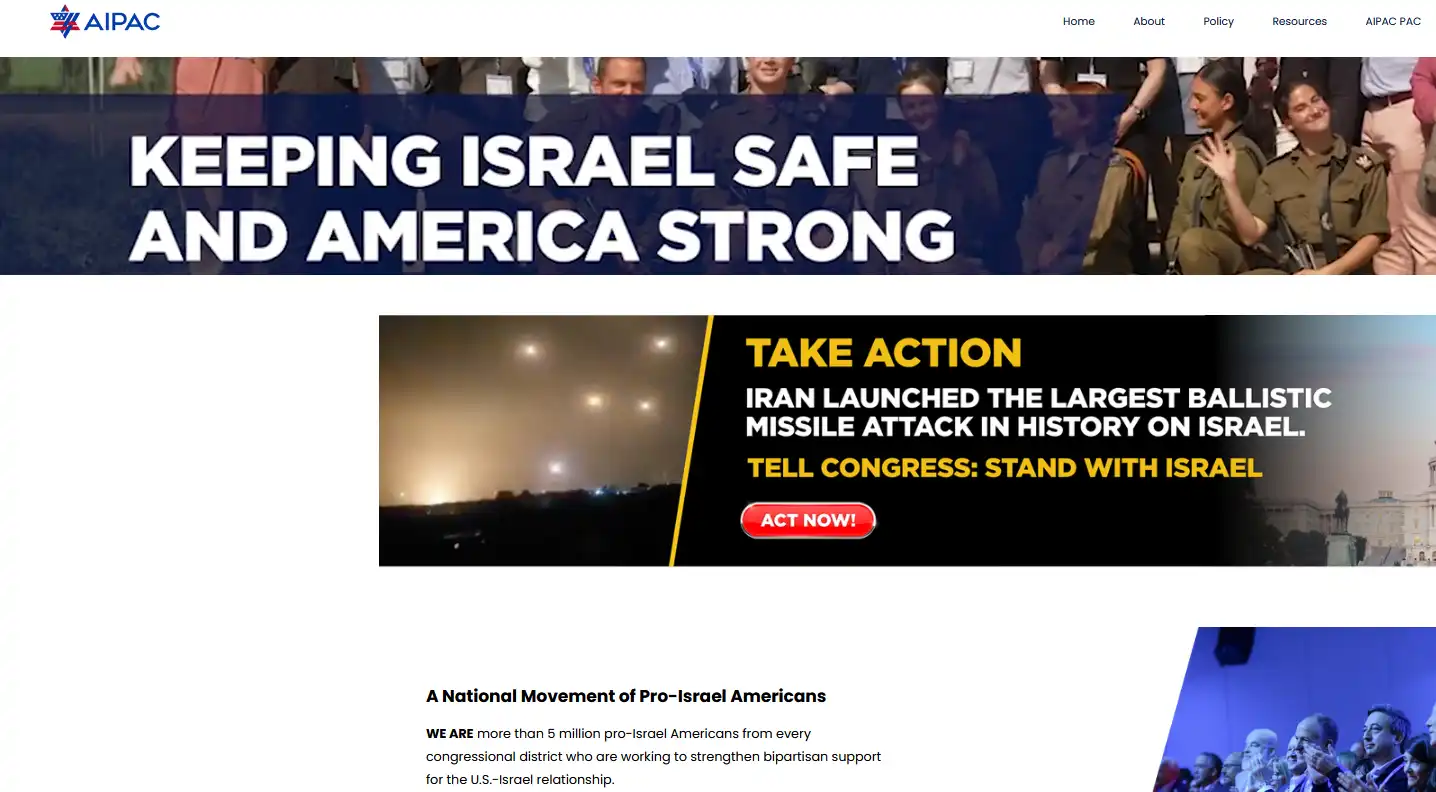
What is AIPAC?
The American Israel Public Affairs Committee (AIPAC) is a preeminent lobbying organization in the United States, established with the singular objective of maintaining a robust and intimate partnership between the U.S. and Israel. Founded in 1963 as a "non-profit" and "non-partisan" entity, it functions in practice as a sophisticated instrument designed to mold the American political architecture to shield and advance Israeli interests. Its reach is so extensive that its operations transcend domestic policy, exerting considerable weight on the stage of global politics.
Core Objectives and Strategies
AIPAC’s fundamental goal is to ensure that Israeli interests are not merely considered but prioritized within U.S. policymaking. The organization presents curated data and narratives to legislators in Congress and the White House, proactively shaping U.S. foreign policy to align with Israeli objectives. AIPAC systematically provides congressional members with pro-Israel intelligence while striving to embed such priorities into their legislative agendas. To manufacture consent and solidify pro-Israel sentiment in American politics, the organization employs a variety of strategies: 1. **Lobbying and Financial Support**: AIPAC invests substantial capital annually to secure the favor of congressional members, often funneling financial contributions into their electoral campaigns. This mechanism incentivizes lawmakers to pledge unwavering support for Israel. 2. **Events and Seminars**: The organization curates an array of conferences and seminars for legislators and their staff. These events serve to frame the discourse on Israel in a manner that encourages political alignment with its state interests. 3. **Engaging Intellectuals and Experts**: AIPAC cultivates a network of pro-Israel experts and academics who permeate American media and educational institutions, effectively shaping public opinion and neutralizing potential criticisms. While other lobbying groups operate within the U.S. political system, AIPAC’s potency is unparalleled. By deploying vast financial resources, it secures the ongoing military and economic assistance that has become the hallmark of the U.S.-Israel relationship.AIPAC’s Congressional Influence
AIPAC maintains a tight grip on Congress through a network of intimate relationships. By facilitating exclusive events, sponsoring trips, and providing critical financial backing for campaigns, the organization imposes a form of psychological pressure on representatives. The result is a legislative environment where public dissent against Israel is treated as a career liability. Through programs like "Friends of Israel," legislators are regularly invited to visit Israel, where they are briefed on its military and economic situation. These immersive experiences are designed to cultivate empathy and frame support for Israel as both a moral and political imperative. AIPAC leverages Super PACs and political action funds to provide the electoral support that modern candidates crave. Recognizing that politicians are beholden to their donors, AIPAC occupies a central role in this ecosystem, providing both the capital and the political cover necessary for survival.
It is widely understood in Washington that defying AIPAC is a hazardous endeavor. Numerous instances suggest that legislators who voice criticism of the organization face the sudden withdrawal of financial support during their reelection campaigns, thereby undermining their political longevity.
The Strategy of "Anti-Semitism" and the Erosion of Political Freedom
In the American political landscape, there is a pervasive trend of labeling any criticism of Israel as "anti-Semitic." AIPAC serves as a primary driver of this rhetoric. By framing discourse in these binary terms, the organization poses a significant challenge to American political liberty. It acts not only as a mechanism for garnering support but also as an enforcer that delegitimizes dissenting voices, effectively narrowing the scope of acceptable public debate. The intent of this strategy is to render any anti-Israel stance a social and political liability. This creates an atmosphere where political leaders are hesitant to offer critique, fearing the immediate professional fallout orchestrated by the lobby. This has led to a stagnant political climate where the vast majority of Congress members feel compelled to maintain perpetual, unquestioning support for Israel. [caption id="attachment_7558" align="aligncenter" width="1024"]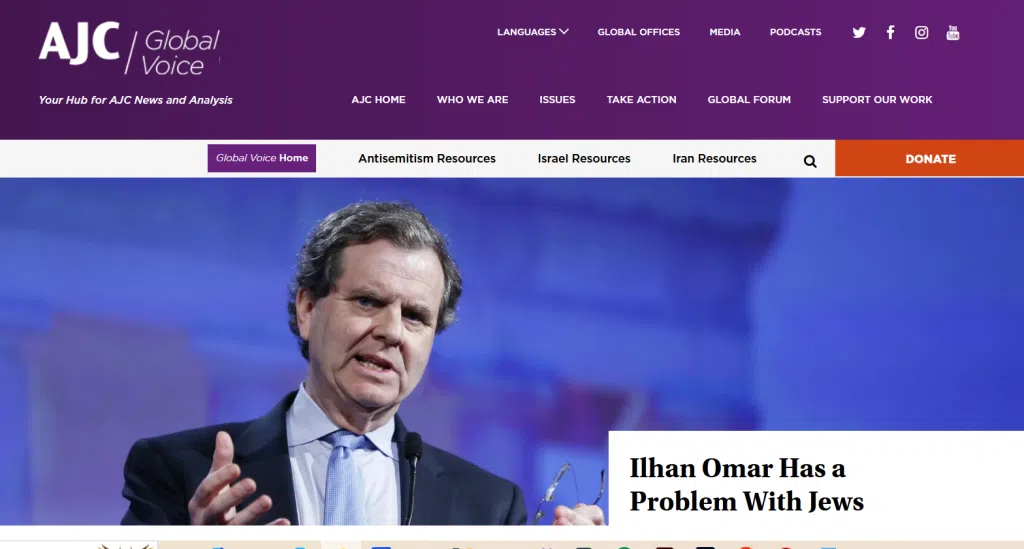 Ilhan Omar's friction with the Jewish community. Source: American Jewish Community[/caption]
The "anti-Semitic" label has proven remarkably effective at destroying the reputations of those who challenge the status quo. When members of Congress, such as Rashida Tlaib or Ilhan Omar, have criticized Israeli military operations in Palestine, they were immediately subjected to these labels, leading to intense social and political harassment.
Julian Assange and WikiLeaks: Controversy, Leaks, and the Struggle with the United States
This environment has created a crisis of conscience in the political sphere; politicians know that voicing opposition may effectively end their careers. Consequently, political autonomy is sacrificed at the altar of political survival. The term "Zionist shooting gallery" is often invoked to describe the experience of critics who find themselves pressured into silence, leaving them politically and socially vulnerable.Strategies for Manipulating Public Opinion
AIPAC’s influence is not limited to the corridors of power; it actively manipulates public perception through the media. By shaping narratives, the organization has destabilized the democratic principle that policy should reflect the genuine will and informed consent of the populace. Television and print media often echo AIPAC’s talking points, casting anti-Israel positions in a negative light. Through this, a public misconception is fostered: that criticizing Israel is synonymous with anti-Semitism. Furthermore, this influence extends to the American educational system. The frequent omission of critical perspectives regarding Israel in universities and schools creates a biased intellectual framework, which undermines the very essence of democratic debate and freedom of speech.Nationalism: The Political Driving Force of the Modern World
The Impact on the Presidency
Even the American President is not immune to the pervasive influence of AIPAC. Any occupant of the Oval Office must balance domestic exigencies with international relations; however, AIPAC’s reach is so deep that veering from its preferred policy is often regarded as "political suicide." Consequently, presidents are frequently forced to prioritize Israeli interests over the national interest of the United States.The Obligation to Protect Israeli Interests
In 1991, the administration of George H.W. Bush faced a stark illustration of AIPAC’s power. When Bush attempted to pause $10 billion in loan guarantees to Israel—believing it prudent for U.S. policy in the Middle East—AIPAC mobilized against him, pressuring Congress to secure the funds regardless of the President's position. The episode underscored that the lobbying power of AIPAC can override even the executive branch.Who is arming Israel in the Gaza genocide?
Subsequent administrations have followed similar patterns. When President Barack Obama attempted to navigate the complexities of the Iran nuclear deal, AIPAC aggressively lobbied against it, framing the administration’s efforts as anti-Israel. Even President Donald Trump, in his efforts to solidify his base, enacted policies—such as the recognition of Jerusalem as the capital and the acknowledgment of Israeli sovereignty over the Golan Heights—that functioned as direct fulfillments of AIPAC’s long-standing objectives. Presidential resistance to AIPAC is arduous, as it invites a deluge of political and media-driven condemnation. By framing every issue through the lens of unwavering support for Israel, AIPAC ensures that neutrality is a nearly impossible position for a head of state to maintain.