
President Woodrow Wilson’s Fourteen Points
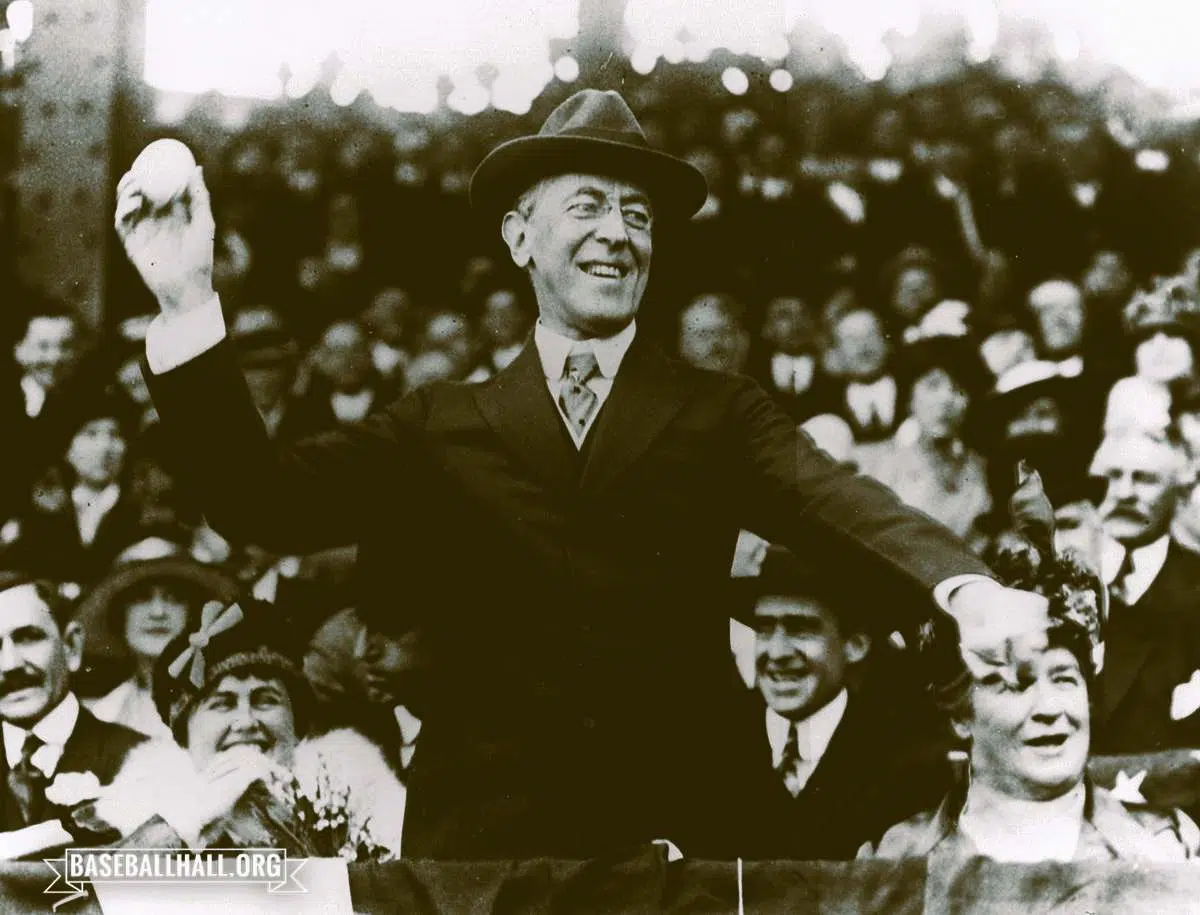
On January 8, 1918, Woodrow Wilson, the 28th President of the United States, articulated his vision for the end of the war and the foundations of a lasting global peace. His framework was the product of "The Inquiry," a research collective comprised of 150 scholars—geographers, historians, and political scientists—tasked with analyzing the political, social, and economic realities of regions across the globe to inform the anticipated peace negotiations. The research was predominantly Eurocentric, designed to equip the American delegation with the expertise necessary to navigate the complexities of a post-war order.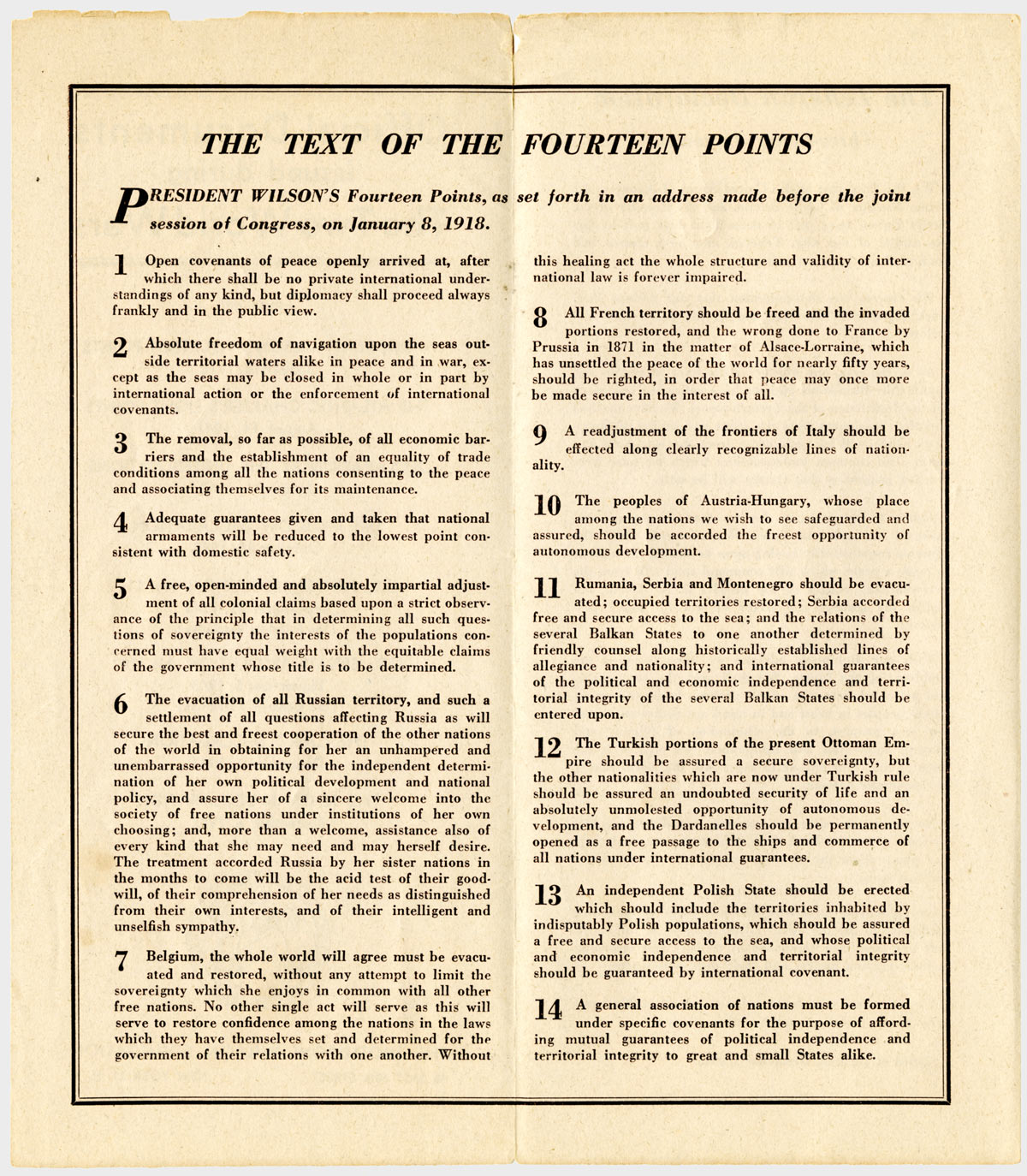
The 1954 Election: Formation of the United Front, Victory, and the Defeat of the Muslim League
A retrospective of European historiography reveals that, while the continent languished in the medieval depths of superstition, squalor, and intellectual stagnation, the Iberian Peninsula served as a luminous beacon of civilization. It was within this crucible that the Muslim architects of the region forged the enduring, multifaceted heritage of Al-Andalus.
Open Diplomacy
The cessation of all secret international understandings; diplomacy shall proceed always frankly and in the public view.Freedom of Navigation
Absolute freedom of navigation upon the seas, outside territorial waters, alike in peace and in war, except as the seas may be closed by international action for the enforcement of international covenants.Free Trade
The removal of all economic barriers and the establishment of an equality of trade conditions among all the nations consenting to the peace.Disarmament
Adequate guarantees given and taken that national armaments will be reduced to the lowest point consistent with domestic safety.Impartial Adjustment of Colonial Claims
A free, open-minded, and absolutely impartial adjustment of all colonial claims, based upon a strict observance of the principle that the interests of the populations concerned must have equal weight with the equitable claims of the government.Evacuation of Russian Territory
The evacuation of all Russian territory and such a settlement of all questions affecting Russia as will secure the best and freest cooperation of the other nations of the world.Restoration of Belgium
The evacuation and restoration of Belgium, without any attempt to limit the sovereignty which she enjoys in common with all other free nations.Liberation of French Territory
All French territory should be freed and the invaded portions restored, and the wrong done to France by Prussia in 1871 in the matter of Alsace-Lorraine should be righted.What is America’s Blackwater? How does it terrorize the World?
Readjustment of Italian Frontiers
A readjustment of the frontiers of Italy should be effected along clearly recognizable lines of nationality.Autonomy for Austria-Hungary
The peoples of Austria-Hungary, whose place among the nations we wish to see safeguarded and assured, should be accorded the freest opportunity to autonomous development.Independence for the Balkan States
Romania, Serbia, and Montenegro should be evacuated; occupied territories restored; and Serbia accorded free and secure access to the sea.Dissolution of the Ottoman Empire and Freedom of the Dardanelles
The Turkish portion of the present Ottoman Empire should be assured a secure sovereignty, but the other nationalities which are now under Turkish rule should be assured an undoubted security of life and an absolutely unmolested opportunity of autonomous development.Independence of Poland
An independent Polish state should be erected which should include the territories inhabited by indisputably Polish populations, with free and secure access to the sea.Establishment of an International Organization
A general association of nations must be formed under specific covenants for the purpose of affording mutual guarantees of political independence and territorial integrity to great and small states alike—the genesis of the League of Nations.How Sikkim became a part of India?
Publish Your Research & Critical Analysis on MaroonPaper
Contribute in-depth essays on law, political philosophy, economics, and geopolitics to an intellectual readership.
Wilson’s Role at the Paris Peace Conference
Though the Fourteen Points provided the ideological scaffolding for the armistice, Wilson’s influence at the Paris Peace Conference of 1919—also known as the Versailles Conference—was steadily eroded by the pragmatic, often imperial, interests of his allies. While framed as a forum for peace, the conference functioned primarily as a mechanism for the victors to dictate terms to the defeated Central Powers.The Background of Iraq's 1958 Military Revolution
Widely recognized as one of the world's inaugural written constitutions, the Charter of Medina serves as a seminal historical document, establishing foundational precedents for the Islamic state, religious pluralism, and the architecture of social cohesion.
Moroccan Nationalist Movement and Sultan Muhammad
Ultimately, Wilson’s role in Paris was one of painful compromise. He fought to temper the punitive demands of Clemenceau and Lloyd George, yet he was forced to concede on multiple fronts. He resisted the outright annexation of colonies, proposing instead that the League of Nations administer them until they were prepared for independence—a vision that Lloyd George undermined by crafting the Mandate system. Wilson’s idealistic attempt to restructure Europe along the lines of sovereignty and self-determination faltered under the weight of Allied Realpolitik. The resulting concessions ensured that the final agreements were governed by five core tenets:- The neutralization of Germany to ensure it could never again rise as a dominant European military power.
- The reorganization of Central and Eastern Europe based on national self-determination.
- The dissolution of the Ottoman, Russian, and Habsburg empires.
- The implementation of security guarantees for France.
- The prevention of any single power achieving total hegemony in Europe.
The Strait of Hormuz and Its Importance to the Contemporary Global Economy
In practice, these objectives largely favored British and French interests. Wilson’s inability to adhere to his own principles meant that the promise of self-determination was applied inconsistently, leaving Germany humiliated and the global order essentially reorganized to suit the appetites of the victors. In final analysis, while the Fourteen Points emerged as a beacon of hope amid the carnage of the Great War, Wilson’s efforts in Paris were characterized by a tragic surrender to vested interests. Yet, despite the failures and compromises of the peace process, the Fourteen Points remain a vital historical milestone. They marked the transition toward a new, if imperfect, era of international cooperation, establishing the framework for modern diplomacy and the enduring, albeit fraught, pursuit of global stability.