
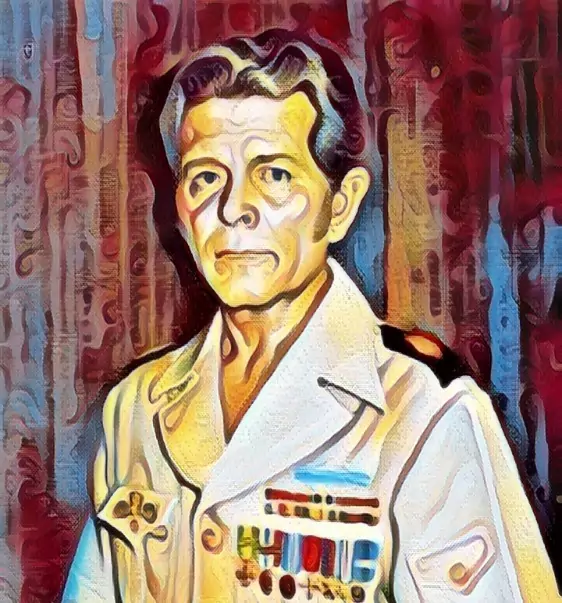
Early Life
William Abraham Simon Ouderland was born on December 6, 1917, in Amsterdam, the capital of the Netherlands. Driven by the hardships of his youth, he left his studies at seventeen to work as a shoe polisher for the Bata Shoe company. Two years later, he left the job to enlist in the national army. Until 1944, he served as a sergeant in the Royal Signals Corps. A Dutch-Australian military commando officer, he later left the army to participate in World War II as a guerrilla commando in the Dutch forces. In late 1970, Ouderland arrived in Dhaka from the Netherlands to serve as the Managing Director of Bata Shoe in Dhaka. Within months, he was promoted to the position of Executive Director.The Jallianwala Bagh Massacre: A Brutal Gift of British Civilization
Ouderland in the War of Liberation
While working at the Bata shoe factory in Tongi, he bore witness to the firing by East Pakistan Rifles (EPR) personnel upon a procession of laborers and civilians in front of the Meghna Textile Mill on March 5, 1971. Deeply pained and shocked by the mass movement of March 1971 in East Pakistan, the subsequent *Operation Searchlight* on March 25, and the indiscriminate brutality and genocide committed by the Pakistani military, he resolved to assist Bangladesh in its war. As the chief executive of a multinational corporation, he enjoyed the privilege of unfettered movement into West Pakistan. He leveraged this access to infiltrate the policy-making circles of the Pakistani military and act as an intelligence operative for the cause of Bangladesh.
Noam Chomsky: the most heated and unpleasant spokesperson of this Century
The intrepid William Ouderland became an active member of the Sector 2 guerrilla force. He provided regular tactical training to freedom fighters in secret camps in Tongi, including on the premises of the Bata factory. Eventually, he took up arms himself. Under his leadership and planning, freedom fighters destroyed bridges and culverts along the Tongi-Bhairab railway line to cripple the enemy's communication. According to a certificate issued by Major Haider, Ouderland provided training, strategic advice, cash, medical supplies, warm clothing, and weaponry to the revolutionary forces. Simultaneously, in the early days of the war, he captured photographs of the Pakistani military's atrocities and smuggled them to international media, playing a pivotal role in shaping global public opinion. Reflecting on this, Ouderland wrote, "I revisited the experiences of my youth in Europe. I felt that the world needed to know what was happening in Bangladesh." Witnessing the barbarism in Tongi, he was struck by the haunting similarities between the Pakistani forces and the Nazi regime he had fought 29 years earlier. He decided to move beyond reconnaissance and directly engage in the conflict, receiving guidance from the then-Australian Deputy High Commissioner in Dhaka.Recognition
In honor of Ouderland’s memory, a road in the Gulshan district of Dhaka has been named after him. For his valiant participation and exceptional expertise during the Liberation War, the Government of Bangladesh conferred upon him the *Bir Protik* award. He is listed as number 317 in the list of *Bir Protik* recipients for Sector 2. While he was invited to the reception and certificate distribution ceremony hosted by the Prime Minister on March 7, 1998, he could not attend due to illness. He donated the prize money of 10,000 Taka to the Freedom Fighter Welfare Trust. He remains the only foreign national to receive this honor from the Bangladeshi government. Until his final moments, he signed his name with the title *Bir Protik* with immense pride and reverence.