
What Does Mean By Human Rights?
Yet, in 2003, the United States, leading a coalition of like-minded states, invaded Iraq under the explicit pretext of neutralizing its "WMD" stockpiles. The architects of this aggression were U.S. President George W. Bush and British Prime Minister Tony Blair. A year later, the U.S. Senate Select Committee on Intelligence released a report revealing that the Bush administration’s pre-war statements regarding Iraqi WMD were misleading and unsupported by intelligence. Subsequent inspections led by the United States confirmed that Iraq had, in fact, ceased all active production and stockpiling of these weapons long before the invasion. By then, however, the wholesale destruction of Iraq at the hands of Bush and Blair was already complete. At the dawn of the twenty-first century, this conflict—now commonly known as the Second Persian Gulf War—stands as one of the most harrowing military aggressions in modern memory.Download Senate Report of Pre-war Intelligence on Iraq
Beyond the conventional narratives propagated by Western media, a closer inspection of the map reveals a starker reality: the perpetual instability in the Middle East serves as a backdrop to a ruthless shadow conflict over the Strait of Hormuz—the critical maritime chokepoint through which twenty percent of the world’s petroleum supply flows.
What is a Weapon of Mass Destruction?
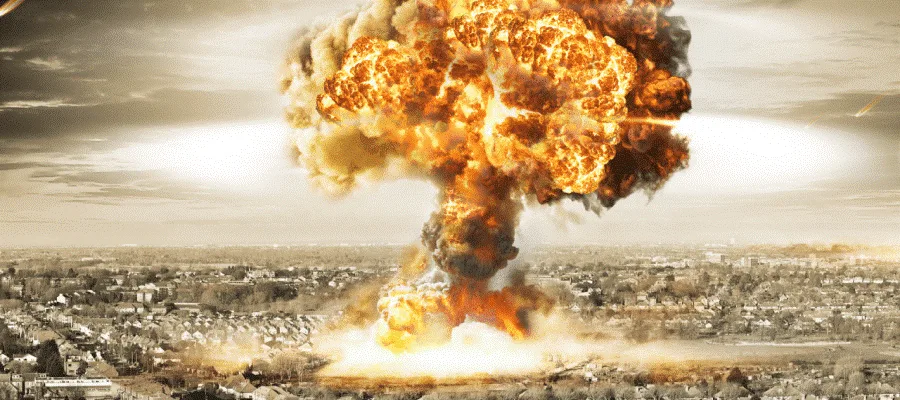
The term “weapon of mass destruction” (WMD) began to gain traction around 1937, though it lacked the pervasive ubiquity it holds today. A century ago, the term was not part of the common lexicon. During the Second World War, it was primarily used to describe the immense destructive capacity of bomber aircraft formations. Only later did it become the standard nomenclature for nuclear, chemical, and biological armaments. In common parlance, a WMD is a weapon designed to kill civilians indiscriminately, without regard for the laws of war—such as nuclear or chemical bombs. The Oxford Dictionary defines it as "a nuclear, biological, or chemical weapon able to cause widespread death and destruction." Similarly, Britannica characterizes WMDs as armaments capable of large-scale, indiscriminate casualties and destruction, the possession of which by an adversary is viewed as a grave strategic threat. The term first appeared in a UN General Assembly resolution in 1946. In 1947, the assembly established the Commission for Conventional Armaments to formalize the definition. On August 12, 1948, the commission defined WMDs as: “atomic explosive weapons, radioactive material weapons, lethal chemical and biological weapons, and any weapons developed in the future which have characteristics comparable in destructive effect to those of the atomic bomb or other weapons mentioned above.” Although the Soviet Union initially dissented, they eventually accepted this definition by signing the resolution in 1977.Is the USA a Leading Terrorist State?
Publish Your Research & Critical Analysis on MaroonPaper
Contribute in-depth essays on law, political philosophy, economics, and geopolitics to an intellectual readership.
Characteristics of Weapons of Mass Destruction
Analysis of the UN commission’s definition indicates that while the term explicitly cites lethal chemical and biological agents, it encompasses nuclear and radioactive armaments, as well as any future, as-of-yet-unknown technologies capable of total destruction. These definitions suggest several core characteristics: * They may be nuclear, biological, radiological, or chemical in nature; * They may involve high-explosive delivery systems; * They include the missiles, aircraft, or ships required to deploy such armaments.When Does a Weapon Qualify as a WMD?
To determine whether a weapon or its deployment constitutes a "weapon of mass destruction," one must assess its capacity and reach. Based on established definitions, a weapon may be classified as a WMD if it: * Is capable of generating catastrophic effects in a single moment, resulting in the deaths of millions, jeopardizing natural ecosystems, and permanently altering the lives of future generations; * Is capable of causing death or severe injury through toxic or poisonous chemical agents; * Spreads pathogens or toxins to harm or kill humans, animals, or plants; * Consists of nuclear explosive devices or biological/chemical agents deployed against enemies in armed conflict.Treaties Governing WMDs
Several multilateral treaties prohibit the use of specific types of WMDs. Chief among these are the Biological Weapons Convention and the Chemical Weapons Convention. Nuclear non-proliferation is addressed through the Treaty on the Non-Proliferation of Nuclear Weapons, the Treaty on the Prohibition of Nuclear Weapons, the Partial Test Ban Treaty (covering tests in the atmosphere, outer space, and underwater), and the 1996 Comprehensive Nuclear-Test-Ban Treaty, which, while signed, remains unimplemented. Other agreements, such as the Hague Code of Conduct and the Missile Technology Control Regime, aim to curb the proliferation of missiles and related technologies.Let’s call Israel’s violence what it is: terrorism, not clashes
The volatility currently defining Middle Eastern statecraft is anchored by the convergence of the intractable Palestinian crisis and the Abraham Accords—a transformative diplomatic framework that continues to reshape the regional architecture.
The Questionable Definition of WMD
It is evident that simpler armaments, such as landmines, are excluded from the WMD classification, despite the immense toll they take on human life. According to the World Health Organization, hundreds of thousands died in 2001 alone due to suicides, homicides, and conventional warfare—a figure that dwarfs the death toll caused by nuclear, biological, or chemical weapons throughout the twentieth century.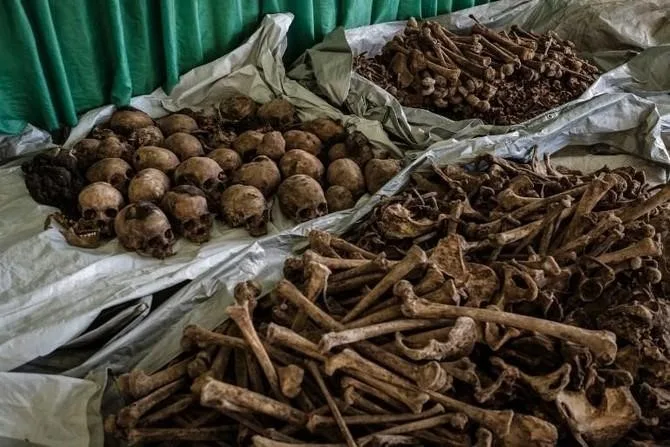
A picture taken on April 30, 2018, shows collected victims’ bones and skulls from a newly discovered pit that was used as a mass grave during the 1994 Rwandan genocide and hidden under a house at the local administration office in Kabuga, the outskirts of Kigali, Rwanda.
Background and Consequences of the Rwandan Genocide
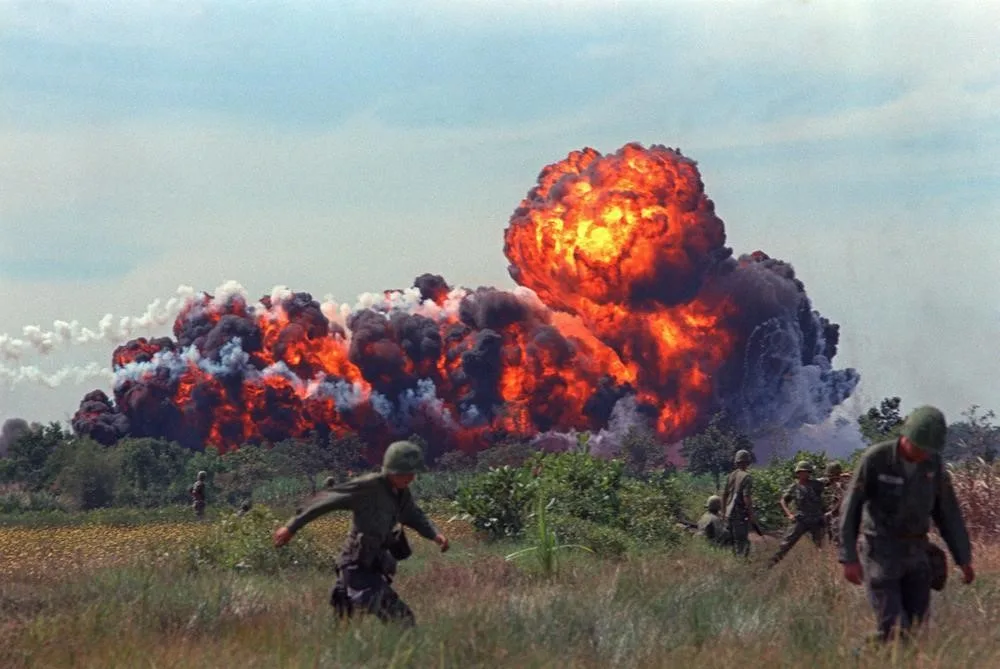
U.S. forces burned Vietnamese people alive