
The Pashtunistan Question
The borders of the Afghan kingdom, established by Ahmad Shah Abdali, remained historically fluid and ill-defined. However, with the consolidation of British power in the Indian subcontinent, the necessity of delineating a formal boundary became urgent. In the wake of the Second Anglo-Afghan War, the border was formalized in 1893 as the Durand Line. Under the agreement between Sir Mortimer Durand and Emir Abdur Rahman, regions south of the Durand Line—including Chitral, the North-West Frontier (Dir, Swat, and Bajaur), and Baluchistan—fell under British administration. When the British departed in 1947, Pakistan inherited these territories as a successor state. This transition ignited immediate hostility from the Afghan government, which argued that since the British had occupied these lands by force, they should either be returned to Afghanistan or granted independence as a new state: "Pakhtunistan." Pakistan’s refusal to entertain these claims created a profound and persistent diplomatic crisis.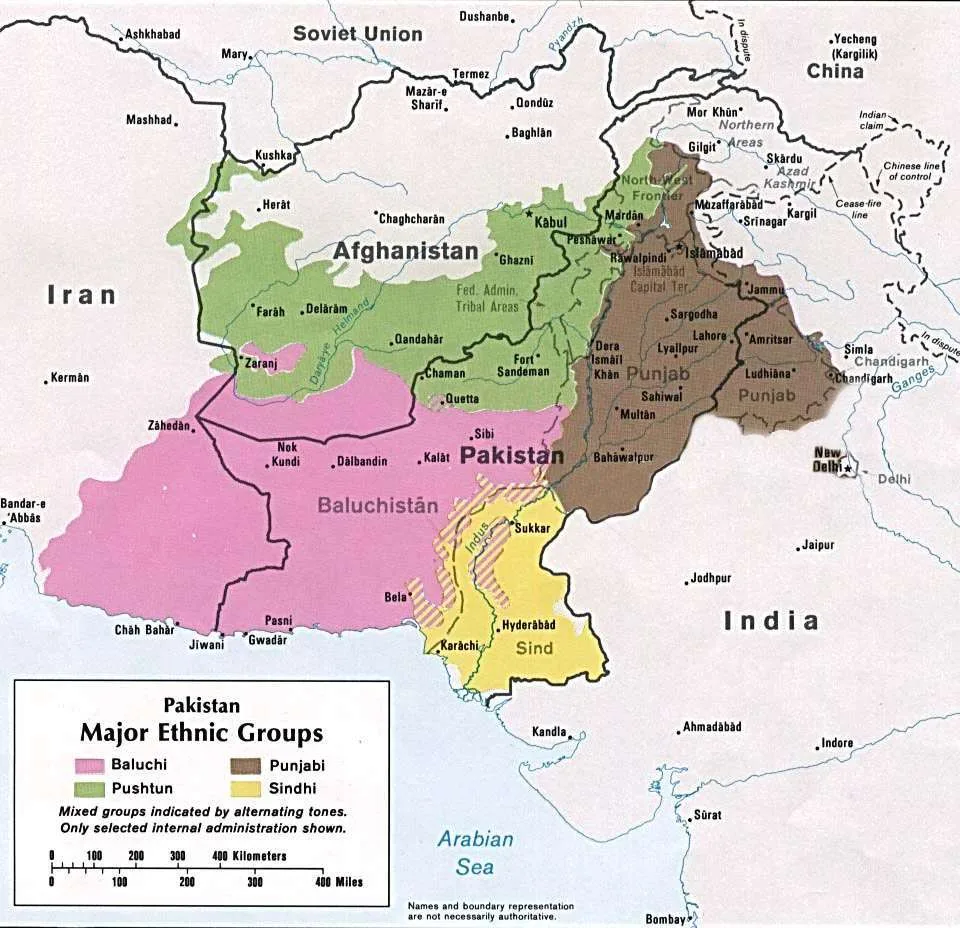
The Moroccan Nationalist Movement and Sultan Muhammad
Geopolitics also played a role: landlocked Afghanistan relied heavily on transit routes through the region. Prior to 1947, trade flowed through the subcontinent, but the creation of Pakistan effectively constricted Afghanistan's economic access. Kabul viewed a semi-autonomous or independent Pashtun state as a potential vital corridor for its commerce—a strategic objective that exacerbated the tension with Islamabad.First Phase (August 12, 1947)
Tribal leaders of the Afridi nation convened at *Tinai Bagn*, declaring the establishment of a state at the heart of their homeland. Simultaneously, a gathering at *Raznak* elected a "Fakir" as the new president of Pakhtunistan. The Pakistani state responded by arresting the Fakir and several other insurgent leaders, further escalating the conflict.Second Phase (1953)
Daoud Khan, a staunch advocate for a Pashtun state, launched a renewed movement in 1953. His ultimatum was stark: the Pashtuns would either join Afghanistan or constitute an independent state.Third Phase (1955)
In 1955, prior to the Pakistani parliament’s formal vote to integrate its provinces into the "One Unit" scheme, the Afghan government issued a scathing condemnation. On March 30, a mob of 15,000 Afghans attacked the Pakistani embassy in Kabul, destroying property and desecrating the Pakistani flag. This incident led to the recall of diplomats and a complete breakdown of official relations.The Backdrop of Iraq's 1958 Military Revolution
Has the Pashtunistan issue ever truly been resolved? Despite multiple attempts at mediation, the core dispute persists. * In 1947, Najibullah of Afghanistan and Pakistan’s Governor-General Muhammad Ali Jinnah engaged in direct talks, which ultimately collapsed. * In 1955, while Afghan diplomats resumed flag-hoisting at their embassy and Pakistani Prime Minister Iskander Mirza’s 1956 visit offered a brief thaw, hostilities resumed the following year. Afghanistan grew deeply anxious over Pakistan’s acquisition of U.S. weaponry. Efforts by Pakistani Prime Minister Huseyn Shaheed Suhrawardy provided a temporary respite, but the underlying tensions remained. * Mediation attempts by regional powers such as Iran and Saudi Arabia also failed to produce a lasting settlement. Throughout the 1960s, intervention by U.S. Ambassador M.H. Meinhold and various Russian overtures failed to untie this knot. The dispute remains tethered to the Durand Line—a colonial legacy that continues to define the fraught, often hostile relationship between Afghanistan and Pakistan.