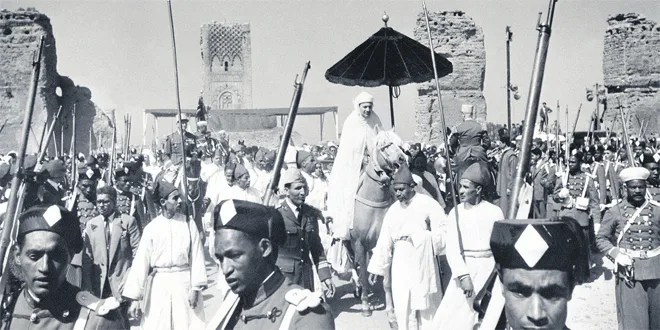
The Genesis of the Moroccan State
Archaeological evidence suggests that hominids, the precursors to modern humanity, inhabited this region at least 400,000 years ago. For nearly two millennia prior to the establishment of Phoenician colonies along the Moroccan coast between the eighth and sixth centuries BCE, the territory was home to indigenous Berber populations. This marks the first recorded history of Moroccan civilization. By the fifth century BCE, the coastal regions fell under the influence of the city-state of Carthage, which maintained its presence until the end of the third century BCE. During this era, local rulers governed the interior territories. From the third century BCE until 40 CE, while the region was formally part of the Roman Empire, local Berber kings retained significant administrative control. In the mid-fifth century, the region was subjected to the occupation of the Germanic Vandals, only to be reclaimed by the Byzantine Empire in the sixth century. In the early eighth century, Muslim forces conquered the region, though it splintered from the Umayyad Caliphate following the Great Berber Revolt of 740 CE. Half a century later, in 788 CE, the Idrisid dynasty established the first unified Moroccan state. This paved the way for successive independent dynasties—most notably the Almoravids and Almohads—to exert dominance over both the Maghreb and Muslim Spain. Morocco reached its zenith as a regional power during the eleventh and twelfth centuries. The Saadi dynasty ruled from 1549 to 1659, followed by the Alaouite dynasty, which has held the throne since 1667.The Evolution of the Nationalist Movement
After overcoming immense obstacles and enduring a bloody struggle, Morocco regained its independence from France on March 2, 1956. The roles played by Sultan Mohammed V and the Istiqlal Party in this movement remain indelible. In the annals of African liberation, the Moroccan nationalist struggle occupies a unique position—one that can only be understood through the prism of the colonial experience. Geographically, the Strait of Gibraltar serves as the threshold between Europe and Africa. Due to their proximity—separated by mere kilometers—Morocco was forced, as early as the 17th century under the Almoravid and Almohad dynasties, to contend with both Northern Spanish incursions and Ottoman expansionism from the east. As industrialization swept through Europe, its gaze turned hungrily toward its neighbors. The fervor of the Industrial Revolution spurred European powers to seek colonial footholds in Northwest Africa. Morocco, sharing borders with both Spain and France, emerged as a prime candidate for colonization.The Roots of Colonialism
Following the political fragmentation and strife that attended the fall of the Saadi dynasty, Alaouite Sultan Al-Rashid reunited Morocco in the late 1660s. Ismail Ibn Sharif subsequently forged a centralized state in the face of tribal opposition, mounting a spirited defense against Spanish and English encroachments. His Rifian army successfully recaptured Tangier from the English and drove the Spanish from Larache in 1689. By 1769, the Portuguese abandoned Mazagan, their final stronghold in Morocco. However, this resistance ultimately faltered; Moroccan sovereignty was severely compromised following the defeat at the Siege of Melilla in 1775. During this period, American merchant vessels in the Atlantic were frequent targets of Barbary pirates. Morocco’s third sultan, Mohammed ben Abdallah, extended protection to American shipping, leading to the Treaty of Friendship between the United States and Morocco in 1786—the foundation of a durable bilateral relationship. France, having already colonized neighboring Algeria, began monitoring Morocco with increasing intent. By the early 1830s, Paris initiated maneuvers to secure the territory. Simultaneously, tensions with Spain escalated, culminating in the 1860 Spanish-Moroccan War over the Ceuta enclave, which resulted in Spain seizing further territory. By 1884, Spain had established its own colonial foothold on the Moroccan coast, succeeding where France had initially focused its ambitions. From 1904, France and Spain exerted direct influence over Morocco. Thousands of Europeans infiltrated the country, acquiring land and exploiting local mines and resources under the guise of modernization. These developments compelled Morocco into a collaborative relationship with France, which gradually morphed into total systemic control. While Great Britain consented to French hegemony, Morocco’s historic ally, the United States, offered diplomatic support during these turbulent years. The Great Powers clashed over these interests, resulting in the Agadir Crisis of 1911, which heightened European tensions. In 1912, Sultan Abdelhafid signed the Treaty of Fes. The accord partitioned Morocco: the northern coastal region and portions of the southwest fell under Spanish control, while the remainder became a French protectorate. A Spanish High Commissioner and a French Resident-General became the de facto rulers of their respective zones.Nationalist Aspirations and the Resistance of Abd el-Krim
As the French entrenched their protectorate, public resentment reached a boiling point. In 1912, nationalist leader Abd el-Krim el-Khattabi organized local tribes against the French authorities, briefly recapturing the city of Fes. Though the French defeated and exiled him in 1926, the fervor remained. Anti-colonial agitation gained momentum during World War I. Under the leadership of Abd el-Krim, a progressive movement against colonial forces succeeded in dismantling the Spanish colonial administration, leading to the proclamation of the Republic of the Rif. However, a joint Franco-Spanish military campaign crushed the republic in 1927. French repression only served to further ignite Moroccan nationalism, particularly after the imposition of the 1930 "Berber Dahir," a discriminatory decree that sparked widespread public protests.
The Formation of the Istiqlal Party
World War II provided a new impetus for the nationalist cause. In 1943, Moroccan leaders formed the Istiqlal (Independence) Party. A coalition of various political factions, the party rapidly gained mass appeal with the Sultan’s implicit support. By 1947, the movement had established foreign offices in Cairo and New York.Read more: The Pashtunistan Crisis and Solution
Following the assassination of Tunisian labor leader Farhat Hached in December 1952, mass riots broke out in Casablanca. In the ensuing crackdown, the French authorities declared the Istiqlal Party and the Moroccan Communist Party illegal, arresting numerous activists.The Exile of Sultan Mohammed V and the Rise of Mohammed Ben Aarafa
The French attempted to neutralize the nationalist movement by targeting the Sultan himself. Due to his sympathy for the nationalists, the French authorities exiled Sultan Mohammed V and his family to Corsica on August 20, 1953, the day of Eid al-Adha. They installed Mohammed Ben Aarafa, a puppet ruler derisively known as the "French Sultan," in his place. In January 1954, the French moved the deposed Sultan to Madagascar. This act of blatant interference galvanized the Moroccan populace, who viewed the exiled Sultan as the legitimate national leader. Resistance continued, emboldened by his absence.French Repression
In retaliation for the installation of Ben Aarafa, nationalist Mohamed Zerktouni orchestrated a bombing in the European quarter of Casablanca on Christmas Day, 1953. Meanwhile, the puppet sultan attempted to implement reforms that favored French interests, including:- The pursuit of "modernization" over traditional royal governance.
- The introduction of a parliamentary system designed to safeguard colonial influence.
- The fusion of executive and judicial powers.
- New labor legislation favoring colonial economic structures.
- The implementation of civil rights, even while the country remained under virtual military occupation.
Struggle Against Colonial Policy
The situation deteriorated as the French and their puppet regime suppressed dissent with brutality. Clashes erupted nationwide, leading to heavy casualties. Two years after the Sultan’s exile, massive demonstrations erupted across the country. The unified demand for the Sultan’s return grew louder, complicated by the rising tide of the Algerian War of Independence.