
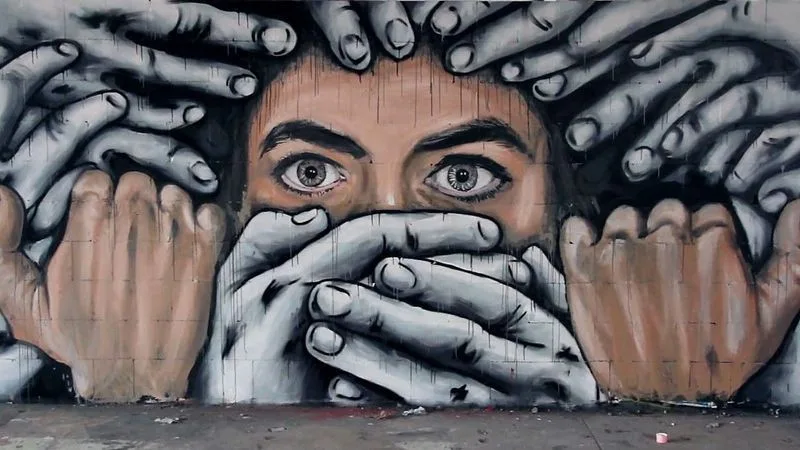
Every day, in private discourse and public squares, human beings speak. We speak out of conviction, convenience, survival, or habit. Some speech is civic; some transgresses established social etiquette; other utterances are purely existential. We speak within prescribed boundaries, yet we continuously test and push past those boundaries. But why do we speak? Is speech solely an inherent fundamental right, or does it also embody an ethical civic responsibility?
Does freedom of expression entitle the speaker to reckless, unbounded rhetoric, or does democratic pluralism require measured, refined speech? Is expression limited to spoken language, or does it encompass investigative journalism, political satire, caricatures, artistic creation, and peaceful religious practice? These enduring inquiries direct us toward a central philosophical and constitutional threshold: what is the legitimate scope of freedom of expression, and where do legitimate societal limits begin?
Defining Freedom of Expression in International Human Rights Law
Freedom of expression does not mean license to utter arbitrary falsehoods or incite violence without accountability. Rather, it represents the foundational entitlement to seek, receive, and impart information, ideas, and opinions across diverse media without prior state censorship.
Under Article 19 of the Universal Declaration of Human Rights (UDHR): "Everyone has the right to freedom of opinion and expression; this right includes freedom to hold opinions without interference and to seek, receive and impart information and ideas through any media and regardless of frontiers."
A constitutional jurisprudence inquiry into Part II of the Bangladesh Constitution: examining the dichotomy between non-justiciable directive principles and judicially enforceable fundamental rights through Kudrat-E-Elahi Panir and the 8th Amendment case.

This universal principle is codified as binding international treaty law in Article 19 of the International Covenant on Civil and Political Rights (ICCPR): 1. Everyone shall have the right to hold opinions without interference. 2. Everyone shall have the right to freedom of expression; this right includes freedom to seek, receive and impart information and ideas of all kinds, regardless of frontiers, either orally, in writing or in print, in the form of art, or through any other media of their choice.
Regional treaties mirror these standards: Article 10 of the European Convention on Human Rights (ECHR) and Article 13 of the American Convention on Human Rights guarantee expressive liberties, while safeguarding legitimate democratic oversight.
Constitutional Recognition: Article 39 of the Constitution of Bangladesh
In municipal constitutional law, Article 39 of the Constitution of Bangladesh provides constitutional entrenchment under the rubric of "Freedom of Thought and Conscience, and of Speech":
Publish Your Research & Critical Analysis on MaroonPaper
Contribute in-depth essays on law, political philosophy, economics, and geopolitics to an intellectual readership.
- Article 39(1): Freedom of thought and conscience is guaranteed absolutely and without reservation.
- Article 39(2): Subject to any reasonable restrictions imposed by law, the right of every citizen to freedom of speech and expression, and freedom of the press, are guaranteed.
Crucially, the framers distinguished between the internal realm of belief—freedom of thought and conscience, which admits no legislative limitation—and external expressive acts, which are subject to "reasonable restrictions" in the interests of state security, friendly relations with foreign states, public order, decency, morality, or in relation to contempt of court, defamation, or incitement to an offence.
Enforcement of Fundamental Rights: Remedies Under Articles 44 and 102
Philosophical Foundations: From John Stuart Mill to the "Harm Principle"
In his classical philosophical treatise On Liberty (1859), John Stuart Mill formulated the premier philosophical defense of free expression. Mill articulated three primary justifications for protecting unorthodox and dissenting speech:
Signed on August 7, 2026 between Saudi Arabia, Türkiye, and Pakistan, the Mecca Joint Defense Pact stipulates that an armed attack on one member shall be deemed an attack on all. For Bangladesh—confronting border casualties, unilateral riparian diversions, and transit imbalances—a collective deterrence architecture restores sovereign bargaining leverage.
- The Infallibility Fallacy: Silencing an opinion presumes that the suppressing authority possesses absolute infallibility. To suppress an opinion because it is considered false is to rob society of the opportunity to replace error with truth.
- The Vitality of Living Truth: Even if prevailing orthodoxy is entirely true, if it is never contested or debated, it atrophies into "dead dogma"—recited without comprehension or moral passion.
- The Synthesis of Partial Truths: Prevailing public opinions rarely contain the whole truth; rather, competing divergent views hold complementary fragments of reality, which only free debate can synthesize.
However, Mill accompanied this defense with the Harm Principle: the only purpose for which power can be rightfully exercised over any member of a civilized community, against their will, is to prevent harm to others. Free expression does not extend to incitement that directly precipitates imminent violence (e.g., urging an agitated mob to burn an agrarian merchant's storehouse).
The Tripartite Test for Restrictions Under International Law
Under Article 19(3) of the ICCPR, state restrictions upon speech cannot be arbitrary or politically motivated. Any limitation must satisfy a strict cumulative three-part test:
- Provided by Law: The restriction must be codified in precise, accessible, and publicly ascertainable legislation, avoiding vague terms (such as "hurting sentiments" or "spreading fake news") that invite executive abuse.
- Legitimate Objective: The restriction must serve an enumerated, legitimate public interest: protecting the rights or reputations of others, national security, public order (ordre public), or public health and morals.
- Necessity and Proportionality: The measure must be strictly necessary in a democratic society, representing the least restrictive means available to achieve the protective objective without extinguishing the right itself.
Hate Speech, Defamation, and Digital Censorship
The boundary between provocative, controversial political expression and prohibited hate speech represents the defining modern constitutional battlefield. Under Article 20(2) of the ICCPR, "any advocacy of national, racial or religious hatred that constitutes incitement to discrimination, hostility or violence shall be prohibited by law."
The Rabat Plan of Action (2012) established a comprehensive six-part threshold test to distinguish legitimate dissent from criminal incitement: analyzing social context, speaker status, intent, content and form, reach and magnitude, and likelihood of imminent harm. Punitive cyber legislation—such as Bangladesh's notorious former Digital Security Act (DSA) and Cyber Security Act (CSA)—often weaponized broad provisions to suppress investigative journalism and political satire, violating the proportionality doctrine.
Conclusion
Freedom of expression is the indispensable oxygen of a free society. It is the bedrock upon which democratic accountability, scientific innovation, and human dignity depend. While reasonable, proportionate boundaries against imminent violence, defamation, and genuine hate speech are essential, any democratic polity that suffocates critical dissent under the pretext of public tranquility inevitably surrenders its freedom to authoritarian decay.