
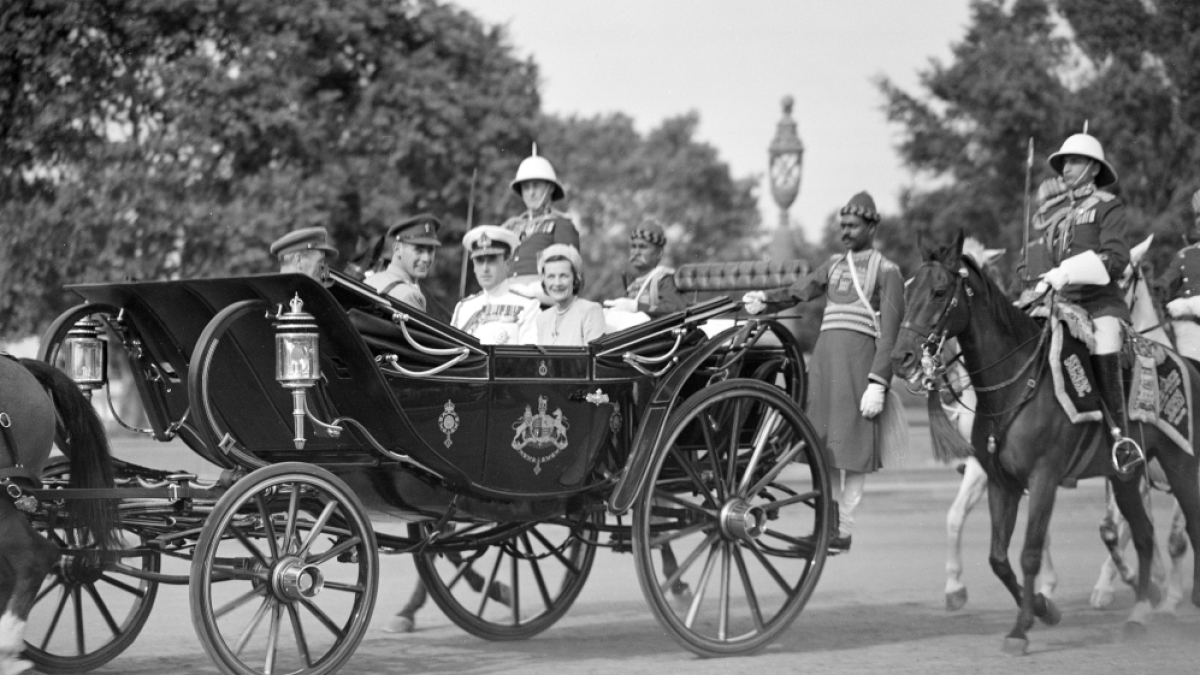
A persistent imperial narrative in Britain asserts that colonial rule in India was an economic burden rather than an engine of British wealth—that administering the subcontinent was an expensive undertaking borne out of civilizing benevolence. For decades, apologists have insisted that the British Raj sustained India at substantial cost to the British Treasury.
However, pioneering historical research published by Columbia University Press by acclaimed economist Utsa Patnaik has comprehensively dismantled this self-serving fable. Drawing on detailed records of trade and taxation spanning nearly two centuries, Patnaik calculated that between 1765 and 1938, Great Britain drained approximately $45 trillion from the Indian subcontinent. It is a staggering sum: equivalent to nearly 17 times the total contemporary annual gross domestic product of the United Kingdom. How was such an immense extraction executed?
Read also: Nagorno-Karabakh Conflict: Peace in the South Caucasus Region
The mechanism was engineered through an intricate fraud embedded in the trade and fiscal apparatus. Prior to colonial subjugation, Britain purchased Indian textiles, rice, and agricultural produce like any other trading nation—paying for them primarily in bullion (silver and gold). But when the East India Company captured territorial tax-collection powers across Bengal in 1765, the terms of trade underwent a predatory transformation.
The Company began collecting domestic taxes from Indian peasants and artisans, and then cunningly earmarked roughly one-third of that domestic revenue to purchase Indian commodities for British consumption. In effect, British merchants were no longer paying for goods out of their own pockets. Instead, Indian taxpayers and weavers were buying their own goods for the British to consume—handing over wealth to London entirely free of cost.

This was systemic theft on a colossal scale. Yet the vast majority of Indians were kept blind to the operation because the agent who collected the revenue was administratively separated from the merchant who acquired the cargo. Had they been the same official, the extortion would have been instantly transparent.
Signed on August 7, 2026 between Saudi Arabia, Türkiye, and Pakistan, the Mecca Joint Defense Pact stipulates that an armed attack on one member shall be deemed an attack on all. For Bangladesh—confronting border casualties, unilateral riparian diversions, and transit imbalances—a collective deterrence architecture restores sovereign bargaining leverage.
A portion of these stolen commodities was consumed directly within Britain, while the surplus was re-exported to continental Europe and beyond. This re-export system generated critical foreign exchange that funded Britain's imports of strategic industrial raw materials—such as timber, iron, and pitch—from Europe. In essence, the British Industrial Revolution relied heavily on strategic capital extracted directly from India.
Moreover, British syndicates sold these confiscated Indian goods to overseas markets at prices far exceeding their procurement cost, pocketing not only 100 percent of the original value of the goods, but also huge speculative trading margins.
When the British Crown assumed direct administration after 1858, the colonial bureaucracy added a sophisticated financial layer to the scam. While the dismantling of the East India Company's monopoly formally allowed Indian producers to export goods directly to foreign merchants, Britain ensured that the clearing and settlement process was centralized exclusively in London.
How did this function? Foreign buyers wishing to purchase Indian commodities were required to buy special "Council Bills"—a financial scrip issued exclusively by the British Crown in London. The only currency accepted for Council Bills was gold and silver. Foreign merchants then sent these paper bills to India to settle their accounts. When Indian exporters redeemed these bills at colonial treasuries in Calcutta or Bombay, they were paid out of collected domestic tax revenues in paper rupees. Thus, the producers were once again paid with their own subjugated tax money, while the foreign gold and silver accumulated permanently in the Bank of England's vaults.
Publish Your Research & Critical Analysis on MaroonPaper
Contribute in-depth essays on law, political philosophy, economics, and geopolitics to an intellectual readership.
Through this financial sleight of hand, London hoarded billions in precious metals that rightfully belonged to Indian exporters as genuine trade surpluses.
Throughout the first three decades of the twentieth century, when India ran immense merchandise trade surpluses with the rest of the world, colonial bookkeeping engineered artificial balance-of-payments deficits. Because the proceeds from India's lucrative global exports were intercepted by London, the colonial state claimed India was perpetually indebted to the British Crown.
Imperial historians long cited this phantom deficit to argue that India was dependent on British capital. In reality, the reverse was true. India was Britain's imperial golden goose. This manufactured deficit forced India to borrow money from British banks simply to finance its own trade transactions, locking an entire subcontinent into artificial sovereign debt servitude.
Britain channeled the windfall from this extractive machine to finance its global imperial ventures—subsidizing the Opium Wars in China during the 1840s and brutally suppressing the 1857 Indian rebellion. Warmongering British campaigns were waged using revenues forcibly collected from Indian taxpayers. As Patnaik observes, the vast majority of Britain's military campaigns beyond India's borders were financed directly or predominantly from Indian revenues.
While post-WWII Germany and Italy were systematically de-Nazified, dismantling the fascist machinery in post-July Bangladesh has encountered fierce resistance. Backed by India's regional hegemony and an entrenched cultural fifth column, reactionary networks are working tirelessly to subvert the democratic breakthrough.
Beyond military conquests, the drained capital was utilized to bankroll capitalist expansion across Europe and white settler colonies including Canada and Australia. The modernization and industrial takeoff of the Western hemisphere was substantially underwritten by the methodical dispossession of colonized lands.
Patnaik demarcated colonial India's trajectory across four distinct economic epochs between 1765 and 1938, calculating the precise revenue flows and compounding them at a conservative interest rate of 5 percent (well below prevailing commercial market returns). The aggregate sum amounts to $44.6 trillion. Notably, this calculation excludes the illegitimate debts that Britain unilaterally saddled onto India during the Raj.
While the numbers are staggering, the human cost defies quantification. Had India been able to reinvest its tax revenues and trade surpluses in domestic education, infrastructure, and industrial capacity—much as Meiji Japan did during the late nineteenth century—world history would look profoundly different. India would have emerged naturally as an economic powerhouse, averting catastrophic, human-made famines and generations of engineered destitution.
These findings offer an indispensable antidote to colonial nostalgia. Conservative historians such as Niall Ferguson have long claimed that British rule modernized and developed India. Former Prime Minister David Cameron asserted that the British Raj was a source of net aid.
Public opinion remains heavily distorted: a 2014 YouGov poll revealed that 50 percent of Britons believed colonialism was beneficial to the colonies. Yet as Patnaik's definitive economic forensic work demonstrates, Britain did not develop India; India developed Britain.
What is required of contemporary Britain? An official apology is an elementary starting point. Reparations are a moral imperative—even if the British economy lacks the aggregate capital to settle the $45 trillion tab. In the meantime, the historical narrative must be cleansed of imperial deceit. Britain did not cling to India out of civilizing philanthropy, but for systematic economic plunder. Britain's industrial ascendancy was built not merely on steam engines and institutional ingenuity, but on violent, state-sanctioned expropriation.
Adapted and translated from Jason Hickel's "How Britain stole $45 trillion from India And lied about it".