
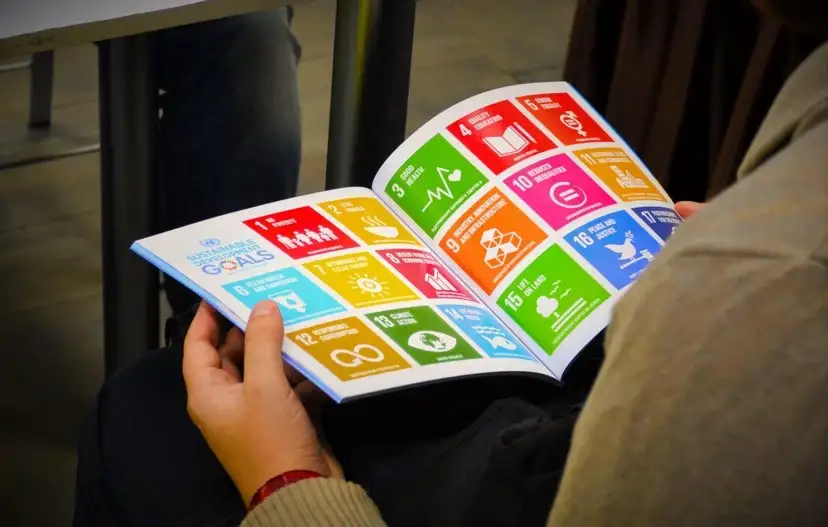
Adopted by the United Nations General Assembly in 2015 as part of the 2030 Agenda for Sustainable Development, the Sustainable Development Goals (SDGs) represent an ambitious, integrated blueprint comprising 17 overarching goals and 169 specific targets. Spanning extreme poverty eradication and zero hunger to universal health coverage, climate action, and institutional justice, the SDGs embody humanity's most comprehensive aspirational charter.
Signed on August 7, 2026 between Saudi Arabia, Türkiye, and Pakistan, the Mecca Joint Defense Pact stipulates that an armed attack on one member shall be deemed an attack on all. For Bangladesh—confronting border casualties, unilateral riparian diversions, and transit imbalances—a collective deterrence architecture restores sovereign bargaining leverage.
Unlike their predecessor, the Millennium Development Goals (MDGs), the SDGs are explicitly universal—applying to high-income industrialized nations and developing economies alike—and interconnected, acknowledging that economic progress cannot be decoupled from ecological sustainability and social equity. Yet as the 2030 horizon approaches, an urgent question confronts policymakers: Are the SDGs practically achievable, or have they become rhetorical aspirations overwhelmed by structural crises?
Publish Your Research & Critical Analysis on MaroonPaper
Contribute in-depth essays on law, political philosophy, economics, and geopolitics to an intellectual readership.
Key Structural Obstacles to Implementation
While conceptually coherent, global progress toward the 2030 Agenda faces formidable systemic bottlenecks:
While post-WWII Germany and Italy were systematically de-Nazified, dismantling the fascist machinery in post-July Bangladesh has encountered fierce resistance. Backed by India's regional hegemony and an entrenched cultural fifth column, reactionary networks are working tirelessly to subvert the democratic breakthrough.
- The Chronic Financing Deficit: The UN Conference on Trade and Development (UNCTAD) estimates the annual SDG investment gap in developing countries at over $4 trillion. Escalating sovereign debt crises across the Global South severely restrict fiscal space, forcing vulnerable nations to prioritize debt servicing over health and education expenditures.
- Geopolitical Fragmentation and Conflict: The erosion of multilateral consensus—exacerbated by great-power rivalries, regional conflicts, and proxy warfare—has redirected critical financial resources toward global defense rearmament rather than sustainable development.
- The Climate Emergency: Climate volatility imposes disproportionate economic costs on developing states, repeatedly obliterating hard-won infrastructural and agricultural gains through intensified cyclones, prolonged droughts, and sea-level rise.
- Post-Pandemic Educational and Economic Reversals: Prolonged school closures during the COVID-19 pandemic induced severe learning poverty across low-income regions, sharply setting back progress on SDG 4 (Quality Education) and exacerbating structural youth unemployment.
- Deficit of Binding Political Will: Because the SDGs remain voluntary multilateral covenants without legally binding enforcement mechanisms, domestic political cycles frequently prioritize short-term electoral populism over long-term structural transformations.

Strategic Imperatives for Realization
Rescuing the 2030 Agenda demands moving beyond incremental administrative adjustments toward radical structural interventions:
- Global Financial Architecture Reform: Multilateral development banks (such as the World Bank and IMF) must undergo fundamental governance reform—expanding concessional lending, reallocating Special Drawing Rights (SDRs), and establishing sovereign debt restructuring mechanisms that protect social safety nets.
- Just Energy Transitions: Decarbonization in the developing world requires substantive technology transfers and grant-based climate financing from historical carbon emitters, ensuring that renewable energy adoption does not generate crushing external debt.
- Progressive Domestic Resource Mobilization: Enhancing domestic fiscal capacity through transparent tax reform, curbing illicit financial flows, and eliminating corporate tax evasion are essential to sustainably funding public services.
- Institutionalizing Accountability: National governments must integrate SDG indicators directly into national budgets, statutory audits, and development plans rather than treating them as auxiliary external reporting exercises.
Conclusion
The Sustainable Development Goals are technically attainable, but their realization is ultimately a matter of global political will. If the international community treats the 2030 Agenda as mere voluntary window-dressing, the goals will falter. If approached as a binding civilizational necessity, the SDGs remain our most potent multilateral roadmap toward an equitable, resilient, and sustainable planetary future.