
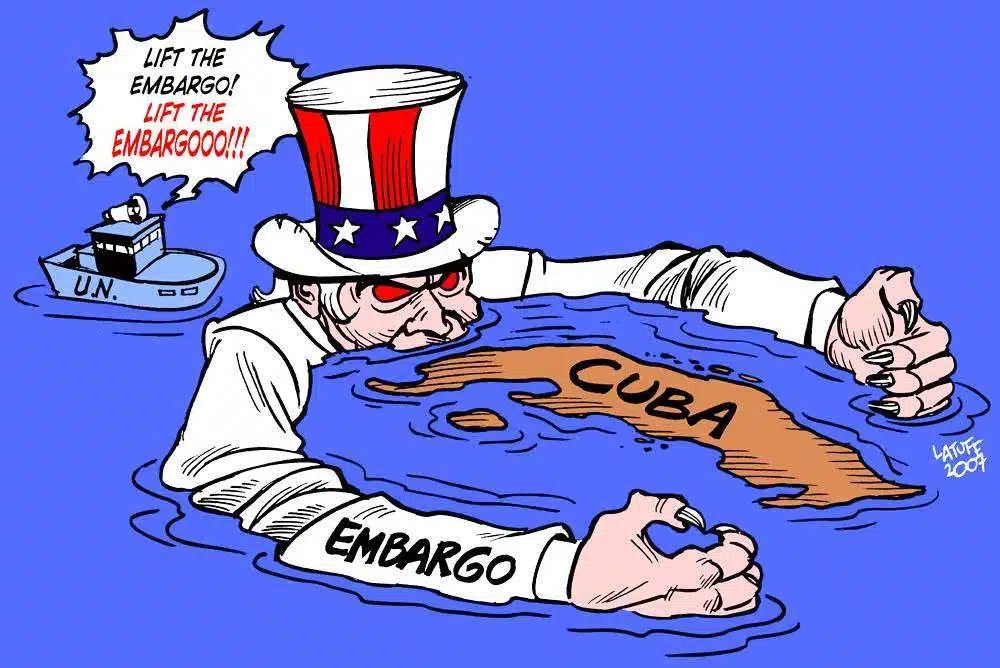
The protracted geopolitical confrontation between the United States and Cuba stands as one of the most asymmetric and enduring conflicts in modern diplomatic history. Beneath rhetorical appeals to democratic governance and human rights lay a relentless grand strategy designed to enforce the Monroe Doctrine and crush any sovereign model capable of challenging Washington’s hegemony in the Western Hemisphere. From the covert disaster at the Bay of Pigs and state-sponsored sabotage to the suffocating economic blockade that outlived the Cold War, this critical inquiry examines the coercive doctrines deployed across successive American administrations to discipline a defiant Caribbean island.
The Kennedy Era: Operation Mongoose and Hemispheric Disciplining
While the administration of John F. Kennedy is frequently romanticized for cosmopolitan idealism, its policy toward revolutionary Cuba was characterized by aggressive state-sponsored destabilization. Following the humiliation of the CIA-backed Bay of Pigs invasion in April 1961, the Kennedy White House inaugurated Operation Mongoose (the Cuban Project) under the operational direction of Attorney General Robert Kennedy and General Edward Lansdale.
Declassified national security records reveal that Mongoose aimed to unleash "the terrors of the earth" upon the island—authorizing biological sabotage against sugar plantations, psychological warfare, maritime raids by exile paramilitary groups, and hundreds of CIA assassination plots targeting Fidel Castro. When Soviet premier Nikita Khrushchev responded by secretly stationing nuclear missiles on Cuban soil in 1962, this escalatory cycle brought humanity to the precipice of thermonuclear annihilation during the Cuban Missile Crisis.
A retrospective of European historiography reveals that, while the continent languished in the medieval depths of superstition, squalor, and intellectual stagnation, the Iberian Peninsula served as a luminous beacon of civilization. It was within this crucible that the Muslim architects of the region forged the enduring, multifaceted heritage of Al-Andalus.
The Doctrine of Internal Security Across Latin America
The American imperative to isolate Cuba radically transformed US security policy across Latin America. In 1962, the Kennedy administration enacted a seismic doctrinal pivot, shifting the mission of Latin American armed forces from "hemispheric defense" against external aggression to "internal security" against domestic subversion.
This doctrinal shift effectively deputized regional militaries into counter-insurgency instruments waging war against their own domestic populations. Over the subsequent two decades, this policy birthed a cascade of brutal right-wing military dictatorships across Brazil, Chile, Argentina, and Uruguay—characterized by systematic torture, forced disappearances (Operation Condor), and the violent eradication of social democratic dissent.
Containing the "Cuban Virus": Strategic Objectives
Why did a small island nation of eleven million people elicit such obsessive hostility from the preeminent global superpower? As declassified State Department memoranda candidly acknowledged, the threat posed by Castro's Cuba was not military conquest, but ideological contagion. Declassified policy papers drafted by Assistant Secretary of State Lester Mallory in 1960 articulated the core thesis:
Publish Your Research & Critical Analysis on MaroonPaper
Contribute in-depth essays on law, political philosophy, economics, and geopolitics to an intellectual readership.
"The only foreseeable means of alienating internal support is through disenchantment and disaffection based on economic dissatisfaction and hardship... every possible means should be undertaken promptly to weaken the economic life of Cuba... to bring about hunger, desperation and overthrow of government."
Washington feared that a successful social revolution delivering universal healthcare, high literacy, and land redistribution—while remaining sovereign from US corporate domination—would serve as a dangerous alternative model across the Global South. To prevent this "virus" from spreading, the island had to be subjected to economic strangulation.
Widely recognized as one of the world's inaugural written constitutions, the Charter of Medina serves as a seminal historical document, establishing foundational precedents for the Islamic state, religious pluralism, and the architecture of social cohesion.
The Permanent Embargo: Economic Warfare as Foreign Policy
Following Kennedy's formal implementation of the comprehensive trade embargo in February 1962, successive administrations tightened the vise. Under the Torricelli Act (1992) and the Helms-Burton Act (1996), Washington extended the blockade extraterritorially, sanctioning foreign third-party corporations and shipping vessels trading with Cuba.
For more than three decades, the United Nations General Assembly has voted almost unanimously (typically 185+ nations to 2) to condemn the US embargo as a flagrant violation of the UN Charter and international law. Despite brief diplomatic detente under President Barack Obama in 2015, subsequent administrations reversed normalization, placing Cuba on the arbitrary State Sponsors of Terrorism list and blocking its access to global financial transactions.
Conclusion: The Imperial Blind Spot
The history of America’s treatment of Cuba underscores the profound dissonance between Washington’s self-proclaimed championing of the "rules-based international order" and its realpolitik enforcement of hemispheric subjugation. While the embargo succeeded in inflicting immense humanitarian hardship on ordinary Cuban citizens, it failed in its strategic objective of forcing political capitulation.
Cuba's resilient survival remains an enduring symbol of resistance to imperial coercion. Genuine geopolitical reconciliation will remain impossible until Washington abandons its anachronistic claim to regional hegemony and engages Havana on the foundation of sovereign equality and mutual respect.