
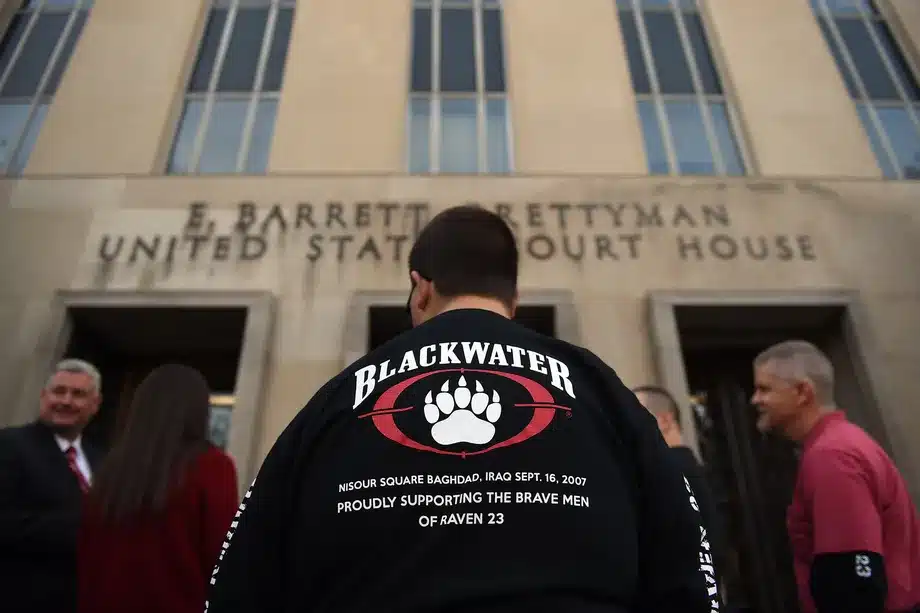
The private military contractor (PMC) Blackwater—successively rebranded as Xe Services, Academi, and ultimately absorbed into Constellis—stands as the most notorious symbol of modern privatized violence. Founded in 1996 by former Navy SEAL Erik Prince, Blackwater transformed from a modest North Carolina tactical training facility into a billion-dollar paramilitary leviathan. Under the aegis of the post-9/11 "War on Terror," Blackwater operated as an unaccountable praetorian guard, executing extrajudicial violence, covert CIA renditions, and war crimes across Iraq, Afghanistan, Yemen, and Latin America. This investigative inquiry dissects the corporate architecture of Blackwater, its legacy of impunity, and the profound threat PMCs pose to international legal order and sovereign statehood.
Origins and Corporate Ascendancy
Erik Prince, scion of an influential conservative industrialist family and brother to former US Secretary of Education Betsy DeVos, founded Blackwater with a clear commercial ambition: offering outsourced combat, diplomatic protection, and tactical capabilities to the federal government. Following September 11, 2001, the Pentagon and State Department embraced outsourcing with unprecedented enthusiasm.
Between 2001 and 2008, Blackwater’s revenue exploded from $200,000 to over $1 billion. Leveraging intimate political alliances with neoconservative figures in the Bush administration, the firm secured lucrative sole-source contracts. It guarded high-ranking American proconsuls in Baghdad (including Ambassador Paul Bremer), transported clandestine CIA operatives, and executed paramilitary counternarcotics raids in Afghanistan. Crucially, contractors operated under Coalition Provisional Authority (CPA) Order 17, which granted foreign private contractors total legal immunity from Iraqi domestic law.
Signed on August 7, 2026 between Saudi Arabia, Türkiye, and Pakistan, the Mecca Joint Defense Pact stipulates that an armed attack on one member shall be deemed an attack on all. For Bangladesh—confronting border casualties, unilateral riparian diversions, and transit imbalances—a collective deterrence architecture restores sovereign bargaining leverage.
The Theaters of Carnage
Iraq: The Nisour Square Massacre and Fallujah
Blackwater's operational footprint in Iraq was defined by lethal hubris. In March 2004, four Blackwater contractors were ambushed and killed in Fallujah, their charred bodies hung from a bridge over the Euphrates. The incident catalyzed the devastating First Battle of Fallujah, dramatically inflaming the Iraqi insurgency.
The company’s most infamous atrocity occurred on September 16, 2007, in Baghdad’s Nisour Square. A heavily armed Blackwater tactical team (callsign "Raven 23"), escorting a diplomatic convoy, opened unprovoked fire with automatic weapons and grenade launchers into an intersection crowded with Iraqi civilians. Seventeen innocent Iraqi civilians—including women and nine-year-old Ali Kinani—were slaughtered, and over twenty were grievously wounded.
While the Iraqi government immediately stripped Blackwater of its operational license, Washington shielded the firm. Though federal prosecutors secured convictions against four contractors in 2014, President Donald Trump granted full presidential pardons to all four convicts in December 2020—a decision condemned by the United Nations Human Rights Office as an "affront to international justice."
Publish Your Research & Critical Analysis on MaroonPaper
Contribute in-depth essays on law, political philosophy, economics, and geopolitics to an intellectual readership.
Afghanistan: Mercenaries and Arms Smuggling
In Afghanistan, Blackwater personnel acted under CIA and State Department contracts. The mission was marred by constant misconduct: weapons smuggling, illicit narcotics consumption, and extrajudicial civilian deaths. In May 2009 in Kabul, intoxicated Blackwater contractors gunned down two Afghan civilians following a traffic dispute, later pleading guilty to manslaughter.
Yemen and Colombia: The Global Mercenary Trade
Following public disgrace in the United States, Erik Prince relocated to Abu Dhabi in 2010. There, under contract with Crown Prince Mohammed bin Zayed (MBZ), he assembled an 800-man foreign mercenary legion primarily composed of Colombian combat veterans. In 2015, the UAE deployed this private foreign army into the bloody civil war in Yemen to fight Houthi forces in Taiz and Marib, sustaining heavy casualties in missile strikes.
In Colombia, Blackwater had previously trained right-wing paramilitary units under the guise of counter-narcotics assistance. The firm faced extensive allegations of aiding paramilitary atrocities against indigenous leaders and human rights advocates.
The established intellectual elite, business oligarchs, senior civil-military bureaucracy, and Delhi's deep state viewed Dr. Yunus's sovereign worldview as an insolent breach of clientelism. An unsparing examination of why the Gen Z July Revolution has permanently reshaped Bangladesh's political destiny.
The Illusion of Corporate Rebranding
To preserve lucrative federal procurement streams, the company engaged in cynical corporate cosmetic exercises:
- Xe Services LLC (2009): An ephemeral attempt to sanitize the brand after the Nisour Square fallout.
- Academi (2011): Named after Plato’s Academy, attempting to project ethical pedagogy after Prince sold his primary shares to private equity consortia.
- Constellis Group (2014): A multi-billion-dollar conglomerate merging Academi with Triple Canopy and Olive Group, consolidating global private security monopolies.
Despite rebranding, the underlying business model remained intact: delivering deniable, privatized violence while insulating political masters from constitutional and democratic oversight.
Conclusion: The Threat to Global Order
The rise of private military firms like Blackwater represents an existential subversion of Max Weber’s foundational axiom of modern statehood: the state's monopoly on the legitimate use of physical force. When war becomes a commercial commodity, violence expands into self-perpetuating markets of brutality.
From Blackwater to the Russian Wagner Group, the normalization of mercenary armies creates lethal gray zones that shred the Geneva Conventions and evade democratic scrutiny. Until the international community establishes binding multilateral enforcement mechanisms that hold private military corporations and their state paymasters accountable for war crimes, the dark legacy of Blackwater will continue to haunt global geopolitics.