
What were the Six Points?
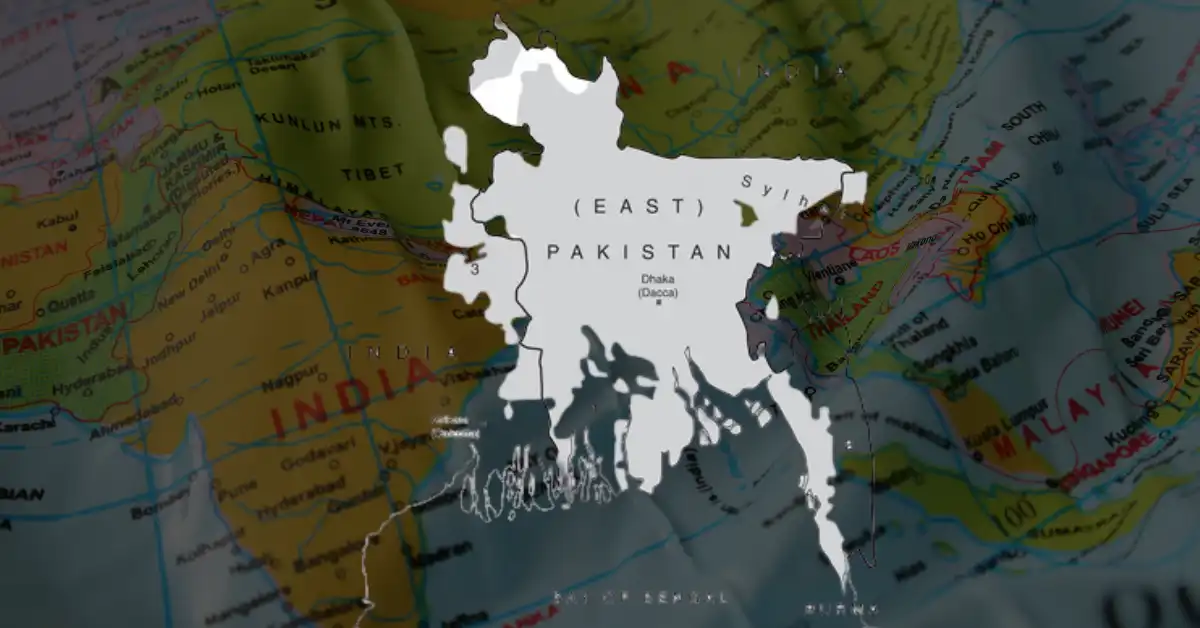
The Six-Point Movement is revered in history as the "Charter of Liberation" for the Bengalis. Within it lay the embryonic seeds of sovereignty. Yet, these points were not the product of a spontaneous impulse; they were the historical crystallization of a long-simmering struggle against systemic political, economic, and military discrimination. The genesis of the six points is deeply contextual. In the post-World War II era, anti-colonial liberation movements were sweeping the globe. Since the inception of Pakistan, East Pakistan had been systematically sidelined across every administrative, economic, and military pillar of the state. The Six-Point program emerged as a clarion call for a democratic and equitable state apparatus. The intellectual and political foundations of the movement were built upon the 1940 Lahore Resolution, the 1947 Partition of the subcontinent, the formation of the Awami Muslim League in 1949, the 1952 Language Movement, the 1954 Provincial Elections, and the overarching authoritarian climate established by Ayub Khan in 1958. Each of these milestones underscored the pervasive exploitation of the Eastern wing. Despite comprising the majority of the population, East Pakistan was consistently relegated to the periphery. West Pakistan diverted the economic resources and development capital of the East to fuel its own growth. A 1970 report by the Pakistan Planning Commission revealed that between 1950 and 1955, 68.31 percent of the national budget was allocated to West Pakistan, while a paltry 31.69 percent reached the East. This disparity intensified following the 1965 Indo-Pak war. During the conflict, East Pakistan’s defense was effectively left in abeyance. Between 1965 and 1970, only 28.84 percent of the total national budget was spent in East Pakistan, igniting profound resentment among the Bengali people. Sheikh Mujibur Rahman, offering a searing critique of this state of affairs, remarked: *"East Pakistan was left abandoned like an orphan during the war. Had the Indian army marched across our borders, we had neither the arms nor the military strength in East Bengal to defend ourselves. If China is truly our protector, we would have been better off forging an alliance with them instead of West Pakistan."* It was against this backdrop of exploitation that the six points were forged—a testament not only to political exigency but to the Bengali commitment to self-reliance and liberation.An Overview of the Six-Point Demands
In February 1966, during an opposition conference in Lahore, Sheikh Mujibur Rahman, in consultation with Tajuddin Ahmad, unveiled the six-point agenda at a press conference. These demands represented a structured program to safeguard the political, economic, and social rights of the East Pakistani people. By February 21, these points were formalized in a booklet titled *"Our Right to Live: The Six-Point Demands."* The agenda centered on restructuring the administrative, economic, and military architecture of the state:1. Constitutional Structure and the Nature of the State
The state shall adopt a federal system of government, with a parliamentary democracy established on the basis of universal adult suffrage.2. Powers of the Federal Government
The central government shall retain authority exclusively over defense and foreign affairs. All other subjects shall remain under the jurisdiction of the provincial government.3. Currency and Monetary Policy
* Two separate but freely convertible currencies shall be introduced, or a single currency may exist, provided its operation is subject to strictly defined conditions. * There shall be one federal reserve bank and two distinct regional reserve banks.4. Taxation and Revenue Collection
The provincial government shall possess the sole authority to impose and collect taxes and duties. A portion of the revenue thus collected shall be contributed to the central government according to agreed-upon protocols.5. Foreign Trade and Exchange
The provincial government shall maintain ownership of its foreign exchange earnings, contributing a mandated portion to the central government.6. Regional Security Forces
The provincial government shall be empowered to establish and maintain paramilitary forces to ensure regional security.The Significance of the Six Points
The six points transformed into the definitive symbol of identity for the people of East Pakistan. They represented a bold commitment to economic emancipation, cultural recognition, and social justice. By crystallizing the longing for a life free from exploitation, the movement paved the path for national self-determination.The 1954 Elections: The Formation of the United Front, Victory, and the Defeat of the Muslim League
Following the adoption of the six points by the Awami League Working Committee in March 1966, Sheikh Mujibur Rahman toured the country to galvanize public support. The demands resonated deeply with the masses. A panicked Ayub regime dismissed the movement as treasonous and separatist—a policy of suppression that only served to etch the six points more deeply into the national consciousness.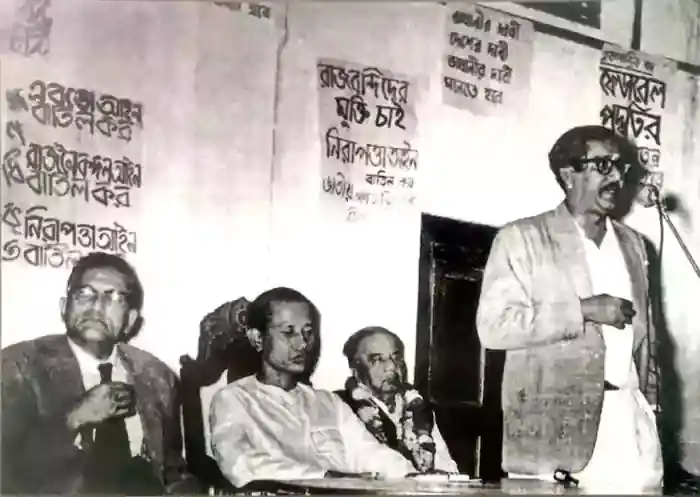
The 1970 Elections: The Election in Which Bengal Answered Pakistan's Injustice
Through the Six-Point Movement, the Bengalis came to realize that their survival and rights were incompatible with the existing Pakistani order. The rejection of these demands by the Pakistani elite only accelerated the drive for total independence. It is for this reason that the six points are hailed as the "Magna Carta" of the Bengali nation. The armed liberation war of 1971, led by Bangabandhu, and the birth of independent Bangladesh were the ultimate fruits of these six points. They were the seeds of sovereignty, guiding the nation toward a future defined by liberty and self-rule.