
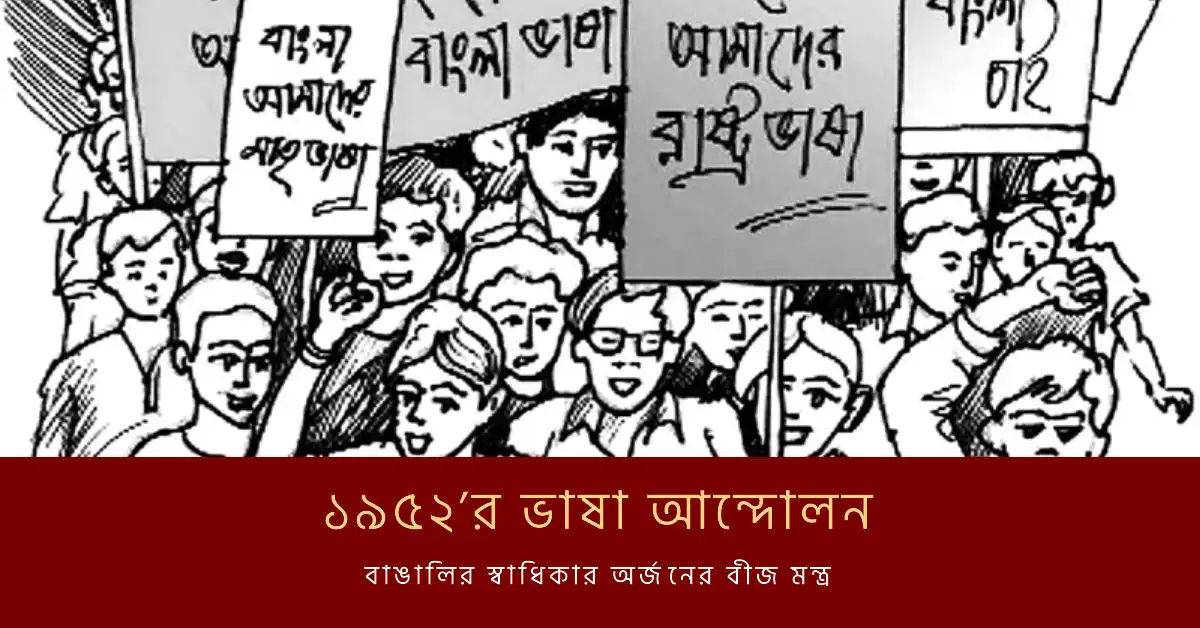
The Initial Phase of the 1952 Language Movement
Following the decline of British India, the Two-Nation Theory led to the creation of two independent states: India and Pakistan. The latter, however, was bifurcated into East and West Pakistan, separated by two thousand kilometers and marked by significant cultural, geographical, and linguistic divergences. While approximately 56 percent of the total population of Pakistan spoke Bengali as their mother tongue, this majority demographic remained perpetually marginalized. Shortly after the birth of Pakistan, the *Tamaddun Majlish* was established under the leadership of Dhaka University Professor Abul Kashem to advocate for language rights. On September 15, 1947, the organization published a seminal pamphlet titled "Is the State Language of Pakistan to be Bengali or Urdu?" To provide the movement with a political structure, the 'State Language Action Committee' was formed in December 1947, with Professor Nurul Huq Bhuiyan as its convener. Simultaneously, various other organizations mobilized to demand the institutional recognition of Bengali. On February 23, 1948, during a meeting of the Constituent Assembly of Pakistan, Dhirendranath Datta, a representative from East Bengal, moved an amendment proposal to allow the use of Bengali alongside English and Urdu in assembly proceedings. Dhirendranath Datta’s proposal was met with vehement opposition from the Muslim League, and it was rejected outright. In protest, student strikes were held across Dhaka on February 26 and 29, 1948. With the support of students and intellectuals, the State Language Action Committee was reconstituted on March 2.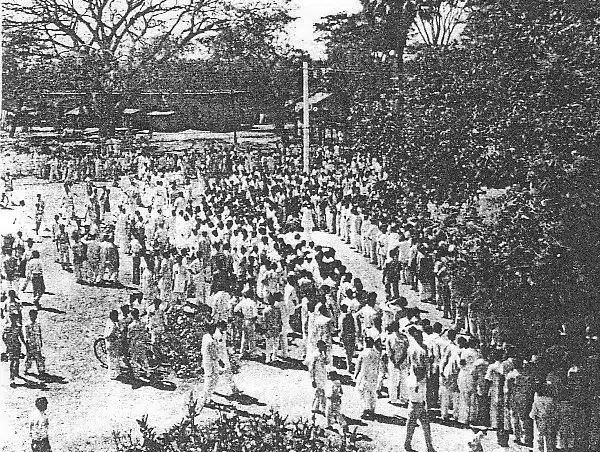
Is Modi scared of India’s textbook history?
At a meeting held at Fazlul Huq Hall on March 10, 1948, presided over by Bangabandhu Sheikh Mujibur Rahman, a resolution was passed to maintain the strike. During the historic March 11 strike, Bangabandhu, Shamsul Huq, and Oli Ahad, among others, were arrested. The ensuing unrest compelled Chief Minister Khawaja Nazimuddin to sign an agreement with the organizers on March 15, promising the release of detainees, the formation of an inquiry committee, and the adoption of Bengali as an official language. However, on March 21, at the then-Racecourse Ground (now Suhrawardy Udyan), Muhammad Ali Jinnah declared, "Urdu, and Urdu alone, shall be the state language of Pakistan." He reiterated this sentiment at the Curzon Hall of Dhaka University on March 24. The assembled students responded with an immediate, resolute chorus of "No, no!" asserting that Bengali must be the state language. The resentment grew rapidly. On November 28, 1948, Prime Minister Liaquat Ali Khan repeated the same declaration in Dhaka, only to be met with the same defiance from students. Furthermore, during an All-Pakistan Educational Conference in Karachi in 1948, a proposal to write Bengali in Arabic script was made, against which Dr. Muhammad Shahidullah stood in firm opposition.The Second Phase of the 1952 Language Movement
Following the assassination of Prime Minister Liaquat Ali Khan, Khawaja Nazimuddin succeeded him. Upon taking office, he reaffirmed Jinnah’s stance on language, which ignited a new, comprehensive wave of protest. By January 31, 1952, the 'All-Party Central State Language Action Committee' was formed under the presidency of Maulana Abdul Hamid Khan Bhashani. This committee called for a province-wide protest and strike on February 21. The authorities responded by imposing Section 144, banning all public meetings and processions in Dhaka. Braving this prohibition, students and political activists took to the streets.February 21
On February 21, 1952, thousands of students ignored the government’s diktat, gathering at the Dhaka University premises from 9:00 AM. A historic student assembly was held in the shade of the Am-tala near the old Arts building, despite the imposition of Section 144. Students, divided into small groups, chanted slogans demanding Bengali as the state language. As they prepared to break the police blockade around 11:15 AM, the police used batons and tear gas to disperse them. The students retaliated with brickbats. While the Vice-Chancellor attempted to de-escalate, violence erupted when the police began arresting students. Subsequently, a procession was fired upon near the Dhaka Medical College. Rafiq, Salam, Barkat, Jabbar, and others were martyred, their blood staining the streets. This tragic event sent a wave of indignation across East Bengal.The 1954 Election: The Formation and Victory of the United Front and the Defeat of the Muslim League
The Aftermath of February 21
The brutality on February 21 ignited a firestorm of rebellion. On February 22 and 23, students, laborers, writers, intellectuals, and citizens observed a total strike and defied Section 144. The police and military responded with renewed force. On February 22, Shafiur Rahman Shafiq was martyred by police gunfire. By February 23, the students had erected the first Shaheed Minar (Martyrs' Monument) at the Dhaka Medical College hostel to honor the fallen, which was inaugurated by the father of the martyr Shafiur Rahman.Achievements of the 1952 Language Movement
The Language Movement served as a catalyst for the Bengali people’s consciousness of their fundamental rights. This culminated in the massive victory of the United Front against the Muslim League in the 1954 provincial elections, guided by a 21-point manifesto rooted in the spirit of the movement. On May 7, 1954, the Constituent Assembly of Pakistan formally accepted Bengali as one of the state languages. The Bangla Academy was established in 1955, and in 1956, Bengali was officially recognized in the first constitution of Pakistan. On November 17, 1999, UNESCO declared February 21 as ‘International Mother Language Day’, honoring the struggle for linguistic and cultural rights worldwide.What is the Cold War? Origin, evolution, and current state