
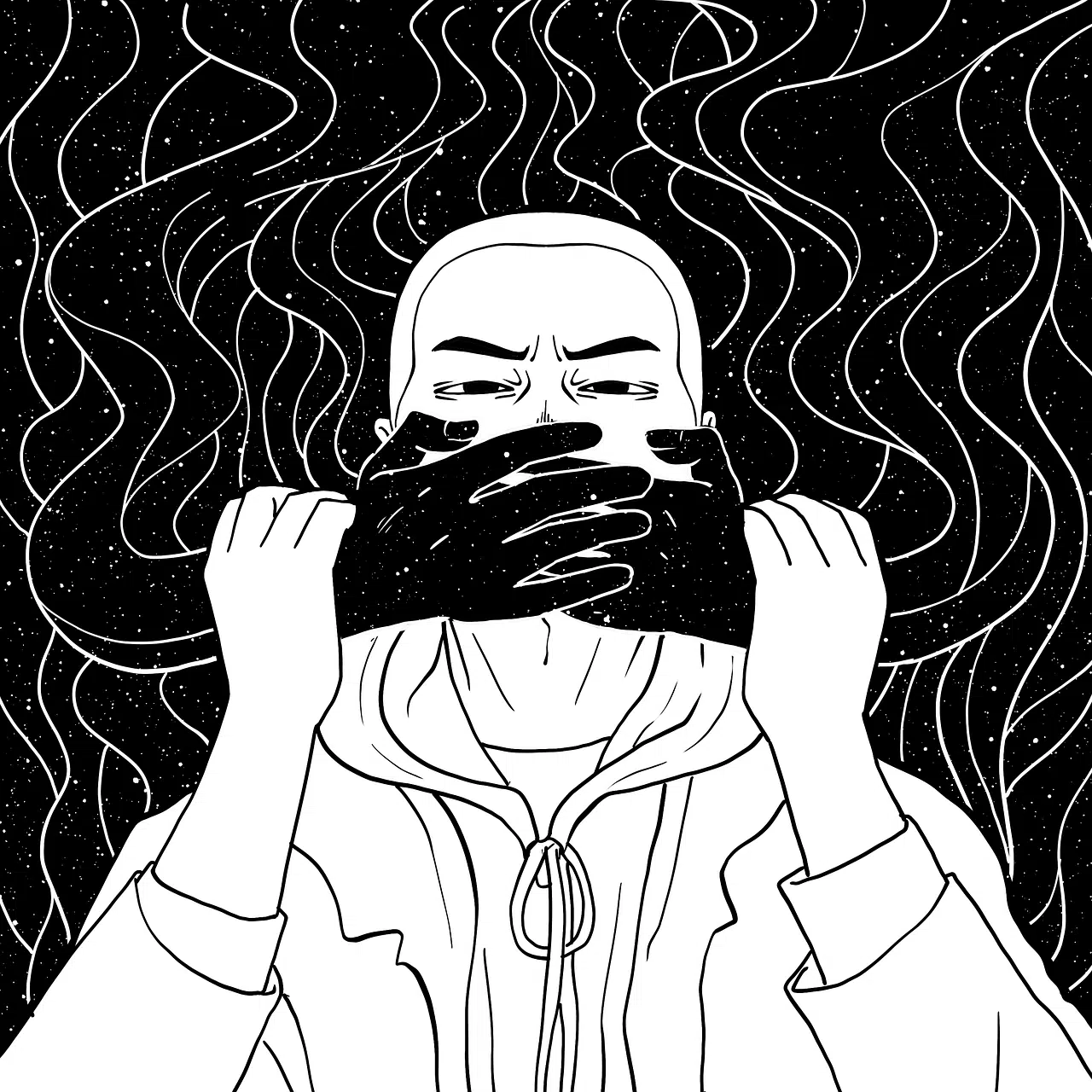
What is Freedom of Expression?
Before determining if Freedom of Expression is under siege, we must first define what it entails. Lexically, a "view" denotes an opinion, a psychological disposition, a concept, or a conviction. In English, the term encompasses nuances such as opinion, viewpoint, remark, thought, idea, sentiment, belief, and faith. According to the ninth edition of the Oxford Dictionary, an opinion is a person’s feeling, thought, or concept regarding a subject or individual—distinct from objective reality. It is a subjective manifestation. It does not necessarily adhere to empirical truth; indeed, it may encompass falsehoods or distortions of reality. Expression, therefore, is the act of externalizing these internal thoughts, sentiments, and attitudes through any medium—be it poetry, prose, drama, cinema, or caricature. Until such a state of expression is reached, one’s private thoughts remain internal, unestablished as a public "view."Freedom of Expression and its Boundaries
Yet, the most vital prerequisite for holding an opinion or exercising freedom of expression is the actual guarantee of that freedom. If your head of state echoes the sentiments of Robert Mugabe—asserting that freedom of expression exists, but offering no guarantees as to what happens *after* that expression—then you are living in the domain of Mugabe’s ideological kin. We have observed this tragedy in the cases of Edward Snowden, Julian Assange, Jamal Khashoggi, and the Sagar-Runi murders. One may express an opinion, but if the "liberty" afforded to you results in an premature departure from this life, then, by any definition, freedom of expression has ceased to exist.Is Freedom of Expression Shrinking?
Every individual, from the commoner to the elite, possesses the Right—a Constitutional Right—to speak and to express themselves. While it may appear that this right is protected, the twenty-first century has witnessed governments and states assuming the role of its primary executor. Bans on speech, prohibitions on assembly, the censorship of political cartoons—this has become a global practice. And yet, freedom of expression remains the bedrock of democracy.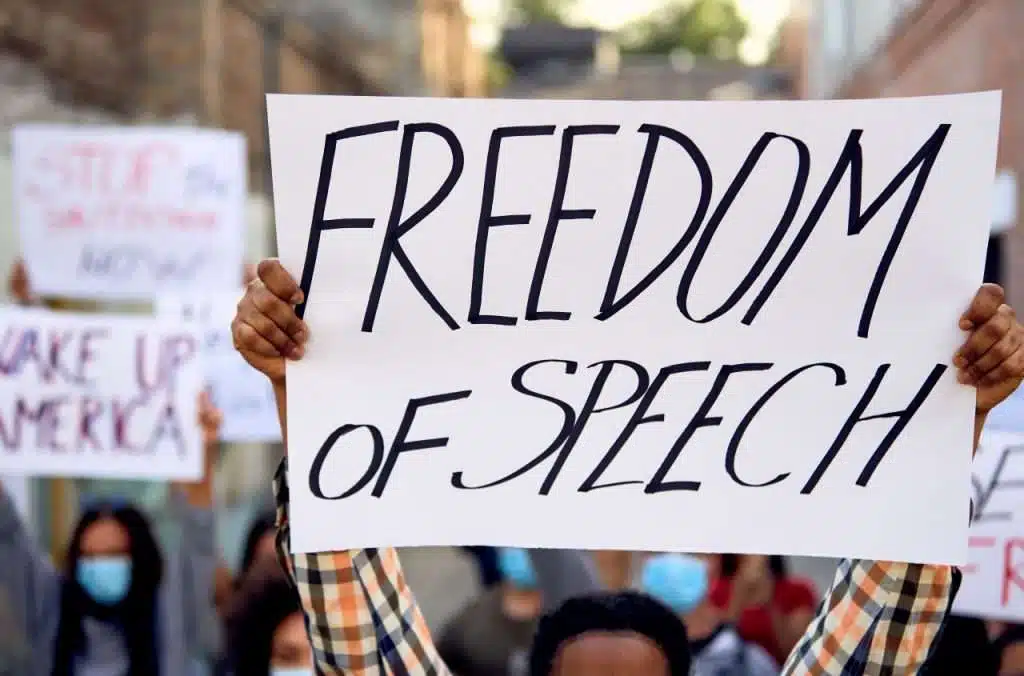
How far Freedom of Expression is appropriate?
The irony is striking: the U.S. and the EU exert pressure on the Bangladeshi government to "restore democracy," even as they have left Afghanistan, Iraq, Syria, and Yemen in ruins and are now entrenched in the conflict against Russia in Ukraine. Nations that have refused to fall in line with their stance on the war face sanctions, frozen assets, and economic punitive measures. The West exerts tight control over the dissemination of information regarding the Ukraine war across both digital and analog platforms. Those who refuse to toe the line face deplatforming or the de-monetization of their content by entities like Google. This is not limited to the Ukraine issue. Across the West, the enforcement of "woke culture" creates a climate where dissent is strictly prohibited. So-called "liberals" may declare whatever they please—a man may identify as a woman, or a convicted murderer may claim the identity of a five-year-old child—but to criticize these bizarre assertions is to invite charges of "hate speech." It goes beyond discourse; this ideology is enforced as mandatory compliance, leading to the exclusion of those who refuse to conform. Conversely, the narrative of the Bangladesh government and its allies—India, China, and Russia—is equally curious. They dismiss these complaints as groundless, citing the existence of ample freedom. This narrative is bolstered by state-sponsored "cyber teams." They claim that the U.S. and EU are practicing imperialist aggression against Bangladesh. Yet, these same teams ignore India’s intervention, framing it as "friendly." There were allegations, for instance, that in the 2018 election, Indian Ambassador Sujata Singh requested opposition leader Hussain Muhammad Ershad to participate. One must not forget that Bangladesh, as a neighbor, has seen the fate of Sikkim firsthand. It seems that "imperialism" is merely a label one uses for the interventions of one’s adversaries, while the interventions of one’s friends are termed "friendship."What is the Gender Pay Gap? Does it really exist?
In the digital sphere, Donald Trump and Andrew Tate were banned from Twitter for expressing dissenting views, though policies shifted after Elon Musk’s acquisition. Facebook’s record is similarly checkered; during the 2017 Rohingya genocide in Myanmar, the platform censored information and refused to provide evidence to the International Court of Justice for the case involving The Gambia. More recently, the BBC chose not to broadcast the opening ceremony of the FIFA World Cup in Qatar. It appears that, for many, the ultimate expression of "freedom" has become the power to suppress the freedom of others.