
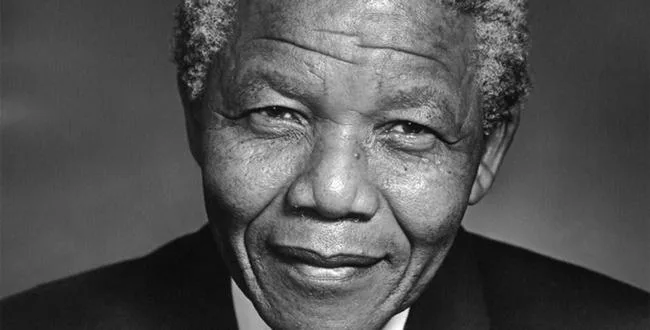
1. Nelson Mandela at a Glance (Quick Facts)
For the reader's convenience, the key milestones of Nelson Mandela’s life are summarized in the table below:
| Category | Details |
| Full Name | Nelson Rolihlahla Mandela |
| Nicknames | Madiba, Tata |
| Birth | July 18, 1918 (Mvezo, South Africa) |
| Death | December 5, 2013 (Johannesburg, aged 95) |
| Political Party | African National Congress (ANC) |
| Presidency | May 10, 1994 – June 14, 1999 |
| Imprisonment | 27 years (1962–1990) |
| Famous Work | Long Walk to Freedom |
| Awards | Nobel Peace Prize (1993), Bharat Ratna (1990) |
2. Early Life and Lineage: From Prince to Revolutionary
Nelson Mandela was born on July 18, 1918, in Mvezo, a small village in South Africa’s Eastern Cape province. His father, Gadla Henry Mphakanyiswa, was a primary counselor to the Thembu royal house, and his mother, Nosekeni Fanny, was Gadla’s third wife.
At birth, he was given the name 'Rolihlahla.' In the Xhosa language, it literally translates to "pulling the branch of a tree," but colloquially, it means a "troublemaker." Who could have foreseen that this "troublemaker" would one day shake the very foundations of a racist regime?
Mandela lost his father when he was just twelve. Before his death, his father placed him under the guardianship of Jongintaba, the regent of the Thembu people. In the regent’s household, Mandela grew up in an environment of royal luxury. Immersed in the tales of his ancestors' valor, the seeds of patriotism were sown within him.
3. Education and the Flight to Johannesburg
Mandela was the first in his family to attend school. On his first day, his teacher, Miss Mdingane, gave him the English name 'Nelson' in accordance with colonial custom.
For his higher education, he enrolled at Fort Hare University, then the only institution of its kind for Black South Africans. It was there that he met Oliver Tambo, who would become his lifelong friend and comrade-in-arms. However, Mandela was expelled following his involvement in a student union dispute.
Upon returning home, he learned that his guardian, Jongintaba, had arranged a marriage for him and his cousin Justice. To escape this forced union, Mandela fled to Johannesburg in 1941. There, he initially worked as a night watchman at a gold mine before transitioning to a clerk position at a law firm, eventually earning his law degree through correspondence.
4. Entering Politics and Joining the ANC
During his time in Johannesburg in the 1940s, Mandela witnessed the brutal reality of apartheid. Black South Africans were restricted from traveling outside designated areas, and were barred from sitting with white citizens on buses or in public parks. This injustice compelled him toward political activism.
- 1943: He joined the African National Congress (ANC).
- 1944: Alongside Oliver Tambo and Walter Sisulu, he formed the 'ANC Youth League,' aiming to transform the ANC into a mass-based movement.
- 1948: The National Party came to power and officially institutionalized 'Apartheid.'
Mandela was initially influenced by Mahatma Gandhi’s philosophy of non-violence. In 1952, he led the 'Defiance Campaign,' a movement of civil disobedience in which thousands of Black South Africans voluntarily violated segregation laws, resulting in mass arrests. Mandela’s growing popularity marked him as a "dangerous" figure to the state.
5. Armed Struggle and the Formation of 'Umkhonto we Sizwe'
In 1960, in the township of Sharpeville, police opened fire on a peaceful demonstration, killing 69 people—an atrocity known as the Sharpeville Massacre. The government subsequently banned the ANC.
Mandela realized that non-violence alone could not overcome such a brutal regime. He stated:
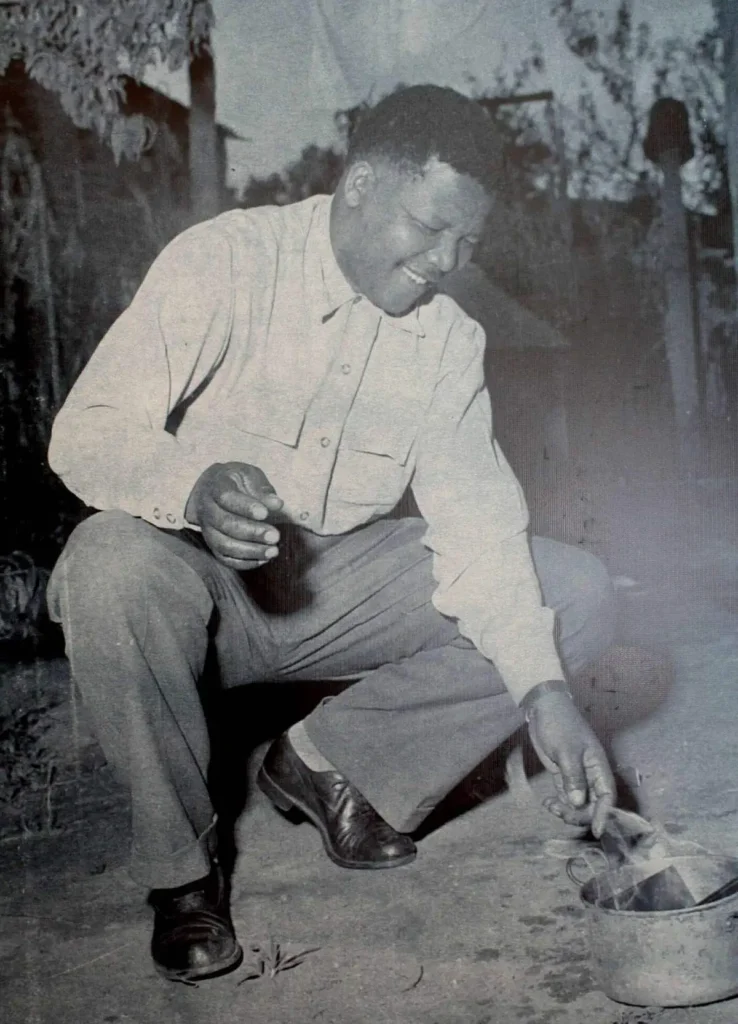
"When the government resorts to force, there is no other path but to take up arms in self-defense."
In 1961, Mandela went underground and established 'Umkhonto we Sizwe' (Spear of the Nation), the armed wing of the ANC, serving as its commander-in-chief. He traveled under aliases to countries like Algeria and Ethiopia for guerrilla training. During this period, the media dubbed him "The Black Pimpernel" for his ability to evade police capture.
6. The Rivonia Trial and the Historic Speech
Following his return to South Africa in 1962, Mandela was arrested based on intelligence reportedly provided by the CIA. After an initial sentence, a police raid on the ANC’s secret headquarters at Liliesleaf Farm yielded documents that led to charges of treason and sabotage against Mandela and his associates. This became known as the 'Rivonia Trial.'
Tariq ibn Ziyad stands as the preeminent figure in the Islamic annexation of Andalusia. This examination chronicles his seminal 711 expedition into the Iberian Peninsula, evaluating the historicity of his legendary maritime immolation and the decisive tactical maneuvers that defined the Battle of Guadalete.
On April 20, 1964, standing in the dock, Mandela delivered one of the most significant speeches of his life. Rather than merely defending himself, he put the regime on trial. He concluded with these immortal words:
"I have fought against white domination, and I have fought against black domination. I have cherished the ideal of a democratic and free society in which all persons live together in harmony and with equal opportunities. It is an ideal which I hope to live for and to achieve. But if needs be, it is an ideal for which I am prepared to die."
7. Twenty-Seven Years on Robben Island: Prisoner 466/64
On June 12, 1964, Mandela was sentenced to life imprisonment and dispatched to the notorious Robben Island prison.
- Prisoner Number: 466/64 (the 466th prisoner of 1964).
- Conditions: He was kept in a damp cell measuring only 7 by 8 feet, with only a straw mat for bedding.
- Labor: Every morning in the biting cold, he was forced to labor in a lime quarry. The prolonged exposure severely damaged his eyesight.
- Communication: He was permitted only one letter and one visitor every six months.
After 18 years on Robben Island, he was transferred to Pollsmoor Prison in 1982 and later to Victor Verster Prison in 1988. Even while battling tuberculosis in confinement, his resolve remained unbroken, and he continued to secretly guide the movement. Across the world, the "Free Mandela" campaign gained momentum.
8. Release and the End of Apartheid
Faced with mounting international pressure and a collapsing economy, the white president, F. W. de Klerk, finally lifted the ban on the ANC.
On February 11, 1990, after 27 years of incarceration, Nelson Mandela walked free through the gates of Victor Verster Prison. The moment was broadcast globally to millions. Many feared civil war, but Mandela chose the path of reconciliation. In 1993, he and De Klerk were jointly awarded the Nobel Peace Prize for their work in peacefully dismantling apartheid.
9. Mandela’s Landmark Presidency (1994–1999)
On April 27, 1994, South Africa held its first multi-racial general election. The ANC won 62% of the vote.
- May 10, 1994: Nelson Mandela was inaugurated as South Africa’s first Black president.
- New Constitution: In 1996, he introduced a new constitution, widely considered one of the finest in the world for its protection of human rights.
- Truth and Reconciliation Commission (TRC): Led by Archbishop Desmond Tutu, the commission was established to uncover the truths of past atrocities, prioritizing restorative justice and social healing over retribution.
- Development: He launched the 'Reconstruction and Development Program' (RDP) to provide electricity, water, and housing to the impoverished.
- 1995 Rugby World Cup: He utilized rugby, a sport historically favored by white South Africans, as a symbol of national unity, which significantly lessened ethnic tensions.
After a single five-year term, Mandela voluntarily stepped down in 1999 at the age of 81—a rare and principled act in the history of African politics.
The 1970 Election: The Moment Bengal Responded to Pakistani Injustice
10. Personal Life and Family
Mandela’s personal life was marked by both tragedy and sacrifice. He was married three times and had six children.
Publish Your Research & Critical Analysis on MaroonPaper
Contribute in-depth essays on law, political philosophy, economics, and geopolitics to an intellectual readership.
1. Evelyn Mase (Married 1944–1958): His first wife. They had two sons (Thembi and Makgatho) and two daughters (both named Makaziwe; the first died in infancy). His eldest son, Thembi, died in a car accident in 1969 while Mandela was imprisoned, and he was denied permission to attend the funeral.
2. Winnie Madikizela (Married 1958–1996): A fierce activist in her own right, Winnie was the voice of the movement while Mandela was behind bars. Political and personal differences eventually led to their divorce. They had two daughters, Zenani and Zindzi.
3. Graça Machel (Married 1998–2013): On his 80th birthday, Mandela married Graça Machel, the widow of former Mozambican President Samora Machel. She remained his companion until his passing.
Mandela’s son Makgatho died of AIDS in 2005. Mandela spoke publicly about the disease, working to dismantle the associated social stigmas.
11. Death and Global Mourning
After battling a recurring lung infection, Nelson Mandela passed away at his home in Houghton, Johannesburg, on December 5, 2013, at the age of 95.
His death brought the world to a standstill. From U.S. President Barack Obama to countless other global leaders, the world paid homage to his legacy. South Africa observed ten days of national mourning, and he was laid to rest in his ancestral village of Qunu.
12. Five Immortal Quotes by Nelson Mandela
Mandela’s philosophy continues to inspire us today:
1. "Education is the most powerful weapon which you can use to change the world."
2. "Resentment is like drinking poison and then hoping it will kill your enemies."
3. "I learned that courage was not the absence of fear, but the triumph over it."
The intellectual architecture of Karl Marx’s project is anchored in the foundational tenets of dialectical materialism, historical materialism, the mechanics of class struggle, the systemic nature of capitalist exploitation, and the teleological trajectory of communism.
4. "It always seems impossible until it's done."
5. "Lead from the back—and let others believe they are in front."
13. Frequently Asked Questions (FAQ)
Q: Why was Nelson Mandela imprisoned?
A: He was imprisoned for his role in organizing armed resistance and sabotage against the apartheid policies of the South African government.
Q: How old was Nelson Mandela when he died?
A: He was 95 years old.
Q: When and why is Mandela Day celebrated?
A: Mandela Day is observed annually on July 18. As he spent 67 years in service to humanity, the day encourages people to devote at least 67 minutes to helping others.
Q: What is the title of Mandela’s autobiography?
A: 'Long Walk to Freedom,' published in 1994.
Q: Did Mandela receive India's highest civilian honor?
A: Yes, he became the first non-Indian to receive the 'Bharat Ratna' in 1990.
Conclusion
Nelson Mandela taught us that the walls of a prison are no match for the human spirit. He was not merely a South African leader, but a global conscience. In our increasingly fractured world, his dream of a 'Rainbow Nation'—a society where people of all colors and creeds coexist—is more relevant than ever.
If the life of this great statesman has inspired you, please share this article and let us know in the comments which quality of Mandela’s resonated most with you.
Sources and Acknowledgments: