
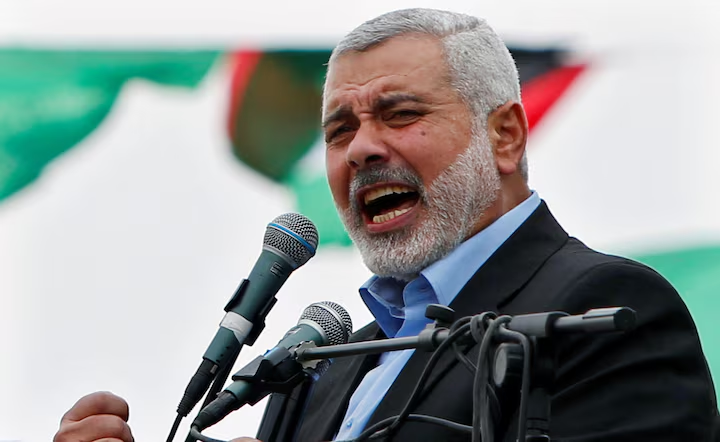
On Wednesday, the Palestinian militant group Hamas announced that its political leader, Ismail Haniyeh, was assassinated in Iran early this morning. Iran’s Islamic Revolutionary Guard Corps (IRGC) has confirmed the death and announced that an investigation is underway. The assassination occurred only hours after Haniyeh attended the inauguration of Iran's new president.
The Assassination of Ismail Haniyeh
A statement issued by the IRGC’s Sepah News website noted: “The residence of Ismail Haniyeh, head of the political bureau of the Islamic resistance movement Hamas, was struck in Tehran. As a result of this incident, he and one of his bodyguards were martyred.” Haniyeh had been in Tehran to participate in the swearing-in ceremony of Iranian President Masoud Pezeshkian on Tuesday. Iran has provided no further details regarding the method of the attack, with the Guard stating that the circumstances remain under investigation.
Reactions to the Assassination
The killing took place less than 24 hours after Israeli forces struck a Hezbollah commander in the Israeli-occupied Golan Heights. Israeli authorities have offered no immediate comment on the assassination, and the White House has yet to issue an official response.
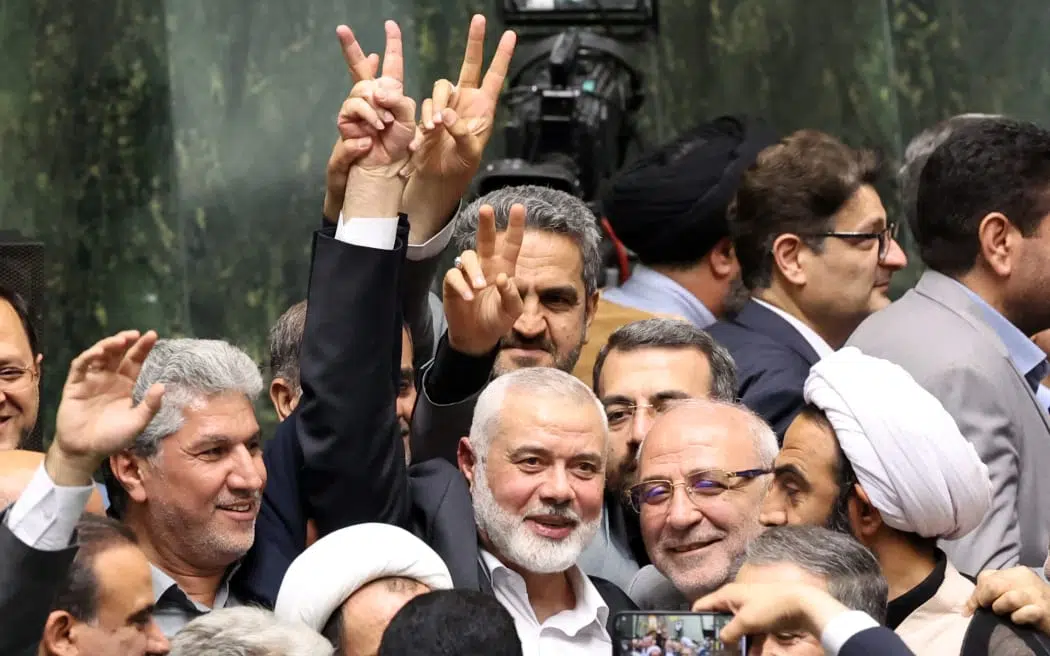
Senior Hamas official Sami Abu Zuhri told Reuters, “The Israeli occupiers assassinated brother Ismail Haniyeh in an attempt to break the will of Hamas.” He further asserted that Hamas would continue its path and remains confident of victory. Labeling the killing a “cowardly act,” he vowed retaliation. The assassination of Haniyeh threatens to significantly escalate regional tensions between Hamas and Israel, and appears to have dealt a severe blow to the prospect of any near-term ceasefire agreement in Gaza.
Beyond the conventional narratives propagated by Western media, a closer inspection of the map reveals a starker reality: the perpetual instability in the Middle East serves as a backdrop to a ruthless shadow conflict over the Strait of Hormuz—the critical maritime chokepoint through which twenty percent of the world’s petroleum supply flows.
Who Was Ismail Haniyeh?
Ismail Haniyeh was a commanding figure in Palestinian politics, widely recognized for his leadership within the Hamas organization. He played a pivotal role in the Palestinian liberation struggle and the pursuit of an autonomous state.
Early Life and Education
Born on January 29, 1963, in the Al-Shati refugee camp in Gaza, Haniyeh’s childhood was defined by the Israeli-Palestinian conflict, which left a profound imprint on his worldview. He studied Arabic literature at the Islamic University of Gaza, where he became active in student politics and joined the Muslim Brotherhood—the precursor to Hamas.
Hamas: Standing on the Frontlines of the Palestinian Struggle for Liberation
Publish Your Research & Critical Analysis on MaroonPaper
Contribute in-depth essays on law, political philosophy, economics, and geopolitics to an intellectual readership.
Rise Within Hamas
Following his education, Haniyeh became a close aide to Hamas co-founder Sheikh Ahmed Yassin. His dedication and leadership acumen propelled him into the upper echelons of the movement. After the 2004 assassinations of Yassin and other senior leaders, Haniyeh emerged as a central figure. Following Hamas’s victory in the 2006 parliamentary elections, he served as Prime Minister of the Palestinian Authority. He led Hamas in the Gaza Strip from 2006 until February 2017. On May 6, 2017, he succeeded Khaled Mashal as the chairman of Hamas’s political bureau.
As a leader, Haniyeh was known for a pragmatic approach, navigating the complex web of relations between disparate Palestinian factions, Israel, and international powers. His commitment to armed resistance against occupation was balanced by his participation in political processes toward achieving Palestinian statehood.
International Diplomacy
Haniyeh’s influence extended well beyond the Palestinian territories; he served as the primary international diplomatic voice for the movement. He was instrumental in cultivating and maintaining relationships with nations supportive of the Palestinian cause. After assuming the top leadership position in 2017, he relocated to Doha, Qatar, which allowed him to bypass the travel restrictions imposed on the besieged Gaza Strip and act as a mediator in ceasefire negotiations. Haniyeh engaged with leaders in Iran, Turkey, and Qatar to secure political and financial support for Hamas. These international efforts were consistently directed toward strengthening the organization’s position and securing aid for the people of Gaza.
The volatility currently defining Middle Eastern statecraft is anchored by the convergence of the intractable Palestinian crisis and the Abraham Accords—a transformative diplomatic framework that continues to reshape the regional architecture.
Who is Arming Israel in the Gaza Genocide?
In addition to his political and military duties, Haniyeh focused on humanitarian initiatives within Gaza, prioritizing improvements in healthcare, education, and the quality of life for his constituents. During periods of intense conflict with Israel, his leadership was crucial in mobilizing resources for the affected population.
Controversies and Challenges
Haniyeh’s tenure was not without deep controversy; his role in Hamas made him a primary target for the United States, the European Union, and their allies. Yet, within Palestinian society, he was often viewed as a symbol of resistance and justice. His resolve and unwavering commitment to a sovereign Palestinian state also earned him a formidable list of adversaries.
Why Are Western Feminists Silent on Gaza?
Ismail Haniyeh remained a central figure in Palestinian politics and the broader Middle Eastern landscape. While his assassination has silenced the man, his impact on the trajectory of Palestinian rights and the regional power balance cannot be undone. He remains, for many, an enduring symbol of the Palestinian people's determination to achieve freedom and sovereignty.