
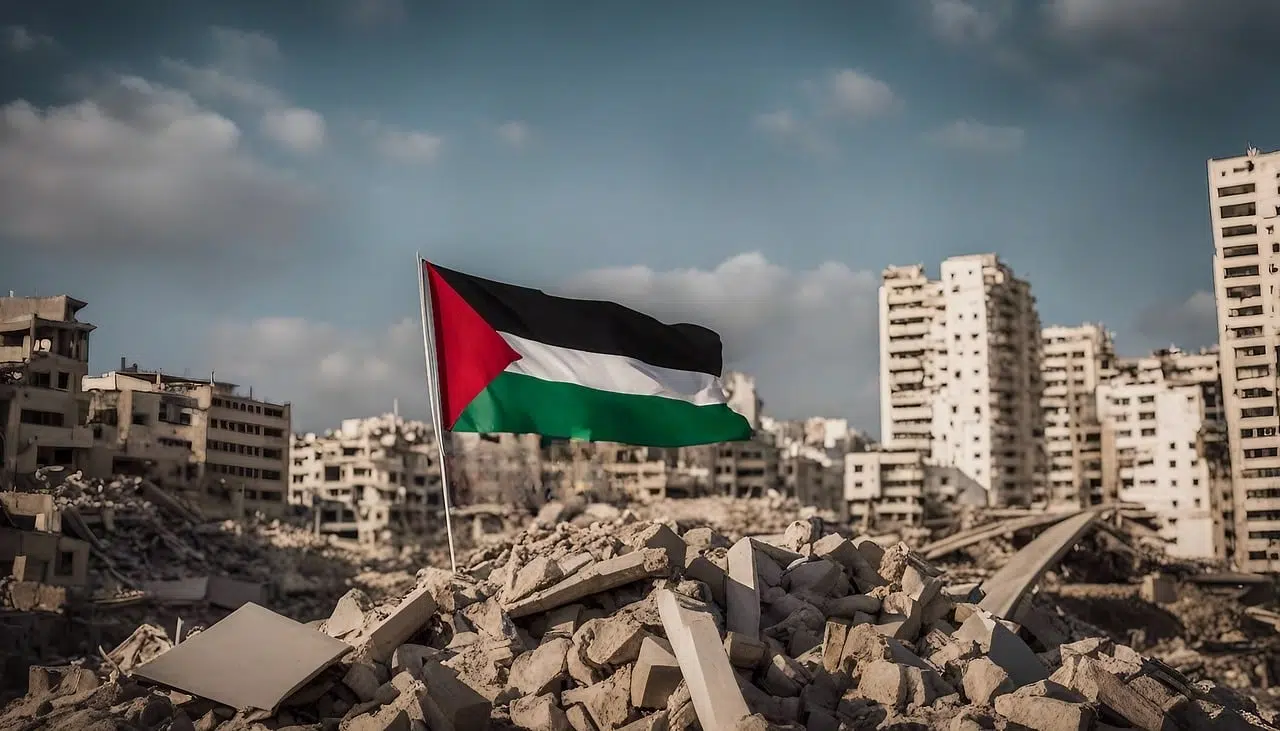
The International Court of Justice’s (ICJ) directive demanding an immediate cessation of Israel’s military offensive in Rafah, in the southern Gaza Strip, represents a watershed moment in international jurisprudence. Describing the situation in Gaza as catastrophic, the Court issued this mandate amidst subhuman conditions, compounded by a desperate lack of shelter, sustenance, hydration, and medical infrastructure—a crisis that has seen more than 900,000 Palestinians displaced in a mere fortnight. This ruling serves as a vital instrument for the upholding of international law and humanitarian imperatives within the Palestinian territories.
The Israeli-Palestinian Conflict
The Israel-Palestine conflict is deeply entrenched, serving as a crucible for intense and cyclical violence over several decades. Woven from a complex tapestry of historical, political, and religious grievances, the friction has intensified dramatically since the October 7 attacks, resulting in staggering destruction and the loss of thousands of Palestinian lives, including women and children. It is this grim escalation that has compelled the International Court of Justice to intervene.
The Ruling of the International Court of Justice
On May 24, the International Court of Justice issued a formal order to Israel to halt its military offensive in the southern city of Rafah. The decision was rendered in the context of a case filed by South Africa, which has accused Israel of genocide in Palestine. Furthermore, the Court has instructed Israel to submit a report within one month detailing the progress of actions taken in compliance with its order.
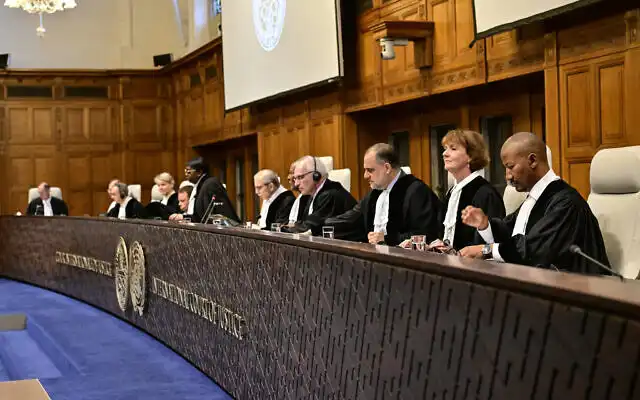
The ICJ’s directive is both clear and resolute: Israel’s military campaign in Rafah must cease immediately. The ruling underscores several critical imperatives:
Beyond the conventional narratives propagated by Western media, a closer inspection of the map reveals a starker reality: the perpetual instability in the Middle East serves as a backdrop to a ruthless shadow conflict over the Strait of Hormuz—the critical maritime chokepoint through which twenty percent of the world’s petroleum supply flows.
- The urgent necessity of protecting civilian lives and infrastructure.
- The absolute obligation of all involved parties to adhere to international humanitarian law.
- The imperative of keeping the Rafah border crossing open to ensure the delivery of humanitarian aid.
The Court's decision stands as a potent testament to the ICJ’s commitment to maintaining global peace and security.
Ireland, Spain, and Norway to recognize the State of Palestine on May 28
The Humanitarian Tragedy in Gaza
The humanitarian situation in Gaza remains dire. Countless Palestinians have been forced from their homes into shelters that are increasingly overcrowded and unfit for habitation. Israeli strikes on hospitals and temporary encampments have claimed the lives of thousands of non-combatants. There exists a critical shortage of essential provisions, including food, water, and medical supplies. The Al-Aqsa Martyrs Hospital is teetering on the brink of collapse; warnings have been issued that fuel shortages for generators could prove fatal for all patients dependent on electric life-support systems. It is an urgent imperative for the international community to prioritize the delivery of humanitarian aid to Gaza to mitigate further loss of life and alleviate the suffering of the civilian population.
Publish Your Research & Critical Analysis on MaroonPaper
Contribute in-depth essays on law, political philosophy, economics, and geopolitics to an intellectual readership.

To date, Israeli military activity in Rafah continues, with occupation forces advancing toward the city's densely populated western districts. Since October 7, the death toll has reached 35,800 Palestinians, with 80,011 wounded. On the Israeli side, the initial Hamas attack resulted in 1,139 deaths, and a number of hostages remain in captivity.
Global Response to the ICJ Ruling
The ICJ’s directive has triggered a wave of global reaction. South African Foreign Minister Naledi Pandor described the order as a forceful appeal for an end to the war, urging other UN member states to support the ICJ’s mandate. International leaders and organizations have echoed this call, demanding immediate humanitarian intervention and a cessation of hostilities.
Israel’s Official Stance
In response to the ruling, Prime Minister Benjamin Netanyahu convened an emergency cabinet meeting, signaling that the Israeli government is weighing the implications of the decision. High-ranking officials, including Foreign Minister Israel Katz and War Cabinet Minister Benny Gantz, were in attendance. Far-right Finance Minister Bezalel Smotrich vociferously opposed the decision, arguing that halting the military operation would threaten Israel’s very existence. Opposition leader Yair Lapid condemned the Court for failing to address the return of Israeli hostages or acknowledge Israel’s right to self-defense, characterizing the ruling as a "moral failure" and a "moral catastrophe," while emphasizing that Israel remains a victim of brutal aggression. Minister of Culture and Sport Miki Zohar asserted that the only way to save Israeli hostages is to maintain pressure on Hamas, insisting that operations must continue until that objective is achieved.
The volatility currently defining Middle Eastern statecraft is anchored by the convergence of the intractable Palestinian crisis and the Abraham Accords—a transformative diplomatic framework that continues to reshape the regional architecture.
History of the Israel-Palestine Conflict
Reports indicate that the Israeli government is engaged in discussions with the United States regarding a potential veto of any UN Security Council resolution aimed at enforcing the ICJ’s mandate.
The Way Forward
The ICJ’s directive could have profound consequences for the trajectory of the Israeli-Palestinian conflict. In the short term, it may compel Israel to reassess its military strategy and place greater weight on humanitarian considerations. In the long term, this ruling could reshape international diplomacy and conflict resolution frameworks, potentially laying the foundation for renewed peace initiatives and establishing a more robust mechanism for the protection of civilians in conflict zones.
Public Sentiment and Media Perspectives
Public opinion regarding the ICJ ruling remains polarized. Many Palestinians view the directive as a long-awaited acknowledgment of their protracted suffering and a step toward justice. Conversely, some in Israel perceive it as an unwelcome intrusion. On the global stage, the order has garnered support from advocates of human rights and international law, while skeptics caution that such intervention may hinder the pursuit of a durable peace.
The International Court of Justice’s ruling regarding Israel’s military operations in Rafah marks a significant milestone in the ongoing conflict. By emphasizing the necessity of adhering to international law and the duty to protect civilian life, the Court has underscored the vital importance of humanitarian access and long-term peace processes as the international community navigates the implications of this landmark decision.