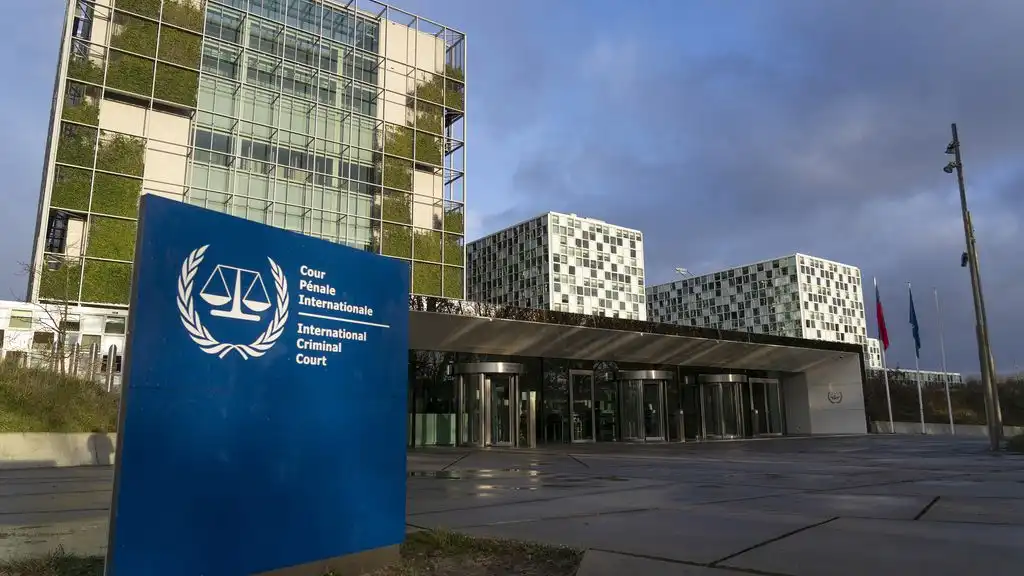
As the world's sole permanent tribunal tasked with the adjudication of war crimes, crimes against humanity, and genocide, the International Criminal Court currently confronts an existential crisis of unprecedented magnitude.
The world’s only permanent international tribunal dedicated to adjudicating war crimes, crimes against humanity, and genocide is currently facing its most formidable challenge. With the incoming Trump administration already signaling its intent, and the looming threat of sanctions against the court and its personnel, a haunting question has taken root: can the International Criminal Court (ICC) survive the next four years?
I posed this question following my participation in the Assembly of States Parties, the annual diplomatic gathering of the court’s member states. The conference took place as dark clouds—both symbolic and literal—gathered over The Hague, the seat of the ICC. Sanctions are coming, and they may arrive sooner than anticipated.
There is mounting evidence that the United States could impose sanctions even before Donald Trump assumes office. Indeed, Republicans may seek to embed these measures directly into the National Defense Authorization Act (NDAA), the annual legislation that dictates Washington’s defense budget and spending priorities.
Supporters of the court hope that such sanctions will be limited to high-ranking officials rather than the institution as a whole. While the ICC might weather targeted measures against specific personnel, the impact would be cataclysmic if the institution itself were sanctioned. How would the court’s investigators and officials travel? If banks and financial institutions, paralyzed by the fear of sanctions, refuse to process transactions, how would staff be paid? Would the judges even be able to utilize software like Microsoft Word to draft their opinions?
This is not the court’s first encounter with U.S. sanctions. In the final months of the previous Trump administration, measures were imposed on several ICC staffers, including the then-Chief Prosecutor, Fatou Bensouda of The Gambia. Yet, this time, the court and its advocates face four years of sustained hostility. Moreover, should sanctions be applied to specific ICC personnel, they will likely reflect the discriminatory and racialized biases inherent within the Trump administration’s worldview: Western ICC officials may find themselves in a stronger position to lobby the administration for exemptions than their counterparts from the Global South.
The challenge for the ICC is acute. The court must, at all costs, avoid escalating tensions with the United States while simultaneously safeguarding its independence. Simultaneously, it must ensure that the Trump administration’s actions are not allowed to normalize or legitimize the erosion of international justice.
Imagining a viable path forward is difficult. Consider a potential scenario: in the coming weeks, the Trump administration imposes sanctions on high-ranking ICC officials. The court responds by declaring its unwavering resolve, and member states rally to its defense. The work continues, and the Prosecutor formally requests arrest warrants for Israeli National Security Minister Itamar Ben-Gvir for war crimes and crimes against humanity committed in the West Bank. While this move is lauded globally as the principled action of an independent judiciary, a disgruntled White House responds by expanding the sanctions. Going a step further, the United States threatens its own allies with 30 percent tariffs if they do not follow suit and sanction the court.
The Anatomy of the Cyprus Dispute
This scenario is entirely plausible. U.S. Senator Lindsey Graham has already demanded that countries such as Canada, France, and Germany be brought under the purview of sanctions for their continued support of the ICC. Can the court withstand such pressure? Can its member states?
The ICC has endured Washington’s interference before, most notably during the early, hostile years of the George W. Bush administration. Eventually, America realized that by targeting figures like Lord’s Resistance Army leader Joseph Kony or former Sudanese President Omar al-Bashir, the ICC posed little threat to U.S. interests; conversely, American opposition to the court only served to undermine U.S. soft power by shielding notorious criminals from justice. Former Secretary of State Condoleezza Rice eventually acknowledged that her administration’s approach to the ICC was akin to "shooting ourselves in the foot."
Yet, this time is different. The ICC is now perceived to be acting directly against U.S. interests—most notably through the pursuit of arrest warrants for Israeli Prime Minister Benjamin Netanyahu and former Defense Minister Yoav Gallant. Just as these warrants will not be withdrawn, American opposition is likely to remain entrenched.
How Can the Court Survive?
The survival of the ICC rests ultimately with the states that created it. First, they must recognize this as an existential crisis. Acknowledging that threats from the United States are both real and long-term, they must take proactive steps to shield the court. They must do everything within their power to protect the institution and its staff from the reach of sanctions.
States must remind Washington that sanctioning the court over the warrants for Netanyahu and Gallant will irreparably damage accountability efforts in regions where ICC and U.S. interests converge, such as Ukraine, Myanmar, and Venezuela. Every time a new coercive measure is leveled against the ICC, American policymakers must be forced to confront the voices of Ukrainian, Rohingya, and Venezuelan survivors of atrocities. They, too, will be victims of these sanctions.
What Do We Owe Afghanistan?
The court cannot simply stand still in the face of a state that has long sought to curtail its efficacy. The ICC must remain resolute and respond to U.S. hostility through strategic engagement. For example, investigators could pursue cases against Iranian leaders for aiding and abetting Hamas and its atrocities. This would be the correct legal course of action, and it would simultaneously weaken the anti-court narrative championed by Trump, Graham, and their allies.
The ICC will likely survive the next four years. However, whether it emerges as a hollowed-out vestige or a strategically adept and more effective international tribunal depends entirely on its leadership and the states that claim to support it. Now is the moment for those states to prove that support with the full weight of their political capital.
*This article was written by Mark Kersten and originally published in Al Jazeera on December 17. He is a consultant for the Wayamo Foundation and an assistant professor of criminal justice and criminology at the University of the Fraser Valley.*
Rakibul Islam
Author & Contributor, MaroonPaper
Contributing insightful research and analytical essays on law, politics, history, and international affairs for MaroonPaper.