Switch language / ভাষা পরিবর্তন করুন
TranslationEnglish Edition

The Strategic Impetus Behind Israel’s Escalation Against Iran
Rakibul IslamRakibul Islam
•June 18, 2025•6 min read
The Strategic Impetus Behind Israel’s Escalation Against Iran

What factors precipitated Israel’s recent strike on Iran? An inquiry reveals a multifaceted convergence of objectives: a calculated maneuver to evade international judicial scrutiny, a tactical diversion from the humanitarian catastrophe in Gaza, and a desperate assertion of regional hegemony.

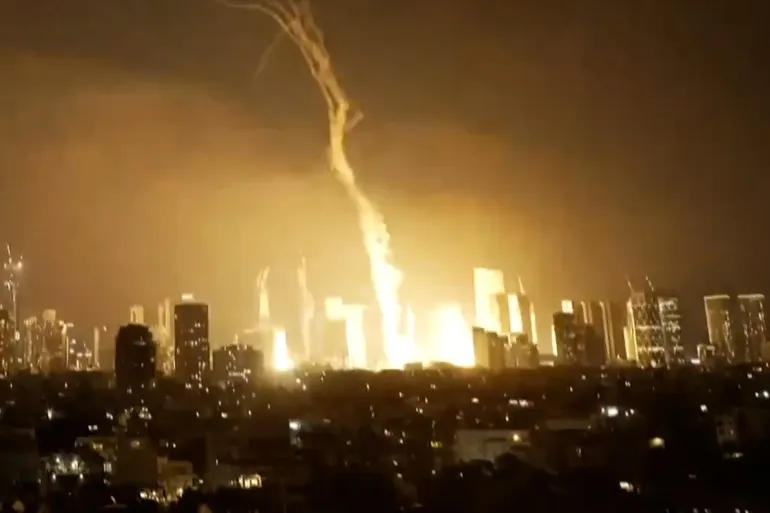
As the Israeli-Iranian conflict enters its third day, the death toll on both sides continues to mount: at least 80 people have been killed in Iran, and at least 10 in Israel. Despite Iran’s lethal counterstrike, Israeli officials maintain that the assault on various Iranian nuclear and military facilities was a strategic necessity. While a series of justifications have been presented to the Israeli public, none adequately explain why the Israeli government chose to launch this unilateral, unprovoked offensive. The Israeli government claims the operation was "preemptive," intended to neutralize an imminent and existential threat posed by Iran’s nuclear program. This assertion appears devoid of evidence. The attack was clearly the result of long-term, meticulous planning. A preemptive strike requires the legal and moral exigency of self-defense—a condition that simply did not exist. Furthermore, Israel cited the IAEA report released on June 12 as the catalyst for this urgency. That report criticized Iran for "serious violations" of its commitments under the Nuclear Non-Proliferation Treaty (NPT), dating back to the early 2000s. However, the IAEA itself seems to have rejected the premise that this created a new emergency; the report contained nothing that was not already well-known to all concerned parties. Beyond the rhetoric of a "preemptive" strike, the Israeli government aimed to "decapitate" Iran’s nuclear program. Scholars and policymakers generally agree that Israel lacks the capacity to destroy this program—particularly if acting in isolation.
Who holds the advantage in military power between Iran and Israel?
The unfolding nature of the operation suggests that the objective was never to dismantle Iran’s nuclear capability. The Israel Defense Forces (IDF) bombed targets ranging from missile bases to gas fields and oil depots, while also targeting senior military leadership. Among those reported killed is Ali Shamkhani, a former defense minister and a close advisor to Supreme Leader Ayatollah Ali Khamenei—though the Iranian state and government have yet to formally confirm his death. Shamkhani is believed to have been a leading figure in recent months of negotiations with the United States. The liquidation of Shamkhani and others reflects a signature Israeli modus operandi: the belief that targeted assassinations will trigger the collapse of the systems and institutions those individuals lead. Shamkhani’s death can be interpreted as a deliberate effort to sabotage ongoing dialogue between Iran and the United States. In any event, these killings indicate a calculated strategy to demonstrate Israeli reach across every level of Iranian officialdom, rather than a mere tactical strike against a nuclear program. A third potential motive is that Israel is intent on accelerating "regime change" in Tehran. Prime Minister Benjamin Netanyahu has publicly called on the "proud Iranian people" to rise up and liberate themselves from a "wicked and oppressive regime." The assumption that Iranians would heed such a call while Israel unilaterally bombards their country is preposterous. It is the equivalent of the equally fallacious notion that by starving Palestinians in Gaza, they would be driven to revolt against and overthrow Hamas. Even if a change were desired, the belief that all Iranians are merely waiting for an Israeli attack to rise up against their government betrays a profound ignorance of the forces driving Iranian politics. While many Iranians undoubtedly oppose the Islamic Republic, they are, despite their political differences, deeply patriotic. They are committed to defending Iran’s national sovereignty and independence, and they remain staunchly opposed to any foreign power attempting to impose its agenda. In fact, just as many Israelis who once considered themselves uncompromising critics of Netanyahu rallied behind the government when the attacks began—most notably members of the parliamentary "opposition"—many opponents of the Islamic Republic are now rallying behind the flag in defense of Iran’s violated sovereignty. The claim that Israel is "laying the groundwork" for a popular Iranian uprising is, at best, a cynical ploy. Israel did not launch these attacks for the reasons stated. What, then, truly drove this aggression? Amid the genocidal campaign in Gaza, Netanyahu realizes that his government has few options left. Much of the international community, including regional allies, is openly critical of Israel. Some are even preparing unilateral moves, such as the recognition of a Palestinian state. Netanyahu faces the threat of an arrest warrant from the International Criminal Court (ICC), while the International Court of Justice (ICJ) is poised to rule on the legality of Israel’s occupation. The IDF has perpetrated relentless atrocities, denied them, and been exposed as habitual liars in the process. Netanyahu has been planning an attack on Iran for years, waiting for an opportune moment. That moment arrived on Friday. It is a desperate endeavor: an attempt to force the world to align behind Israel just as the international community begins to challenge its long-standing impunity. While Western powers view Iran as a threat, Netanyahu has sought to legitimize this assault by repeating traditional Israeli tropes—from divine promises to the memory of the Holocaust. His goal is to restore Israel’s former status: the power to do whatever it wishes, whenever it wishes. By current Israeli definition, "security" is the state’s most sacred tenet. This concept serves as the seemingly apolitical foundation of Israeli identity, dedicated entirely to the goal of Jewish supremacy—the only way, they believe, to preserve the integrity of Jewish life. For them, "security" means the ability to kill whom they please, where they please, and when they please, without ever having to pay the price. From Gaza, Yemen, Lebanon, and Syria to now Iran—this singular concept of "security" drives every Israeli action. This "security architecture" must be constantly expanded; it can never rest. By striking Iran, Netanyahu has taken the ultimate gamble: whether before the courts in The Hague or domestic tribunals, he seeks total and permanent impunity for both the state and himself. Will this be Netanyahu’s path to salvation? Will Israelis forgive him for his horrific suppression in Gaza and his catastrophic failures at home? Judging by the current jubilance in Israeli society, it seems they might. The long queues outside every open shop—from hardware stores to grocers—suggest that the Israeli public has entered a mode of pure survivalism. Such a subservient citizenry may benefit Netanyahu, but it serves as an ominous sign for any effort to build or preserve a robust, healthy Israeli society. — Ari Goldberg. This article was originally published in Al Jazeera under the title: The real reason Israel attacked Iran.

Share this intellectual discourse

Help expand constructive dialogues on global affairs, law, and politics.

Rakibul Islam

Rakibul Islam

Author & Contributor, MaroonPaper

Contributing insightful research and analytical essays on law, politics, history, and international affairs for MaroonPaper.

Stay Connected with MaroonPaper

Subscribe to receive selected intellectual essays, critical commentaries, and translations directly in your inbox.

No spam, ever. Unsubscribe at any time.