
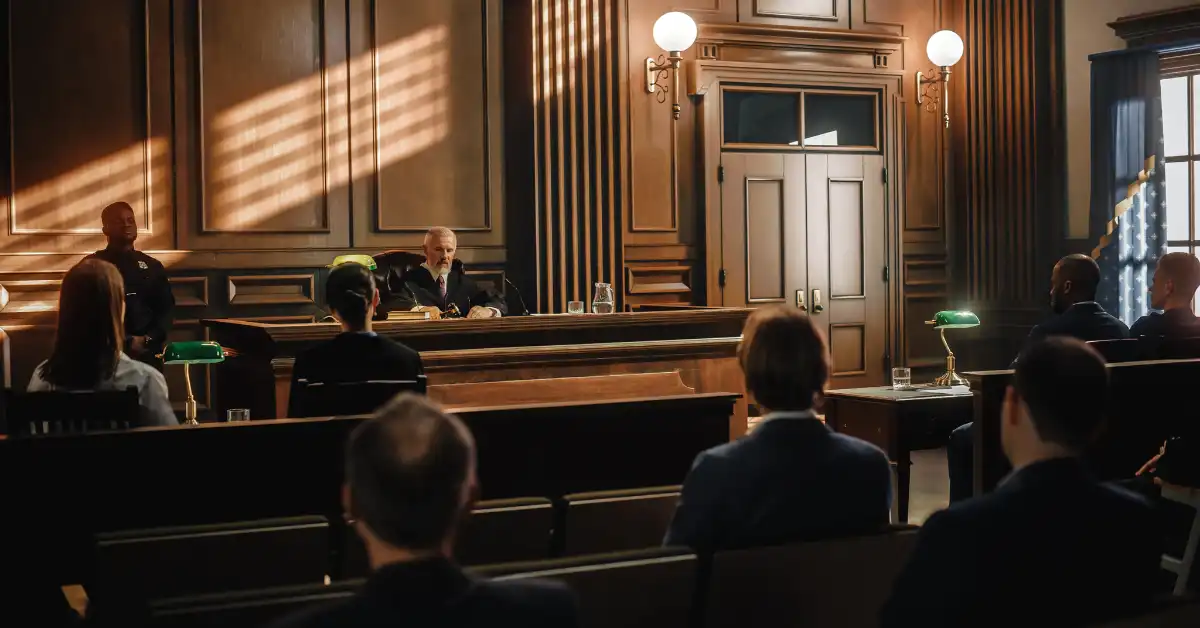
What Constitutes a "Suit of a Civil Nature"?
The Code of Civil Procedure, 1908, establishes clear provisions under Section 9 regarding suits of a civil nature. By this standard, any litigation involving a dispute over rights to property or an office is classified as a suit of a civil nature. Consequently, if an individual or an entity asserts a claim to a property or an office, the matter is considered civil in nature—even if such rights are ostensibly derived from religious rites or social customs. In legal parlance, a civil case is referred to as a "suit." These are initiated to resolve questions concerning rights of possession or ownership of property. They typically arise from disputes between private individuals, between entities, or between an individual and an entity. In the majority of these cases, the remedy sought involves either financial compensation or the restitution of rights.What is Res Sub Judice? What is the difference between Res Sub Judice and Res Judicata?
Civil litigation originates when a citizen's rights and responsibilities are infringed upon. However, disputes confined to purely religious, social, or tribal norms—wherein no underlying legal right is at stake—do not fall under the purview of civil litigation. Yet, as per Section 9, if an issue of property or office is contingent upon religious or social rules, the court retains the jurisdiction to adjudicate that specific question. For instance, if an individual is expelled from a tribal community in a manner that compromises their legal rights, the matter becomes a civil suit. Similarly, the removal of an individual from a position in a religious institution qualifies as a civil matter. Conversely, claims involving special privileges of religious leaders, invitations to communal dinners, or questions regarding social ceremonies where no substantive right is claimed do not ascend to the level of a civil suit. Ultimately, a suit of a civil nature exists only when the inquiry concerns an individual’s rights, property, or office. Notably, the classification is determined by the subject matter of the suit, not by the status of the parties involved. If the subject matter is civil, the civil court possesses inherent jurisdiction. Unless a law explicitly forbids the adjudication of a specific matter, the jurisdiction of the civil court remains inviolate. Section 9 does not differentiate between rights created by common law and those established by statutory enactments.What is Res Judicata? Conditions for Res Judicata and Constructive Res Judicata
What qualifies as a suit of a civil nature?
Based on judicial precedents, the following are notable examples of civil matters: 1. Suits filed by or against the government or local autonomous bodies. 2. Litigation brought by employees contesting wrongful termination. 3. Suits to establish the right to worship. 4. Litigation related to Muslim or Hindu divorce proceedings. 5. Suits challenging the unlawful expulsion of a member from a social club.What does not qualify as a suit of a civil nature?
Conversely, the following are generally not considered civil in nature: 1. Matters whose primary focus is limited to religious rituals or ceremonies. 2. Claims to social status based on office, such as a claim by the head of a monastery to be carried in a palanquin on public roads during festivals. 3. Cases where the plaintiff lacks a proprietary interest in the property but claims a duty, such as a trustee claiming the right to manage a temple. 4. Claims to receive honor or voluntary service from religious adherents. 5. Claims concerning religious rites where no question of property or office is involved. Pursuant to Section 9, civil courts will only entertain suits where a legitimate claim to property or office is at the heart of the dispute.Categories of Civil Litigation
The interpretation of Section 9 divides civil litigation into two primary categories: * **Property-related suits:** This encompasses the right to recover mortgaged property, the right to recover debts, or the recovery of arrears in salaries for public officials. All such matters are adjudicated as civil suits. * **Office-related suits:** This includes, for instance, litigation regarding the office of a *Mutawalli*, wherein a plaintiff may seek an injunction against the removal from such a position, or assert a claim to an office within an institution. Suits for damages arising from breach of contract, rent recovery, or specific remedies—such as the enforcement or rescission of contracts, rectification of deeds, cancellation of instruments, declaratory decrees, injunctions, and recovery of possession—are all categorized as civil litigation.What is Woke Culture? Why is it so controversial?