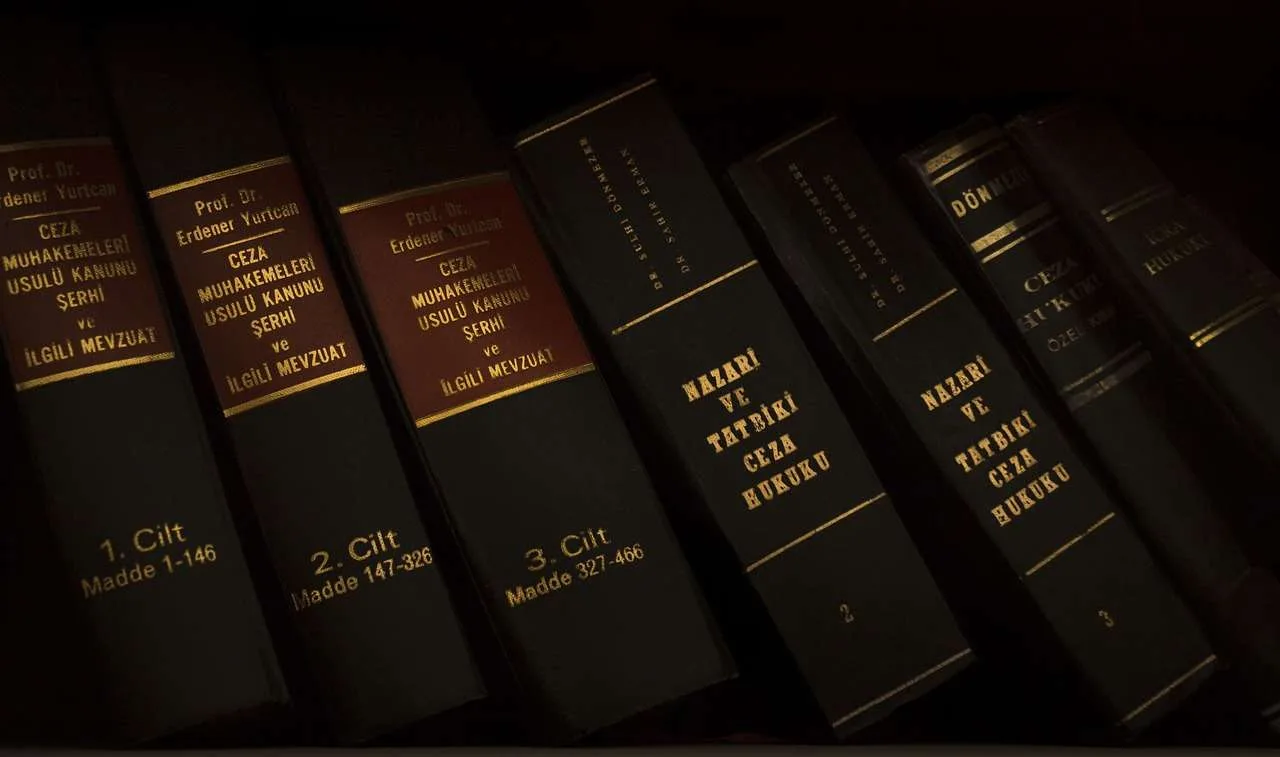
The State of Jurisprudence in the Twenty-First Century
Rakibul Islam
•November 3, 2020•8 min read
Law serves as a systemic apparatus of regulations, oscillating between the rational and the arbitrary, the equitable and the unjust. It is defined by the pervasive architecture of obligations—both codified and tacit—that govern the human condition. Legislation emerges from varied theatres of authority: sometimes within the deliberate halls of parliamentary assembly, and other times amidst the visceral exigencies of the battlefield. Laws are drafted to codify the birth of liberty or, conversely, to orchestrate its systematic erosion; they are instruments wielded interchangeably by the sovereign state, the citizenry, or the singular apparatus of government.
If we are to define "law" without euphemism or pretense, we must characterize it as a systematized mechanism of rules—some rational, others absurd; some equitable, others profoundly unjust. It is a dense tapestry of constraints, both explicit and implicit, that governs our surroundings. Laws are forged in the halls of parliaments and upon the blood-soaked terrain of battlefields. They are crafted to proclaim liberty and, with equal frequency, to extinguish it. Whether created by the state, the citizenry, or the singular dictate of a regime, the legitimacy and reception of a law depend entirely upon the identity of the legislator and the ultimate beneficiary. In the twenty-first century, this is the precarious state of the law.
The Genesis of Law
If one were to inquire into the genesis of law, a traditional answer might point to the primordial prohibitions placed upon Adam, arguably the first universal legal code. Alternatively, one could look to the first instance of written jurisprudence. While the Code of Hammurabi is frequently cited as the oldest, the Ur-Nammu code—dating roughly to 2112–2050 BCE—predates it. In antiquity, the law was not the sprawling, bureaucratic leviathan it has become today; it was rudimentary. One might cynically posit that the earliest laws were simple commands: "Get out of my territory" or "Keep away from my wife." Perhaps such simplicity was all the era required.
In the current century, as human life, the state, and governance have undergone profound structural shifts, the law has mutated in tandem. It has been transformed, sometimes toward justice, but more often toward oppression. In the existing global order, the objective of law frequently boils down to little more than governance or exploitation. It serves as a tool by which one group imposes its will upon another, under the veneer of legitimacy. We see this reflected in the Digital Security Act of 2018 in Bangladesh, the contentious Citizenship Amendment Act in India, or the unilateral revocation of Article 370 in Kashmir.
Laws are almost invariably defined and interpreted by a small, self-serving elite. This cabal imposes its whims upon the masses in the name of the "public interest," while the vast majority remains excluded from the legislative process. These laws, though they may invoke the rhetoric of "good governance" or "justice," are rarely anchored in the consensus of the governed.
Does this mean the law is inherently monolithic or entirely one-sided? Law persists, and yes, it is often lopsided. Yet, if the law is one-sided, it implies the existence of opposing realities. I submit that the law exists in two distinct states:
* The Theoretical state;
* The Functional or Practical state.
Alternatively, one may view it as:
* The Outer Shell or Facade;
* The Veins and Arteries—the inner structure.
The Theoretical Law: The Facade
The theoretical state—the outer shell—largely remains consistent with the humanistic, equitable ideals that supposedly birthed the legal tradition. However, these ideals have been relegated to the pages of textbooks. While they may command global nominal respect, they are rarely followed in practice. Just as international courts often bow to the interests of the United States or Russia, theoretical law remains subservient to the raw realities of power.
The Functional Law: The Inner Structure
Conversely, the functional or practical state—the hidden structure, the "loopholes" that govern the real world—is what truly reigns. We must distinguish between the "primary" intent of a law and its "ultimate" application. It is much like a product warranty: a company promises coverage, but embeds it within a labyrinth of "terms and conditions" designed to deny that very coverage when it matters most.
The facade of the law blinds the public, while the ruling class uses the inner mechanics to manipulate and exploit. In Bangladesh, the Digital Security Act of 2018 or the draft Land Law of 2020 are primary examples. The former is a successor to the 2006 Information and Communication Technology (ICT) Act, bringing back the notorious Section 57—a provision that had been the subject of widespread, reasoned protest, now revived with total disregard for public dissent.
State Security Laws
The Digital Security Act of Bangladesh details "offenses and punishments" in sections 17 through 38, citing religious offense, breach of state secrecy, and acts against the spirit of the Liberation War. Yet, the law fails to define what constitutes "hurt religious sentiment," the "spirit of the Liberation War," or the distinction between defamation and criticism. In practice, if your opinions or freedom of thought displease the government, prosecution is a certainty. These laws have effectively extinguished the ability of journalists to investigate corruption. Section 32 essentially criminalizes the act of entering an office without express permission. Fourteen of these twenty sections are non-bailable, ensuring that once a case is filed, the accused is at the mercy of a system that often favors detention first and investigation later. One finds that while notorious criminals may sit in Parliament or walk free for decades, the common citizen is never beyond the reach of the state.
Between 2006 and 2016, 94% of cases filed under the ICT Act were under Section 57; only 34% resulted in conviction. The rest were either cleared by courts or dismissed during investigation due to a lack of merit. (Prothom Alo, September 23, 2016).
In 2018, 37 cases were filed under Section 57, and 34 under the new Act; in 2019, 63 were filed under the new Act. (Ali Riaz, *The Digital Security Act Has Become a Nightmare*, August 2020). From January to June 2020, 111 cases were filed, involving at least 205 people, with 111 arrests. (Article 19). Currently, an average of three cases are filed daily under the Digital Security Act. (Prothom Alo, June 26, 2020).
This is not a uniquely Bangladeshi phenomenon. Consider the brutal murder of Jamal Khashoggi, or India’s revocation of Kashmiri autonomy and the subsequent blackout. Consider Israel’s continued encroachment on Palestinian territory, or the American strategy of looting nations under the pretext of counter-terrorism. In France, the government defends the mockery of religion as "free speech" while branding criticism of the state as "defamation." It is clear how state machinery is weaponized under the guise of the law.
International Law
Internationally, the state of legal efficacy is equally dire. One need only observe the role of the United States, the EU, and Russia in Yemen, Cuba, Iran, Syria, or across the African continent to see the impotence of international legal frameworks.
International law holds that every riparian nation has a rightful claim to the waters of a shared river, yet the construction of the Grand Ethiopian Renaissance Dam demonstrates the fragility of such norms. Ethiopia’s pursuit of energy sovereignty at the expense of downstream nations—Egypt and Sudan—has brought the region to the brink of conflict. Meanwhile, in South Asia, India’s unilateral construction of dams on shared rivers has exacerbated desertification in Bangladesh—a consequence of a subservient, "India-centric" foreign policy.
Conclusion
Countless thinkers and sociologists have dedicated their lives to the refinement of law, yet their intellectual labor is increasingly confined to the theoretical realm. In practice, the application of law is in a state of terminal decline. The powerful, the ambitious, and the corrupt continue to "customize" the law to serve their own ends. They create rules that prohibit others from developing nuclear weapons while they amass their own; they rewrite constitutions to remain in power indefinitely; they quietly strip the citizenry of their fundamental right to vote. This is the law as it exists today. In the twenty-first century, it signifies nothing more—and nothing less—than the mechanism of the powerful.
Share this intellectual discourse
Help expand constructive dialogues on global affairs, law, and politics.
Rakibul Islam
Author & Contributor, MaroonPaper
Contributing insightful research and analytical essays on law, politics, history, and international affairs for MaroonPaper.