
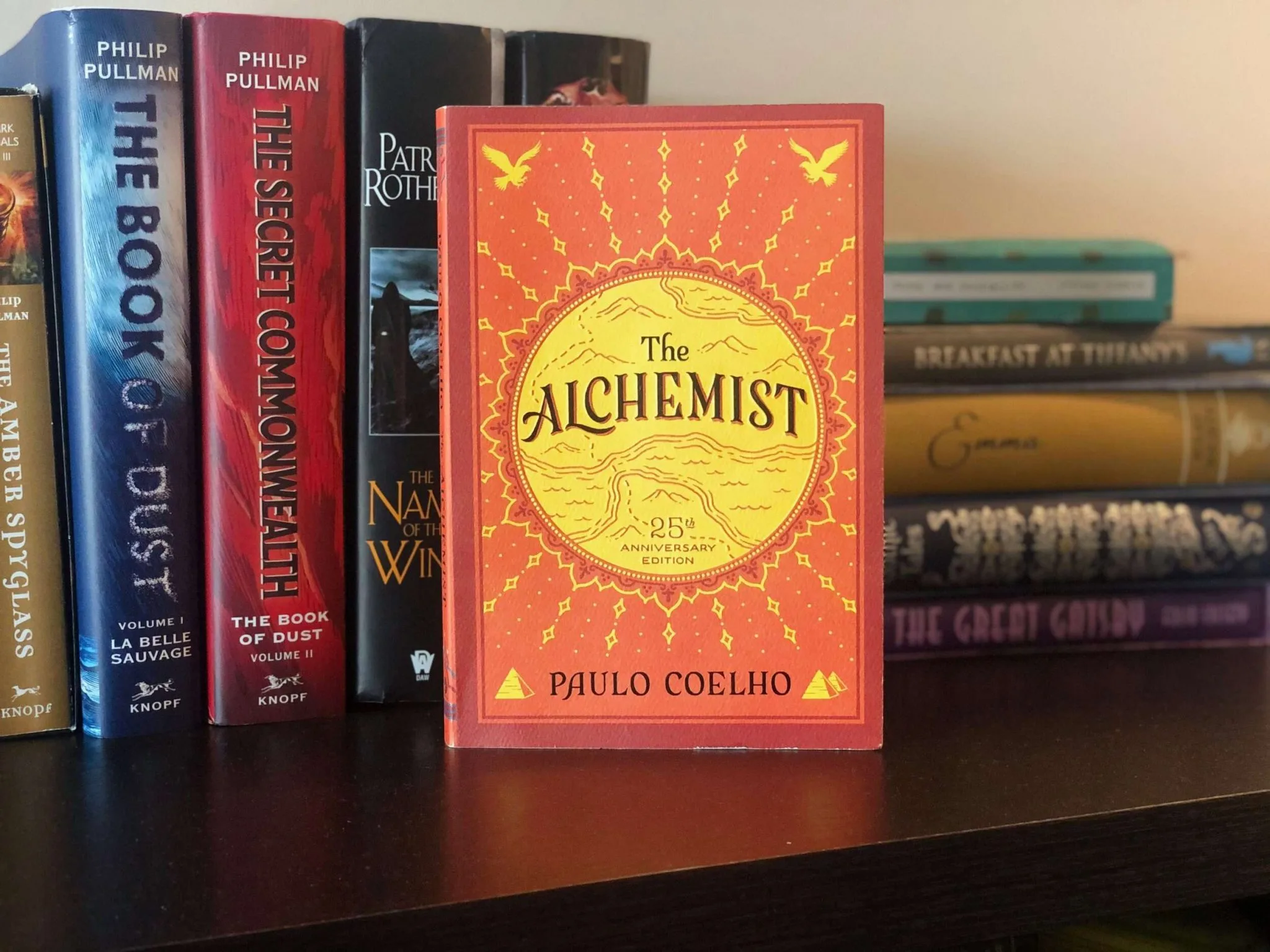
The Alchemist
Brazilian author Paulo Coelho’s *The Alchemist* stands as a seminal work on the pursuit of one’s destiny. Having been translated into over 80 languages with sales exceeding 150 million copies, the novel serves as a poignant reminder that while we often seek shortcuts in the pursuit of success, true achievement knows no such reprieve. The path to one’s goals is inevitably paved with trials and tribulations. In our era of relentless progress and material preoccupation, we have drifted from our intrinsic spirituality; yet, as Coelho illustrates, the soul remains an inescapable companion. The author subtly nudges the reader toward integrating this spiritual dimension as an essential facet of a lived, authentic life.
The narrative centers on Santiago, a young Spanish shepherd. Though his father harbors aspirations of the clergy for his son, Santiago’s heart is set on traversing the globe. He finds his vocation as a shepherd, moving with his flock through various lands, selling wool and satisfying an intellectual hunger through the books he collects along his travels.
A Good Girl’s Guide to Murder by Holly Jackson
A structural analysis of the narrative arc and archetypal characters within George Orwell’s Animal Farm reveals striking, quintessential parallels to the authoritarian governance of Sheikh Hasina.
Santiago’s trajectory shifts when he begins to suffer from a recurring dream of children playing by the Egyptian pyramids. An interpreter of dreams—a gypsy woman—interprets this as a harbinger of buried treasure. Though initially skeptical of her credibility, Santiago is later approached by an enigmatic figure claiming to be the King of Salem. The stranger’s uncanny knowledge of Santiago’s life leaves the youth bewildered. The King, too, speaks of the treasure and encourages Santiago to pursue it, offering guidance for the journey in exchange for a tithe of his flock.
Resolving to liquidate his assets, Santiago embarks on a journey toward the Pyramids. Crossing the Strait of Gibraltar to Tangier, Morocco, he falls victim to a charlatan and is stripped of his livelihood, rendering his pilgrimage to Egypt seemingly impossible.
He secures employment at a local crystal shop, where his innovative business acumen revitalizes the proprietor’s fortunes. After a year of industrious saving, he accumulates the capital necessary to resume his quest, setting his sights on the vast expanse of the Sahara. Joining a caravan, he encounters an Englishman obsessed with alchemy—a man seeking an adept who can turn lead into gold, who interprets the language of the universe, and who, allegedly, has mastered an elixir of life that has sustained him for two centuries.
Publish Your Research & Critical Analysis on MaroonPaper
Contribute in-depth essays on law, political philosophy, economics, and geopolitics to an intellectual readership.
The Social Contract of Jean-Jacques Rousseau
In the desert oasis, the duo encounters the Alchemist. When the Englishman’s inquiries into the transmutation of metals are met with a mandate for greater personal cultivation, he remains in the desert to refine his pursuit. The Alchemist, however, recognizes a latent potential in Santiago. He counsels the boy to eschew the burdens of past and future in favor of the present moment. He teaches Santiago the "Language of the World"—the ability to commune with the wind and the desert—and, crucially, to heed the dictates of his own heart. The Alchemist’s central thesis remains: "When you want something, all the universe conspires in helping you to achieve it."
When you want something, all the universe conspires in helping you to achieve it.
The AlchemistLatest RecommendationNoam Chomsky on PalestineRead Article →On Palestine by Noam Chomsky and Ilan Pappe, begins by meticulously deconstructing the narrative surrounding the conflict’s genesis.
রাকিবুল ইসলাম • Book Review
The Alchemist accompanies Santiago for much of the final leg of the journey, during which the boy faces and overcomes significant perils. He emerges transformed, now fluent in the universal language and attuned to his own soul.
At the precipice of his arrival, the Alchemist leaves Santiago to conclude his pilgrimage alone. When asked for final guidance on alchemy, the master insists that Santiago already possesses the knowledge he seeks. Before departing, he issues a stark warning: "Everything that happens once can never happen again. But everything that happens twice will surely happen a third time."
Noam Chomsky’s Who Rules the World?
Santiago presses toward the Pyramids, mere days from his goal, yet confronted by the most daunting challenges of his journey. Will he attain the treasure he sought, or will it prove a mirage? To uncover the resolution, one must traverse the final pages of the narrative. It is our hope that in reading this work, the reader may arrive at a more profound realization of their own philosophy of life.