
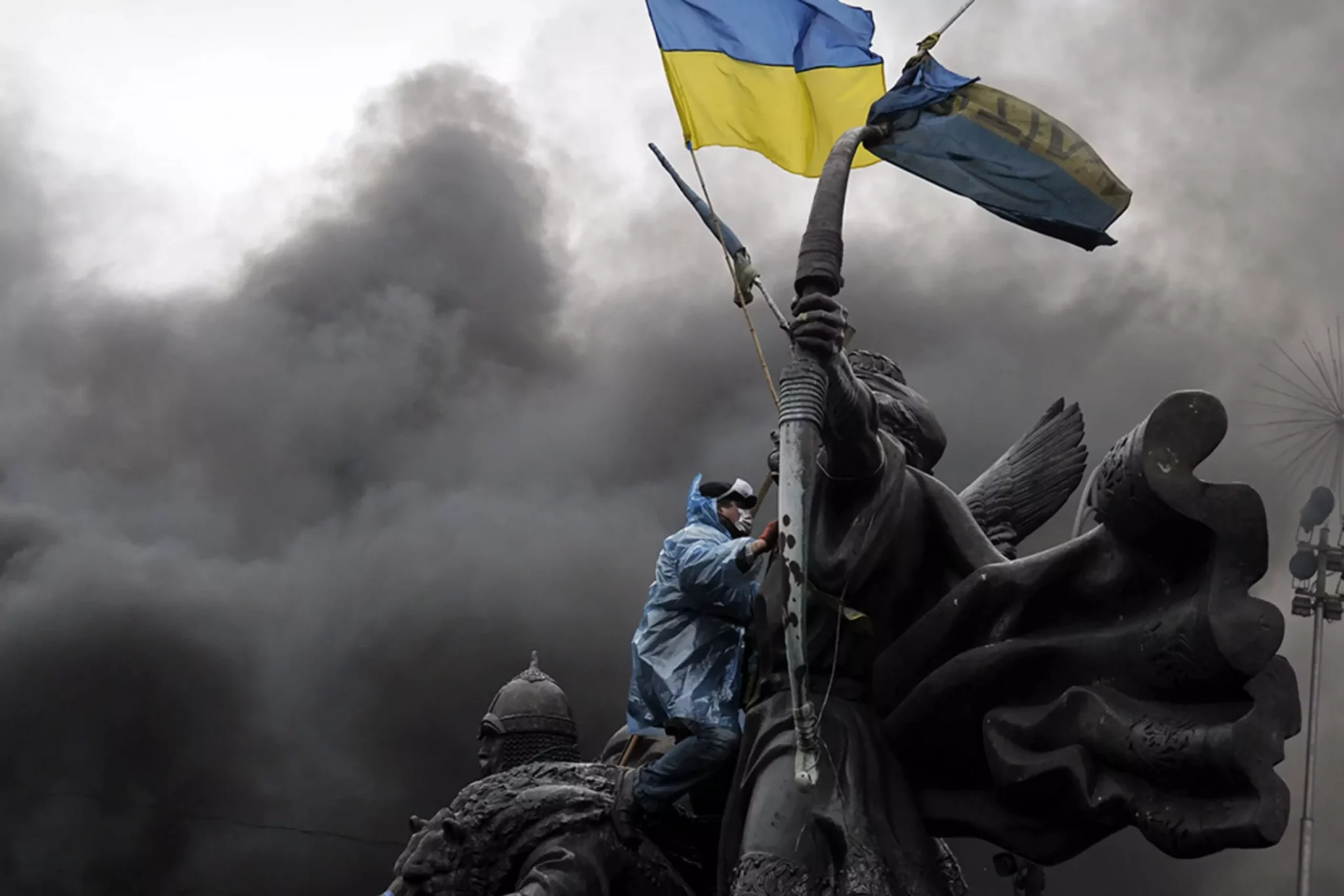
The Russia-Ukraine Crisis \\ Hostilities have intensified over the years, yet tensions are now escalating rapidly due to the looming threat of a Russian invasion.
The Russia-Ukraine Crisis
According to Washington, Russia has deployed over 100,000 troops to the border of Ukraine and the annexed Crimean Peninsula within the last week. This military mobilization has stoked fears in Kyiv and across the West that the Kremlin may be preparing to wage war against its neighbor—a former Soviet republic that has increasingly slipped from Moscow's political orbit. Earlier this month, a senior Ukrainian military expert suggested to Al Jazeera that Russia could launch a "short and victorious" war as early as the start of January. Moscow, however, has denied any such intent. The Kremlin maintains that Russia reserves the right to position its troops wherever it deems necessary and that each move is strictly defensive in nature. Russian officials, including President Vladimir Putin, have issued stern warnings against the eastward expansion of NATO. What, then, lies at the heart of this conflict, now in its eighth year?
Why Did Russia Invade Ukraine?
Contemporary Ukraine, Russia, and neighboring Belarus all trace their lineage to the "Kievan Rus," a medieval powerhouse founded some 1,200 years ago along the banks of the Dnieper River, which encompassed a vast swath of Eastern Europe. Yet, Russians and Ukrainians have diverged—linguistically, historically, and, most crucially, politically. Putin has repeatedly asserted that Russians and Ukrainians are "one people," integral to a "Russian civilization" that also includes Belarus. Ukrainians have consistently rejected this narrative. Since 2005, Ukraine has weathered two revolutions, both marking a decisive rejection of Russian hegemony in favor of charting a path toward the European Union and NATO. Angered by the prospect of NATO bases on its border, Putin has characterized Ukraine’s potential integration into the U.S.-led transatlantic alliance as a definitive crossing of a red line.
What factors precipitated Israel’s recent strike on Iran? An inquiry reveals a multifaceted convergence of objectives: a calculated maneuver to evade international judicial scrutiny, a tactical diversion from the humanitarian catastrophe in Gaza, and a desperate assertion of regional hegemony.
Support for Separatists
In the months following Ukraine’s 2014 "Revolution of Dignity"—which ultimately saw the ouster of pro-Moscow President Viktor Yanukovych—Putin exploited the resulting power vacuum to annex Crimea and provide support to separatists in the southeastern provinces of Donetsk and Luhansk. The insurgents established two authoritarian, economically hollow "people's republics," where the death penalty was reinstated. They operated dozens of political prison camps where dissenters were systematically tortured and executed.
Noam Chomsky on the Refugee Crisis
Ihor Kozlovsky, a professor at Donetsk State University who spent nearly 700 days in captivity, recounts being tortured by separatist and Russian officials who regurgitated Putin’s rhetoric regarding "Russian civilization." He told Al Jazeera, “The official told me, ‘There are no nations, only civilizations. The Russian world is a civilization, and whoever was part of it—whether you call yourself a Tatar or a Ukrainian—is irrelevant; you do not exist.’ ” The war—and the way the separatists humiliated their opponents while presiding over the collapse of the “republican” economies—has effectively frozen pro-Russian sentiment in Ukraine. Ivar Dale, a senior policy adviser at the Norwegian Helsinki Committee, told Al Jazeera, “Conversely, Russia is helping to strengthen the sense of a Ukrainian national identity, which some Russian politicians claim does not actually exist.”
Publish Your Research & Critical Analysis on MaroonPaper
Contribute in-depth essays on law, political philosophy, economics, and geopolitics to an intellectual readership.
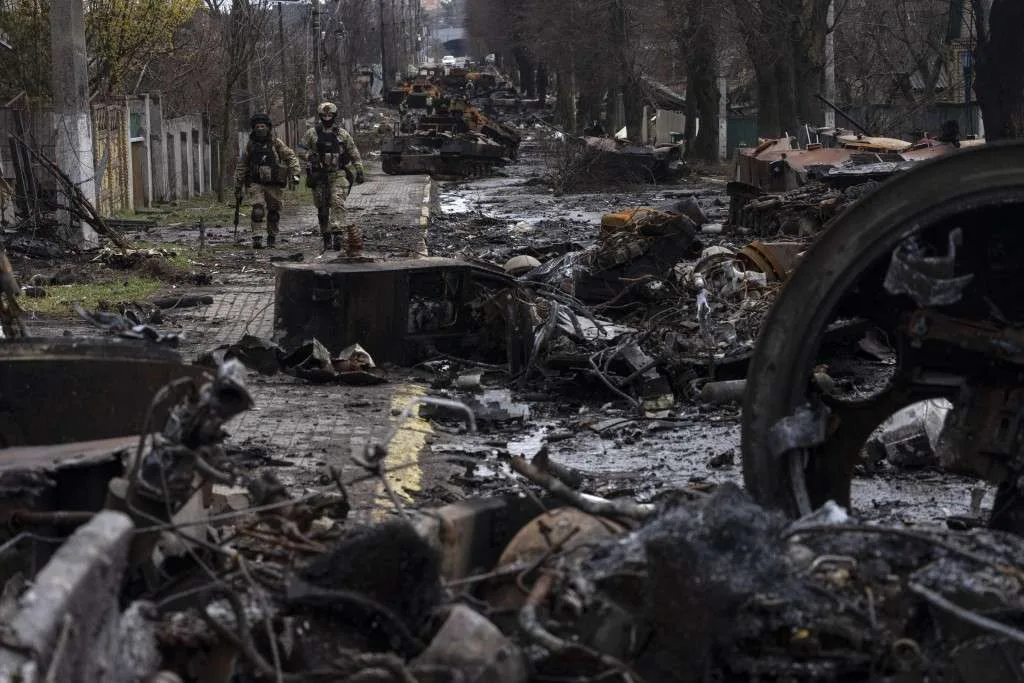
This conflict has become the most volatile war in Europe, claiming over 13,000 lives and displacing millions. In 2014, the Ukrainian military was poorly equipped and demoralized, while the rebels were bolstered by Russian "advisers" and weaponry. Today, however, Ukrainians are far more robust, both militarily and morally, with thousands of volunteers who helped hold the line against separatists ready to do so again. Roman Nabozhnyak, who volunteered to fight against the separatists in 2014 and spent 14 months on the front lines, told Al Jazeera, “As a veteran, I am always ready to rejoin the military to defend Ukraine in the event of an invasion.”
Let’s call Israel’s violence what it is: terrorism, not clashes
Ukraine has acquired or received advanced weaponry from the West and Turkey, including Javelin missiles—which have proven devastating to separatist tanks—and Bayraktar drones, which played a decisive role in the war between Azerbaijan and Armenia last year. Former U.S. President Donald Trump’s first impeachment was predicated on the withholding of military aid and arms exports to Kyiv. His successor, Joe Biden, may authorize the delivery of lethal weapons and advisers in the coming weeks. Meanwhile, Ukraine has also accelerated domestic development and arms production, with some indigenous systems proving as effective as their Western counterparts.
As the world's sole permanent tribunal tasked with the adjudication of war crimes, crimes against humanity, and genocide, the International Criminal Court currently confronts an existential crisis of unprecedented magnitude.
Economic Dimensions
Beyond the ideological and political dimensions, Putin has long sought Ukraine’s membership in the Moscow-controlled free trade bloc established in 2000. Several former Soviet republics were integrated into the Eurasian Economic Community (EAEC), an initiative viewed by many as the first step toward the resurrection of the USSR. With a population of 43 million and a formidable agricultural and industrial base, Ukraine was intended to be the most vital component of the EAEC after Russia, yet Kyiv refused to join.
Citing the theories of Nobel laureate economist Paul Krugman, Kyiv-based analyst Alexey Kushch told Al Jazeera, “To create a self-sufficient market, you need a population of approximately 250 million. Krugman’s models are the foundation for the construction of the bloc; for the union to be viable, it requires the inclusion of Ukraine and the 34 million people of Uzbekistan. That is why there is a permanent geopolitical war surrounding these countries.” After severing ties with its once-largest economic partner, Russia, Ukraine’s economy cratered. But seven years into the conflict, the recession has abated. Ukraine’s primary exports—grain and steel—have seen prices soar in the global market, and Ukrainian companies and migrant laborers have found new opportunities in the West.
Freedom of Expression and Its Limits
Why Now?
Putin’s approval ratings are currently in decline as Russians express frustration over mandatory vaccinations and the economic hardships wrought by the pandemic. The Kremlin remembers the stratospheric 90 percent approval rating that followed the annexation of Crimea; a new war or a heightened state of tension could divert public attention from domestic grievances and bolster Putin's popularity. He is keen to restart negotiations with the West, particularly the United States, and the mobilization of troops along the Ukrainian border has already proven effective. Thousands of troops were deployed to the border in the spring, and in June, Putin held his first face-to-face meeting with U.S. President Joe Biden. On December 7, the two presidents held a two-hour video conference, during which Biden warned of harsh economic sanctions and the reinforcement of NATO forces in Europe should Russia invade. Yet, Putin remains eager for a personal summit. According to a video released by Russian media on Tuesday, he told Biden, “We will definitely meet, I would really like that.”
This article was written by Mansur Mirovalev. It was originally published on Al Jazeera under the title Russia and Ukraine conflict explained: What you need to know on December 16, 2021.