

Anthropogenic climate change is the defining planetary crisis of the twenty-first century. Its systemic consequences reverberate across natural ecosystems, public health, macroeconomics, and global stability. From accelerating sea level rise and intensifying meteorological disasters to cascading biodiversity loss, shifting climate dynamics pose unprecedented challenges. This comprehensive analysis examines the empirical mechanics of climate change, its environmental and socioeconomic consequences, and the imperative for structural decarbonization.
What is Climate Change?
Public discourse frequently conflates weather with climate. While weather denotes atmospheric fluctuations over hours or days, climate represents the statistical distribution of weather patterns—including mean temperatures, precipitation levels, and atmospheric pressure—calculated over decades or centuries. A desert ecosystem, for instance, maintains an arid climate due to multi-decadal deficits in moisture.
Climate change refers to sustained, long-term shifts in global or regional climatic parameters. While natural drivers such as solar irradiance cycles and volcanic eruptions have influenced historical epochs, the contemporary era is defined by unprecedented anthropogenic emissions. Since the advent of the Industrial Revolution in the mid-nineteenth century, the combustion of fossil fuels—principally coal, crude oil, and natural gas—has exponentially elevated greenhouse gas concentrations in the atmosphere. According to the Intergovernmental Panel on Climate Change (IPCC), global surface temperatures have already surged by approximately 1.1°C above pre-industrial baselines.
The material manifestations of this thermal acceleration are readily observable: prolonged megadroughts, severe freshwater depletion, megafires, catastrophic inundations, and polar cryosphere degradation.
Read also: What is Environmental Pollution? Fundamental Principles of Environmental Jurisprudence
Root Causes: Natural vs. Anthropogenic Drivers
Climate dynamics are governed by radiative forcing, which can be categorized into natural variability and human-induced forcings:
Unpacking the fundamental drivers of global warming. From Milankovitch orbital cycles and volcanic aerosols to fossil fuel combustion, deforestation, and industrial agriculture, explore how human activities have accelerated the climate emergency.
1. Natural Variability
Natural climate modulators encompass Milankovitch orbital cycles (eccentricity, axial tilt, and precession), periodic solar flares, and volcanic eruptions that inject sulfur dioxide aerosols into the stratosphere, causing short-term radiative cooling.
2. Anthropogenic Drivers
The post-industrial thermal spike is overwhelmingly driven by anthropogenic greenhouse gas (GHG) emissions. The primary contributors include carbon dioxide ($CO_2$) released via fossil fuel combustion and industrial calcination; methane ($CH_4$) emitted from enteric fermentation, fossil fuel extraction, and landfills; nitrous oxide ($N_2O$) from synthetic nitrogen fertilizers; and fluorinated gases from refrigeration and electronics manufacturing. Terrestrial land-use transformations—predominantly tropical deforestation and peatland drainage—drastically reduce carbon sinks.
Explore deeper: Climate Change: What Are the Primary Causes of Global Warming?
Environmental and Humanitarian Consequences
The destabilization of the planetary climate system generates interconnected systemic shocks across the biosphere and human society:
1. Eustatic Sea Level Rise and Coastal Displacement
Over the twentieth century, global mean sea levels climbed by approximately 20 cm, driven by the thermal expansion of ocean water and the melting of land-based ice sheets in Greenland and Antarctica. Projections warn of an additional 0.3 to 1.2 meters of sea level rise by 2100 under mid-to-high emission pathways.
Publish Your Research & Critical Analysis on MaroonPaper
Contribute in-depth essays on law, political philosophy, economics, and geopolitics to an intellectual readership.
Low-lying deltaic regions—most critically Bangladesh, coastal China, the Nile Delta, and the Netherlands—face existential inundation risks. Megacities including Lagos, Bangkok, Mumbai, Shanghai, London, and New York must construct multibillion-dollar coastal defenses. Globally, nearly 900 million people reside in low-elevation coastal zones, with up to 400 million vulnerable to displacement by the close of the century.
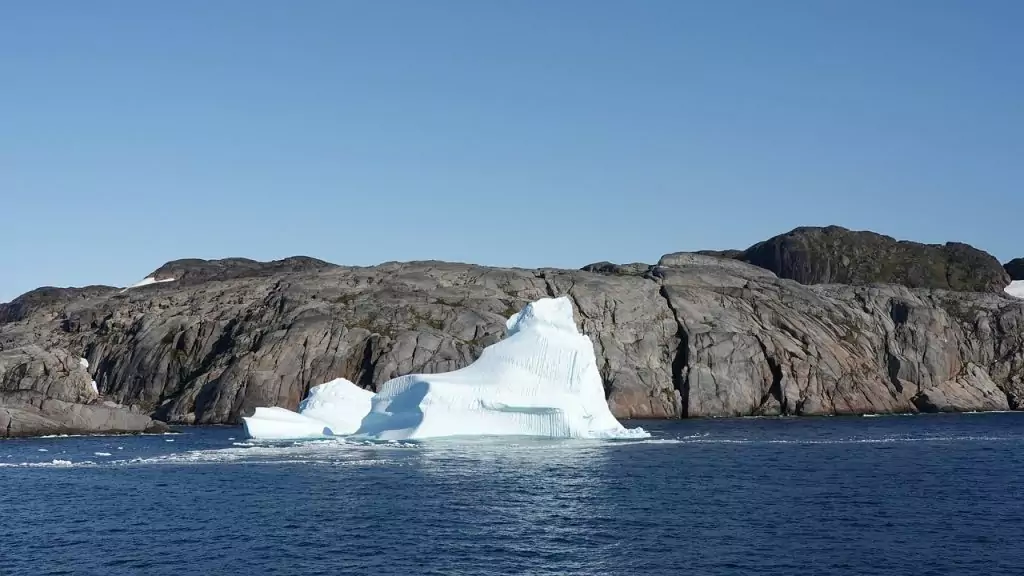
Data from the World Meteorological Organization indicates that contemporary sea level rise is accelerating at its fastest rate in over 3,000 years, threatening critical port infrastructure and contaminating coastal freshwater aquifers with saltwater intrusion.
2. Meteorological Extremes and Economic Shockwaves
Thermodynamic changes intensify hydrological cycles, causing both extreme precipitation events and severe hydrological droughts. Warmer sea surface temperatures fuel hyper-destructive Category 4 and 5 tropical cyclones, accompanied by catastrophic storm surges.
Between 2011 and 2020, global weather-related economic losses totaled approximately $2.5 trillion—a near 50 percent increase over the previous decade. Catastrophic years such as 2017, dominated by Hurricanes Harvey, Maria, and Irma, caused global damages surpassing $470 billion.
Read also: What is Environmental Harm? Nature, Classifications, and Conservation Measures
Signed on August 7, 2026 between Saudi Arabia, Türkiye, and Pakistan, the Mecca Joint Defense Pact stipulates that an armed attack on one member shall be deemed an attack on all. For Bangladesh—confronting border casualties, unilateral riparian diversions, and transit imbalances—a collective deterrence architecture restores sovereign bargaining leverage.
3. Agricultural Vulnerability and Food Security
Shifting precipitation patterns, desertification, and heat stress undermine agricultural output. Sub-Saharan Africa and South Asia face projected staple crop yield declines between 15 and 50 percent without aggressive adaptation. Concurrently, agricultural practices and supply chains generate 20 to 30 percent of global GHGs, demanding regenerative soil management, reduction of food waste, and agro-technological modernization.
4. Marine Ecosystem Collapse and Biodiversity Loss
Oceans absorb over 90 percent of excess planetary heat and roughly 25 percent of anthropogenic carbon emissions, triggering severe marine heatwaves and ocean acidification. Scleractinian coral reef ecosystems, which support over 25 percent of marine biodiversity, face systemic collapse under 2°C warming scenarios.
5. Public Health Pandemics and Human Mortality
The World Health Organization projects that between 2030 and 2050, climate change will cause approximately 250,000 additional deaths annually from thermal stress, malnutrition, and vector-borne diseases like malaria and dengue fever, while disproportionately burdening vulnerable developing nations.
6. Macroeconomic Shocks
A macroeconomic assessment by the Swiss Re Institute indicates that unchecked warming of 3.2°C could erase up to 18 percent of global GDP by 2050. Regional vulnerabilities vary sharply: ASEAN economies could witness GDP contractions exceeding 35 percent, while China and developing economies face massive structural losses.
Read also: Recognizing the Right to a Healthy Environment as a Fundamental Human Right
Mitigation, Adaptation, and Global Governance
Confronting planetary climate change requires rapid, structural decarbonization coordinated across multilateral institutions, nation-states, and civil society:
- Clean Energy Transition: Rapid deployment of utility-scale solar photovoltaic, offshore wind, geothermal, and advanced energy storage systems to displace fossil generation.
- Industrial Electrification: Transitioning transport fleets to zero-emission electric powertrains and retrofitting industrial processes with green hydrogen.
- Regenerative Land Stewardship: Halting deforestation, restoring degraded coastal mangroves, and expanding carbon-sequestering agroforestry.
- Multilateral Climate Financing: Fulfilling climate justice obligations by providing loss-and-damage funds and adaptation capital to vulnerable Global South nations.
Addressing climate change is not merely an environmental preference, but an urgent civilizational imperative to safeguard planetary stability for present and future generations.