
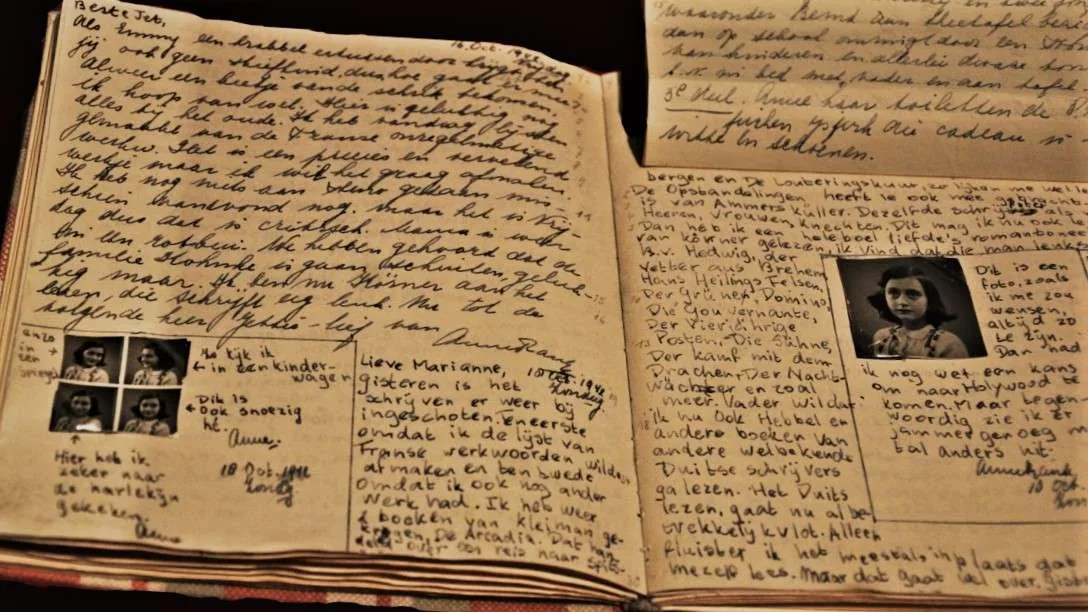
The Diary of a Young Girl
In 1933, following the rise of Adolf Hitler, Otto Frank moved his family from Frankfurt, Germany, to the relative safety of Amsterdam, Netherlands. Anne Frank was born in 1929. By July 1942, as Nazi deportations intensified across occupied Holland, the Franks retreated into the "Secret Annex" behind Otto Frank's canal-side workplace on Prinsengracht. Confined in perpetual silence during working hours, Anne turned to her red-and-white checkered diary—affectionately addressing her entries to an imaginary confidante named "Kitty."
Despite the claustrophobic dread of discovery, "The Diary of a Young Girl" endures as a luminous tribute to hope, intellectual maturity, and moral compassion. It transcends its historical horror to stand as an immortal monument to the inviolability of the human spirit.
A structural analysis of the narrative arc and archetypal characters within George Orwell’s Animal Farm reveals striking, quintessential parallels to the authoritarian governance of Sheikh Hasina.
A Singular Historical Document
Anne Frank’s journal serves as a quintessential historical record of the Shoah. While academic histories capture the institutional machinery of genocide through aggregate statistics, Anne personalizes the tragedy. Her prose captures the daily terror of air raids, the humiliation of anti-Jewish decrees, and the psychological burden of enforced concealment. Yet she writes without self-pity, transforming cold historical chronicles into a deeply empathetic encounter with human vulnerability.
Core Philosophical Themes
Far from a simple adolescent diary, Anne's writings reflect an extraordinary philosophical introspection. Several core motifs resonate through the text:
Publish Your Research & Critical Analysis on MaroonPaper
Contribute in-depth essays on law, political philosophy, economics, and geopolitics to an intellectual readership.
The Preservation of Dignity and Humanity
Even as the civilized world disintegrated outside the Annex windows, Anne refused to surrender her moral agency. Her famous conviction—"in spite of everything, I still believe that people are really good at heart"—is not naive optimism; it is a conscious, defiant refusal to allow Nazi barbarism to dictate her internal ethical universe.
Empathy and Universal Tolerance
Anne reflected extensively on prejudice, class, gender roles, and hatred. Even when observing her companions' petty squabbles in the cramped quarters, she sought to understand their psychological frailties, advocating empathy as the foundational antidote to tyranny.
On Palestine by Noam Chomsky and Ilan Pappe, begins by meticulously deconstructing the narrative surrounding the conflict’s genesis.
The Universal Rites of Adolescence
A remarkable dimension of the diary is its universality. Alongside discussions of war and Nazi terror, Anne candidly writes of her turbulent relationship with her mother, her search for identity, intellectual ambitions of becoming a journalist, and the gentle blossoming of young love with Peter van Pels. This poignant normalcy makes the inevitable tragedy all the more devastating.
Literary Craft and Legacy
Anne was not merely an accidental diarist; she was an extraordinarily gifted literary stylist. In 1944, upon hearing a radio broadcast by the Dutch government-in-exile calling for wartime records, she began methodically editing and rewriting her entries into a cohesive literary work. Her prose balances sharp observational wit with lyricism, capturing complex emotional registers with deceptive clarity.
"The Diary of a Young Girl" remains indispensable reading across generations. It compels every reader to confront the catastrophic cost of totalitarian intolerance while reaffirming the indestructible dignity of the individual conscience.