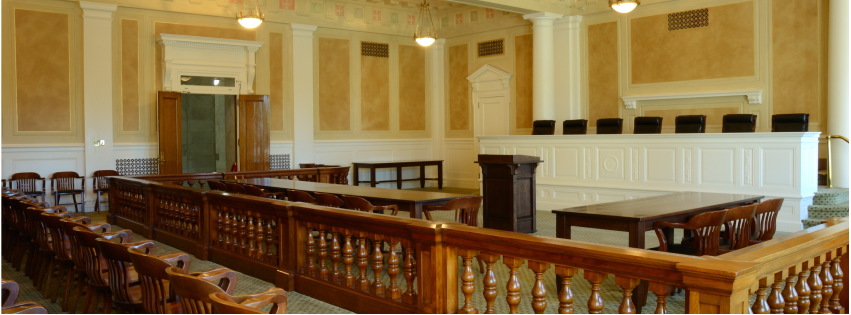
A court constitutes a state-sanctioned tribunal, serving as the formal apparatus through which legal disputes are adjudicated, criminal culpability is determined, and the enforcement of statutory rights is rigorously upheld.
Have you ever deeply contemplated the mechanism by which the fragile equilibrium of peace and order is maintained within the complex architecture of society? Or considered how individuals ensnared in conflict find a recourse that is both equitable and acceptable to all parties involved? To answer these questions, we must turn our gaze toward the bedrock of the state: the judiciary. Courts are far more than mere institutions; they are the constitutional custodians of justice, the rule of law, and the advancement of social equity. They represent the nexus where the rights of every citizen are safeguarded and impartiality in the face of competing interests is maintained—serving as a beacon of justice in the darkest corners of the social fabric. In this discussion, we shall examine the nature of the judiciary and the classification of courts within Bangladesh.
What is a Court?
Tracing the etymological roots of the English word "court" reveals a rich tapestry of cultural and historical evolution. Its lineage begins with the ancient Latin term *cohors* (meaning an enclosed space or a group), which transitioned into the word *cōrtem*, eventually giving rise to the Old French term *cour* (an enclosed courtyard). It was subsequently assimilated into the English lexicon as "court."
A court is a state-sanctioned, legitimate institution where, in accordance with established law, disputes are settled, crimes are adjudicated, and legal rights are upheld. The Constitution of Bangladesh and various statutory enactments provide a detailed framework for the definition, jurisdiction, and functions of these judicial bodies.
How are Courts Classified?
The judicial system of Bangladesh is structured upon the foundation of its Constitution and ancillary laws. The classification of courts is vital for ensuring judicial transparency, operational efficiency, and the administration of justice. The categories and their respective functions are summarized below:
1. Constitutional Classification
The Bangladeshi judiciary is divided into the Supreme Court and the Subordinate Courts. Both divisions of the Supreme Court (the High Court Division and the Appellate Division) deliver landmark judgments or hear ultimate appeals regarding civil and criminal matters.
The Supreme Court
The Supreme Court serves as the apex judicial body of Bangladesh, comprising two divisions: the High Court Division and the Appellate Division. The High Court Division possesses both original and revisional jurisdiction in civil and criminal cases. Under Article 102 of the Constitution, it holds the authority to protect fundamental rights, review legislative and administrative actions, and interpret the Constitution. Conversely, the Appellate Division hears appeals against the judgments of the High Court and subordinate courts. Its powers are delineated in Article 103 of the Constitution, including the final disposal of appeals in cases involving capital punishment or other severe sentences.
Restoring Judicial Independence in Bangladesh
Subordinate Courts (District Courts / Lower Courts)
The judiciary at the district level is bifurcated into Civil Courts and Criminal Courts. Civil Courts adjudicate matters concerning personal rights, property, debt, and marital disputes. The District Judge serves as the principal civil judge of the district, presiding over both original and appellate matters (Section 3 of the Code of Civil Procedure, 1908). Criminal Courts, meanwhile, address criminal offenses and are comprised of various tiers of Magistrates and Courts of Sessions (Section 6 of the Code of Criminal Procedure, 1898).
2. Classification by Nature of Case
Based on the nature of the proceedings, courts are primarily categorized as Criminal Courts and Civil Courts.
Criminal Court
Criminal courts adjudicate offenses. According to Section 6 of the Code of Criminal Procedure, 1898, the function of these courts is to facilitate the investigation, trial, and punishment of criminal acts. This includes various tiers of Magistrate Courts and Courts of Sessions. These courts preside over serious crimes—such as homicide and rape—as well as minor offenses like petty theft or financial fraud.
Civil Court
[Civil Courts](http://দেওয়ানি আদালত) primarily resolve private disputes, such as property ownership, debt recovery, and marital dissolution. Per Section 9 of the Code of Civil Procedure, 1908, civil courts have jurisdiction over all suits involving civil rights, property, and contractual obligations. For instance, land title disputes are exclusively addressed within the civil judicial framework.
What is Intellectual Property and Why is it Important?
3. Classification by Procedural Function
Bangladesh’s judicial structure is procedurally divided into trial courts and appellate courts.
Trial Court
A Trial Court is typically the court of first instance, where the primary adjudication of a case occurs (e.g., District Judge Court, Sessions Court, Magistrate Court).
Appellate Court
An Appellate Court is a venue where appeals against the verdicts of lower courts are heard (e.g., the District Judge Court acting in its appellate capacity, or the Appellate Division of the Supreme Court).
What is Evidence? Definitions and Classifications.
4. Specialized Tribunals and Courts
Beyond the general civil and criminal courts, Bangladesh has established specialized tribunals to address specific areas of law with greater expertise and efficiency. These include:
* **Women and Children Repression Prevention Tribunals:** Preside over criminal cases related to the abuse of women and children (e.g., rape, physical assault, sexual harassment), operating under the "Women and Children Repression Prevention Act, 2000".
* **Labor Courts:** Resolve disputes concerning wages, retrenchment, job reinstatement, and trade union issues under the Labor Act, 2006.
* **Artha Rin Adalat (Money Loan Courts):** Adjudicate civil suits related to the recovery of loans by banks and financial institutions pursuant to the Artha Rin Adalat Act, 2003.
* **Anti-Corruption Tribunals:** Hear cases filed by the Anti-Corruption Commission (ACC) following investigations, governed by the Anti-Corruption Commission Act, 2004. While often called "ACC Tribunals," they are formally known as Special Judge Courts.
* **Land Survey Tribunals:** Established to resolve disputes involving land surveys or the correction of records-of-rights.
* **Marine Courts:** Preside over accidents in inland waterways, vessel fitness, and licensing offenses under the Bangladesh Marine Act, 2001 (with ongoing legislative modernizations like the draft Bangladesh Maritime Zone Act, 2018).
* **Cyber Tribunals:** Established under the Information and Communication Technology Act, 2006, these tribunals adjudicate cybercrimes (such as hacking, data theft, and digital harassment) as per the Cyber Security Act, 2023.
The courts and tribunals of Bangladesh are indispensable to the maintenance of public order, the preservation of civil rights, and the entrenchment of the rule of law. While specialized tribunals ensure procedural speed and technical expertise, the Supreme Court, as the guardian of the Constitution, upholds the fundamental principles of the state. This framework reinforces public confidence in the law and ensures the universality of justice.
FAQ
**What is a court?**
A court is a state judicial institution where disputes are settled and criminals are sentenced in light of the Constitution and the law.
**How many types of courts are there in Bangladesh?**
Broadly, there are three types of courts:
* The Supreme Court (High Court and Appellate Divisions),
* District-level courts (Civil and Criminal courts),
* Specialized courts and tribunals.
**What are the two divisions of the Supreme Court?**
* High Court Division (Protection of fundamental rights and primary judicial review),
* Appellate Division (Hearing appeals against lower court judgments).
**What is the difference between civil and criminal courts?**
* Civil courts deal with private rights, property, and debt.
* Criminal courts adjudicate offenses such as theft, homicide, and assault.
**What is a District Court and its primary function?**
The District Court is the principal judicial body at the district level, presiding over civil and criminal matters, headed by a District Judge.
**What is the fundamental jurisdiction of the High Court Division?**
Per Article 102 of the Constitution, it possesses the power to hear writ petitions, conduct fundamental criminal and civil reviews, and issue directives to protect fundamental rights.
**What are Metropolitan Criminal Courts?**
These courts resolve criminal cases within metropolitan areas like Dhaka, Chittagong, and Khulna.
**What is a Magistrate Court?**
It is the initial tier of the criminal justice system, responsible for trying general offenses and imposing fines.
**What are specialized courts and tribunals?**
Institutions established under specific laws to expedite the resolution of targeted disputes, such as the Cyber Tribunal or the International Crimes Tribunal.
**What is the pecuniary jurisdiction of a court?**
This refers to the monetary limit of a claim within which a court is authorized to preside over a civil suit (e.g., an Assistant Judge can hear civil suits valued up to 1.5 million BDT).
**What is the role of the Chief Justice?**
The Chief Justice is the head of the Supreme Court and the highest-ranking officer of the judiciary, responsible for supervising the appointment and discipline of judges.
**What types of cases does the Appellate Division hear?**
It hears appeals against civil and criminal judgments of lower courts and delivers final rulings on constitutional matters.
Rakibul Islam
Author & Contributor, MaroonPaper
Contributing insightful research and analytical essays on law, politics, history, and international affairs for MaroonPaper.