
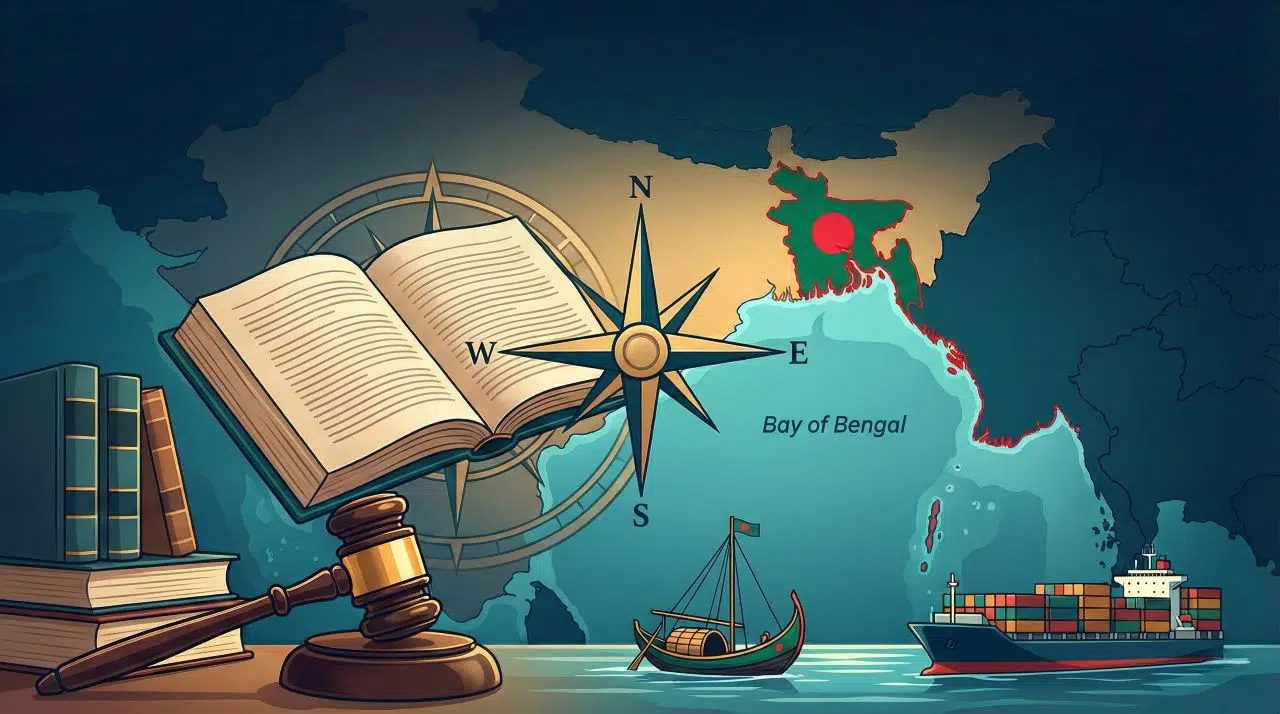
Key Takeaways
- Definition: The Law of the Sea is the branch of international law that governs the conduct of states regarding the use of the oceans, rights to maritime resources, and the preservation of the marine environment.
- Foundational Basis: The bedrock of modern maritime law is the 1982 United Nations Convention on the Law of the Sea (UNCLOS).
- Maritime Zones: The ocean is divided into distinct jurisdictions, including the Territorial Sea (12 nautical miles) and the Exclusive Economic Zone (up to 200 nautical miles).
- Significance: This legal framework plays an essential role in international trade, fishing, the extraction of mineral resources, and the preservation of national security.
Defining International Maritime Law
Simply stated, the Law of the Sea comprises the international rules, treaties, and customs that govern the use of the world's seas and oceans. It is not the statute of any single nation but an international legal architecture recognized under the auspices of the United Nations.
In legal parlance, the Law of the Sea constitutes a body of public international law that delineates the rights and obligations of coastal states. It provides the legal status for oceanic waters, the seabed, and the airspace above.

Historically, the 17th-century Dutch jurist Hugo Grotius argued in his seminal work, 'Mare Liberum' (The Free Sea), that the ocean was open to all. However, by the 20th century, technological advancements and the increasing demand for resources compelled states to assert sovereignty over maritime domains, necessitating a precise international convention. This culminated in the 1982 UNCLOS, often described as the "Constitution for the Oceans."
UNCLOS 1982 and Maritime Zones
Under UNCLOS 1982, the maritime boundaries of a coastal state are categorized into specific zones. Understanding these distinctions is critical.
1. Internal Waters
This includes rivers, canals, and ports located landward of the baseline. Here, the state exercises absolute sovereignty; foreign vessels may not enter without explicit permission.
Parliament may amend the Constitution, but it cannot dismantle its foundational architecture. An analytical inquiry into the judicial evolution of Bangladesh's Basic Structure Doctrine from Anwar Hossain Chowdhury to the Sixteenth Amendment.
2. Territorial Sea
Extending up to 12 nautical miles from the baseline, this area remains under the sovereignty of the coastal state. However, foreign vessels are granted the right of "Innocent Passage"—the right to navigate the area provided they do not engage in any activity prejudicial to the peace or security of the coastal state.
3. Exclusive Economic Zone (EEZ)
Extending up to 200 nautical miles from the baseline, the EEZ grants the coastal state sovereign rights for the exploration, exploitation, and management of marine resources, both living (such as fish) and non-living (such as oil and gas). Freedom of navigation and overflight for other states is maintained in this zone.
The resolution of the maritime boundary disputes between Bangladesh and Myanmar (2012) and Bangladesh and India (2014) relied upon the principles of UNCLOS 1982, adjudicated by ITLOS (International Tribunal for the Law of the Sea) and international arbitration. These rulings, which granted Bangladesh a significant exclusive economic zone in the Bay of Bengal, serve as a premier example of the successful application of international maritime law.
Publish Your Research & Critical Analysis on MaroonPaper
Contribute in-depth essays on law, political philosophy, economics, and geopolitics to an intellectual readership.
What is Intellectual Property and Why Is It Important?
The Importance of Maritime Law in International Relations
In our interconnected world, no state is entirely self-sufficient, and 80 to 90 percent of international trade is conducted via the sea. Consequently, the importance of the Law of the Sea is multifaceted.
1. Resource Extraction and the Blue Economy
The seabed holds vast reserves of oil, gas, and rare minerals. Implementing the "Blue Economy" requires a state to establish clear legal title over its maritime boundaries. The Law of the Sea provides the framework for countries to exploit these resources within their EEZ without interference.
A right without an enforceable remedy is an empty promise. Rooted in the maxim ubi jus ibi remedium, this jurisprudential study examines how Part III of the Bangladesh Constitution, Article 44, and the High Court Division's writ jurisdiction under Article 102 operationalize fundamental freedoms.
2. Freedom of Navigation and Commerce
Maritime routes are the arteries of global trade. The Law of the Sea ensures the unimpeded passage of vessels through critical "chokepoints" such as the Strait of Malacca, the Suez Canal, and the Strait of Hormuz. Without this legal consensus, powerful nations could blockade trade routes, precipitating global economic collapse.
3. Environmental Protection and Scientific Research
Mitigating maritime pollution and preserving biodiversity are urgent global challenges. UNCLOS mandates that states prevent and control pollution within their jurisdictions. Furthermore, it creates a framework for international cooperation in marine scientific research.
4. Dispute Resolution and Peacekeeping
In contentious regions like the South China Sea, the Law of the Sea serves as a normative benchmark. While it cannot prevent every conflict, it provides a structured legal venue for diplomacy, ensuring that states engage in deliberation rather than military confrontation.
Comparison of Maritime Zones
| Zone | Extent (from baseline) | Coastal State Rights | Foreign State Rights |
| Internal Waters | Landward of baseline | Full Sovereignty | None (without permission) |
| Territorial Sea | 12 nautical miles | Full Sovereignty (conditional) | Innocent Passage |
| Contiguous Zone | 24 nautical miles | Customs, immigration, sanitary enforcement | Freedom of navigation |
| EEZ | 200 nautical miles | Resource extraction and research | Navigation and overflight |
| High Seas | Beyond 200 miles | None | Open to all (Common Heritage) |
Restoring the Independence of the Judiciary in Bangladesh
Frequently Asked Questions (FAQ)
1. What is the difference between a nautical mile and a standard mile?
2. What are the "High Seas"?
3. Has Bangladesh benefited from the Law of the Sea?
Conclusion
In the twenty-first century, the oceans are no longer merely paths of transit; they are the primary sources of energy, nutrition, and national security. The Law of the Sea remains the essential framework for maintaining balance between powerful and weaker states. For coastal nations like Bangladesh, mastering the nuances of this legal regime is an imperative of national interest.