
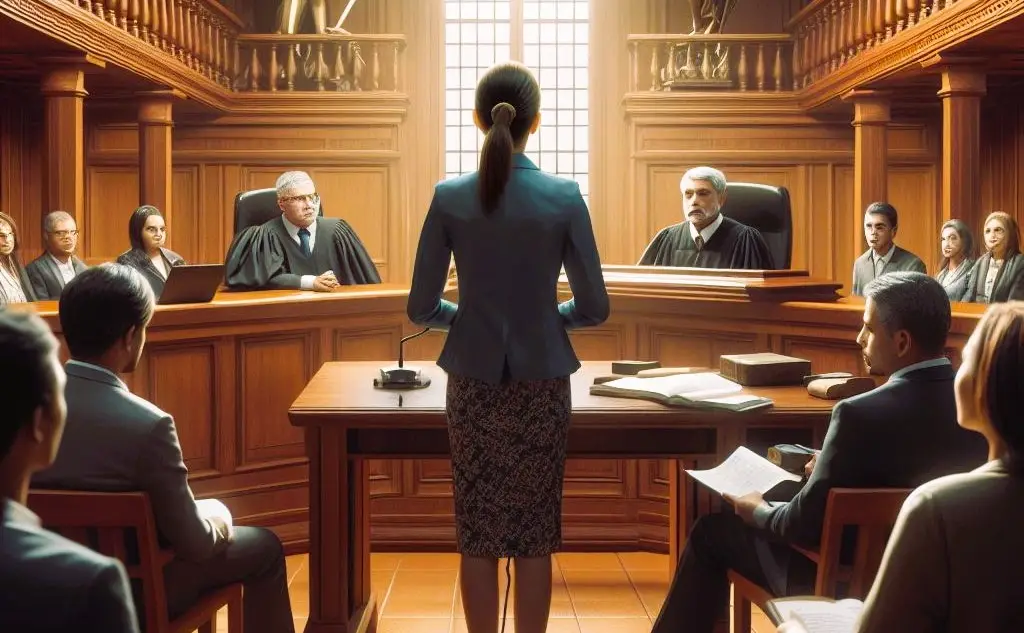
The term shakkhi (witness) finds its etymological roots in the Sanskrit word shakkhya (evidence). Lexicographically, a witness is defined as an "observer," a "spectator," an "eyewitness," an "experienced person," or simply one whose testimony is formally received. Fundamentally, a witness is an individual who has directly perceived an event or occurrence and possesses authentic information regarding it.
In a legal context, a witness is a person who, either voluntarily or under compulsion, provides oral or written testimony concerning facts they claim to know. The primary function of a witness is to furnish truthful information regarding a specific incident. By establishing the facts and circumstances of a case, the witness plays a pivotal role in determining the finality of judicial proceedings.
Who is a witness? Who can testify?
The Classification of Witnesses
Section 118 of the Evidence Act, 1872, delineates the competency of witnesses. It provides that all persons are competent to testify unless the court considers that they are prevented from understanding the questions put to them, or from giving rational answers, due to tender years, extreme old age, disease (whether physical or mental), or any other similar cause. In essence, anyone capable of comprehending questions and providing logical responses may serve as a witness. However, witnesses are further categorized based on their roles, involvement, and the nature of their testimony. The primary classifications are discussed below.
Prosecution Witness (PW)
Under Bangladeshi law, a prosecution witness is an individual summoned by the state to testify in support of the charges brought during a trial. The testimony of a prosecution witness is generally vital for proving the allegations contained within the charge sheet. These witnesses are abbreviated in legal records as PW.
Parliament may amend the Constitution, but it cannot dismantle its foundational architecture. An analytical inquiry into the judicial evolution of Bangladesh's Basic Structure Doctrine from Anwar Hossain Chowdhury to the Sixteenth Amendment.
What is Law? What are the different types of law?
Defense Witness (DW)
A defense witness is an individual called by the accused or the defense counsel to testify in favor of the defendant. Under the laws of Bangladesh, the defense witness provides testimony intended to prove the innocence of the accused or to rebut the prosecution's claims. These witnesses are abbreviated as DW.
Hostile Witness
In accordance with Section 154 of the Evidence Act, 1872, a witness who is called by a party but subsequently offers testimony or displays hostility toward that party is termed a "hostile witness." Effectively, if a witness provides evidence against the side that called them, they are labeled a hostile or adverse witness.
Publish Your Research & Critical Analysis on MaroonPaper
Contribute in-depth essays on law, political philosophy, economics, and geopolitics to an intellectual readership.
Chance Witness
A chance witness is an individual who happens to be an eyewitness to an occurrence by coincidence. Typically, these are individuals who had no predetermined reason to be at the scene of the crime but were present at the precise moment the event unfolded.
What is evidence? How many types of evidence are there?
Defense Witness (for Innocence)
This refers to a witness cited specifically to establish the innocence of the accused. Provisions for such defense testimony are governed by Sections 340 and 342 of the Code of Criminal Procedure, 1898. Under these provisions, during a trial or inquiry, the accused—or any person called by the accused—may provide testimony in support of the defense.
A right without an enforceable remedy is an empty promise. Rooted in the maxim ubi jus ibi remedium, this jurisprudential study examines how Part III of the Bangladesh Constitution, Article 44, and the High Court Division's writ jurisdiction under Article 102 operationalize fundamental freedoms.
Approver
An approver is a witness who is granted a pardon by the government in exchange for providing information regarding a crime. The legal framework for this is found in Sections 337, 339, and 494 of the Code of Criminal Procedure, 1898. To uncover the truth in grave offenses, a judge may offer a pardon to an accomplice, abettor, or participant on the condition that they provide a full and truthful disclosure of all circumstances known to them concerning the offense and every other person involved.
Material Witness
Pursuant to Section 540 of the Code of Criminal Procedure, 1898, a court may, at any stage of an inquiry or trial, summon any person as a witness or examine any person in attendance. If the court determines that the evidence of such a person is essential for the just decision of the case, they may be summoned, examined, or recalled as a material witness.
Expert Witness
An expert witness is a person possessing specialized knowledge or experience in a particular field. They testify before the court based on their professional expertise. Provisions for expert witnesses are contained in Section 45 of the Evidence Act, 1872. When the court must form an opinion regarding foreign law, science, art, physical or forensic evidence, digital records, handwriting, fingerprints, footprints, or technical trade practices, the opinions of experts in these respective fields are considered relevant.
What is Judicial Review? How does it shape the Law and Society?
Medical Witness
A medical witness is an individual with specialized medical training or experience. These witnesses provide testimony to the court based on their clinical knowledge and professional expertise regarding matters of health and anatomy.
The credibility and reliability of any witness may vary depending on their nature, character, demeanor, consistency, and the weight of their evidence. Before arriving at any judicial conclusion, a court must evaluate the testimony of each witness with meticulous care and impartiality.